Analysis
The Phoenician Scheme
A premise, a genre convention and a formal choice are different aspects of a film. Connecting them means considering framing, editing, sound and the information in each scene, rather than deducing them from a synopsis or label alone.
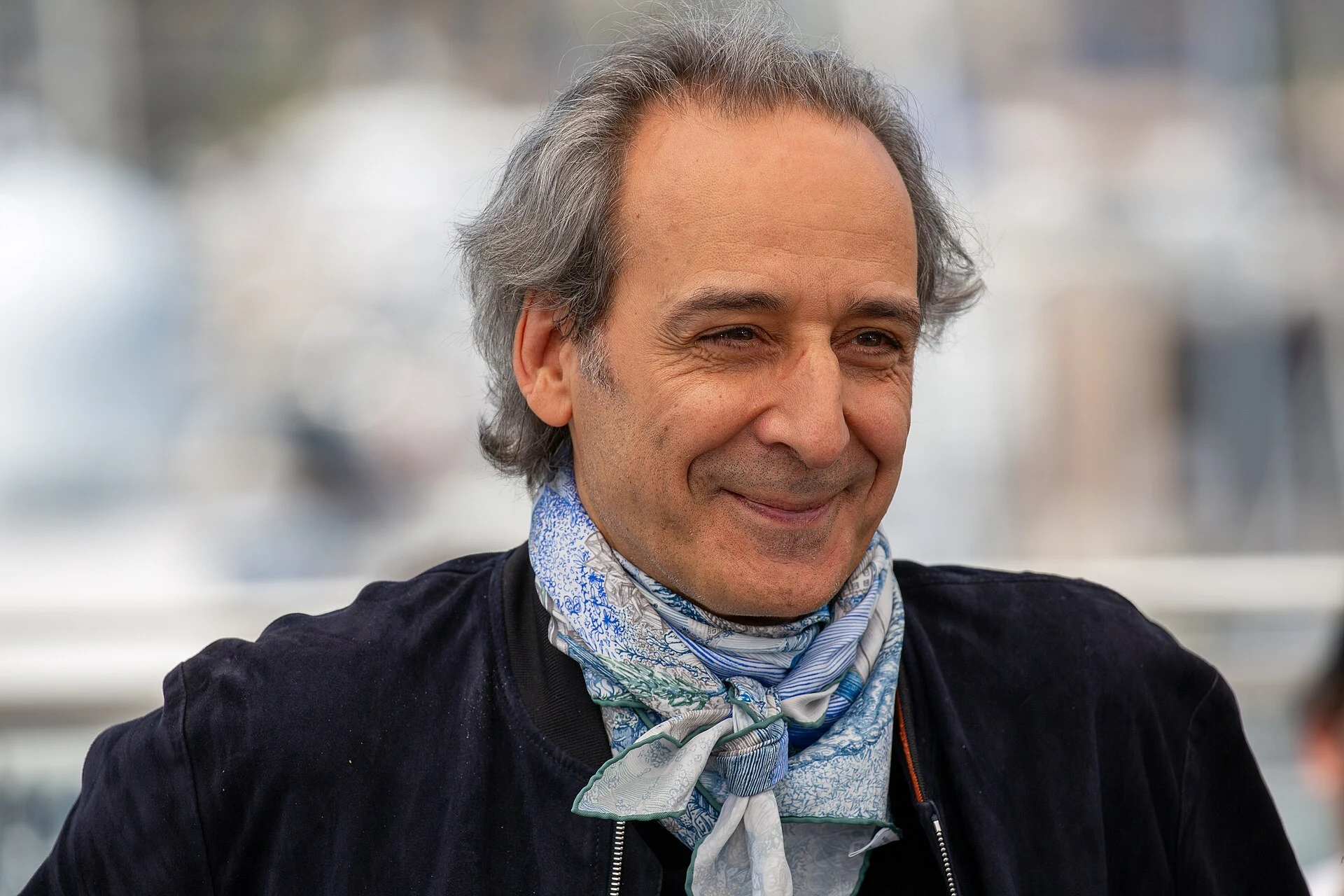
A premise, a genre convention and a formal choice are different aspects of a film. Connecting them means considering framing, editing, sound and the information in each scene, rather than deducing them from a synopsis or label alone.
The first verification remains unresolved
This text explains how to distinguish a description from formal analysis; it does not claim a viewing took place or conclude that the film is unavailable to the public.This text explains how to distinguish a description from formal analysis; it does not claim a viewing took place or conclude that the film is unavailable to the public.
What the reviews say—and what they don’t
The collected excerpts make it possible to establish that critical commentary on the film appears in several different publications. Semanario Universidad frames it as an intrigue involving economic monopolies; Rolling Stone en Español summarizes the premise as the journey of a tycoon and his daughter, amid espionage and fatherhood; The Hollywood Reporter en Español offers an overall assessment that places it somewhere between a major work and a failure; and OtrosCines characterizes its narrative as more focused than Anderson’s other work. These are signs that there are interpretations to compare, but the full texts are not part of the evidence provided.None of these excerpts offers a verifiable examination of entrances and exits, distances between bodies, obstacles within the frame or the distribution of information in an identified scene. Nor can they establish the authorship and date of each review on the basis of the material available, or determine how much they rely on promotional materials. The fact that the publications are different does not in itself demonstrate editorial independence from those materials. Accordingly, the excerpts can guide further research, but they cannot be used to suggest that a formal comparison has already been carried out.
The distinction between knowing broadly what a film is about and knowing how a scene advances or restricts information is an important one. The plot descriptions in the excerpts do not, by themselves, prove that the film’s architecture or the arrangement of its characters serves a particular narrative function.
A protocol for looking at space without anticipating the conclusion
If an identified copy becomes available, the examination can begin without deciding in advance that the spaces have a narrative function. After a first viewing, it would be useful to select a limited sample of scenes and record each scene’s entry point, exit point and timestamp. The unit of analysis should not be “the film uses space to control information,” but a smaller question: who occupies each area, who can cross a threshold, and what changes when someone does?On a second pass, the record could describe only observable elements: characters’ relative positions, obstacles separating them, changes in shot or scale, movement within the frame, visible doors or corridors, and moments when a character is outside the frame. Next, it would be necessary to note what information the viewer receives at each moment: who sees or hears something, who appears not to know it, and what the editing reveals. If space and the distribution of information change together, that relationship can be analyzed; if they do not, the hypothesis should be narrowed or discarded.
Distinguishing description from interpretation prevents symmetry, frontal composition or an orderly arrangement—if observed in a specific scene—from automatically being treated as proof of meaning. A composition can direct attention; to claim that it also creates suspense, hierarchy or exclusion requires describing the mechanism and checking its effects as the scene unfolds. Without a copy and timestamps, it would not be responsible to attribute such qualities to the film here.
Production statements do not replace the screen
The consulted review excerpts and encyclopedic listing include no original interviews, attributable production notes or verifiable materials from the cinematography, production design or editing teams. They do not establish those teams’ decisions or the intentions of their members.If relevant testimony is found, its role should be limited: to document what an identified person said about a process or decision. A promotional statement would not, by itself, prove how a scene works, and a formal observation would not authorize an inference about an intention that nobody has documented. A useful comparison requires keeping these two layers separate: first, what can be described in a copy; then, what an attributable primary source says about its production. The current materials do not provide this second kind of evidence.
A variation in the title worth noting
There is also a discrepancy in how the Spanish title is presented. The Spanish Wikipedia result gives La trama fenicia as the title in Spain, while the results from Rolling Stone en Español, The Hollywood Reporter en Español and OtrosCines use El esquema fenicio in their headlines. It would be inappropriate to resolve the issue by intuition or to treat a label in a search result as sufficient proof of an official distribution title.The titles used in the excerpts do not establish the official release title in each territory. The Phoenician Scheme is therefore retained as the reference title, without assigning undocumented regional status to the variants.
Conclusion: the hypothesis awaits proof
This text explains how to distinguish a description from formal analysis; it does not claim a viewing took place or conclude that the film is unavailable to the public.The next step is not to write a more emphatic interpretation, but to obtain and document a complete copy, verifiably link it to the work, log scenes and timestamps, and seek credits and original testimony. Only then can it be assessed whether thresholds, distances and obstacles actually distribute narrative knowledge, whether they do so in some sequences, or whether the film does not support this reading. Until those checks are complete, presenting the analysis as criticism based on a viewing would be misleading.
Key takeaways
- This text explains how to distinguish a description from formal analysis; it does not claim a viewing took place or conclude that the film is unavailable to the public.
- The review excerpts located provide general frameworks, not evidence of how specific scenes organize space and information.
- Without timestamps or documented viewing, formal choices should not be described as observed facts.
- The spatial hypothesis can be assessed only by comparing a verifiable copy with primary testimony and full reviews.
Sources and filmography consulted
- The Phoenician Scheme | Filmfilicos blog de cine. filmfilicos.com. Consulted 10 Oct 2026
- The Phoenician Scheme: Wes Anderson en clave épica. ccmagazine.es. Consulted 10 Oct 2026
- Crítica: El esquema fenicio (The Phoenician Scheme). es.rollingstone.com. Consulted 10 Oct 2026
- 🎞️🌍 'El esquema fenicio' combina el estilo visual de Wes .... www.facebook.com. Consulted 10 Oct 2026
- Review of Wes Anderson's 'The Phoenician Scheme'. www.youtube.com. Consulted 10 Oct 2026
- The Phoenician Scheme. semanariouniversidad.com. Consulted 10 Oct 2026
- The Phoenician Scheme. es.wikipedia.org. Consulted 10 Oct 2026Colaboradores de Wikipedia · The Phoenician Scheme · CC BY-SA 4.0
- Crítica de El esquema fenicio (The Phoenician Scheme). www.otroscines.com. Consulted 10 Oct 2026
- Crítica: El esquema fenicio (The Phoenician Scheme). es.hollywoodreporter.com. Consulted 10 Oct 2026
