Editorial collections
Under an hour is not a category: how to read the filter without confusing duration with format
Running time helps plan a viewing, but does not alone define a film's format, pace or quality. The length of a particular edition and a catalogue threshold answer different questions.
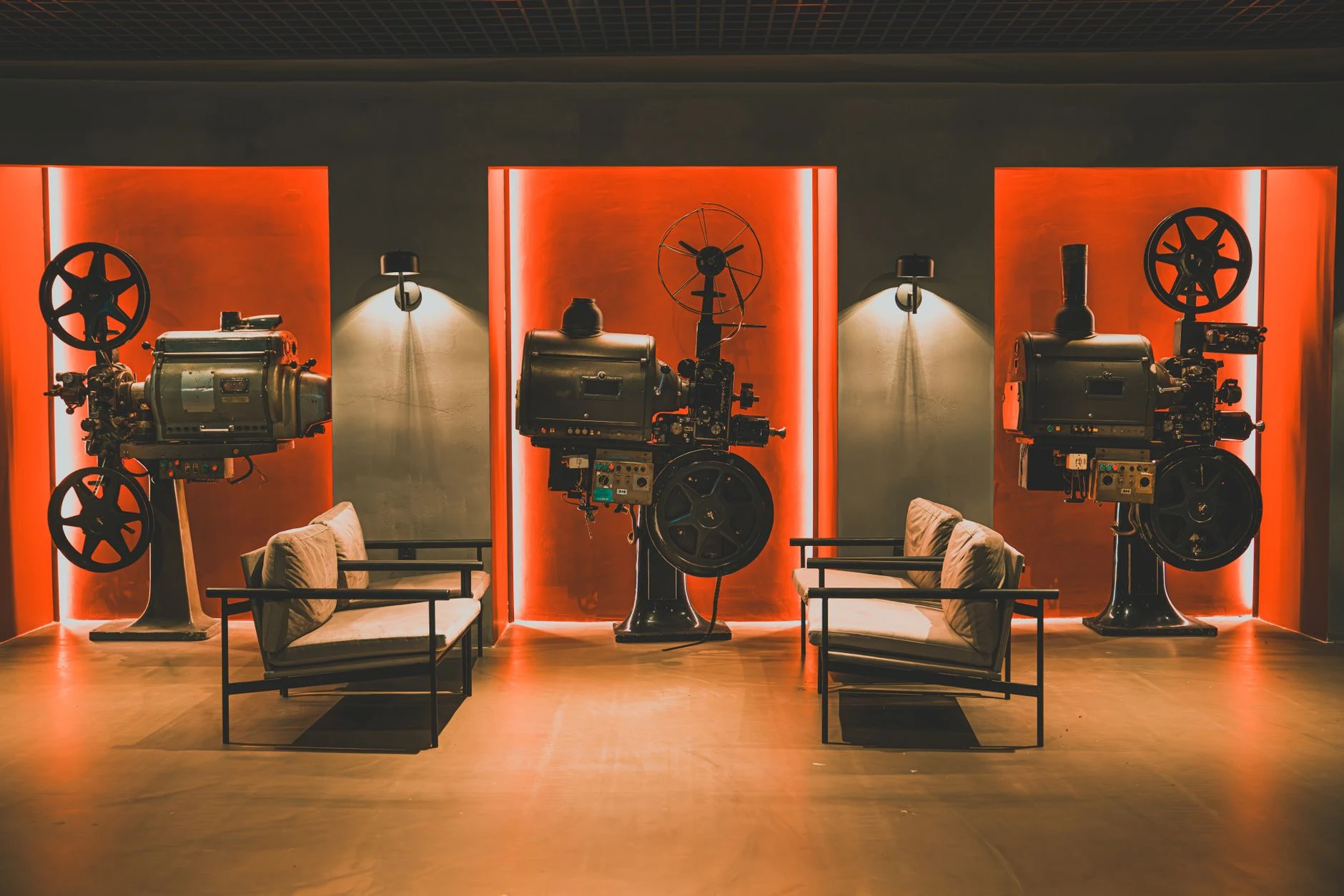
Running time helps plan a viewing, but does not alone define a film's format, pace or quality. The length of a particular edition and a catalogue threshold answer different questions.
The filter narrows a search; it does not define a universal category
“Under 60 minutes” expresses a duration limit, in principle. It is not enough to conclude that all the results are short films, that they share a format, or that they meet a definition valid across all countries, archives, and festivals. Without the catalogue documentation, we also do not know whether the rule excludes works running exactly 60 minutes, how it handles records with no duration, or which source it uses when different entries disagree.Public terminology does not resolve these questions on its own, either. Among the results consulted are editorial lists that use “short” broadly and pages that give different criteria for distinguishing short films from feature films. A Filmin page, for example, groups works with varying running times under a short-film label, including one entry listed at 60 minutes. An article by Ismael Martín states a 60-minute limit for short films in Spain; another press result cites a threshold of more than 40 minutes for calling a conventional narrative work a film. These references show that terminology depends on context; they do not establish a universal rule or explain MovieResort’s catalogue criteria.
Reading the subject
Without both, we cannot know which titles actually appear in the filter or select candidates from that set. The public lists we found are no substitute for that record: they may have a different scope, a different update date, or a different editorial understanding of “short film.”Nor were primary or institutional records provided to verify each title’s running time, type of work, and version. A running time on its own does not necessarily tell us whether it refers to a particular cut, a copy distributed in a certain territory, or an entry for a different edit. When two institutions publish different times, the responsible response is not to pick the number that fits the filter, but to document the discrepancy and specify which version each record refers to.
The pages we found show that editorial uses of the terminology vary, but they do not prove that a particular title currently belongs to the facet, or that its running time and classification have been corroborated by an institutional source. A list of recommendations does not establish that its titles belong to this filter’s results.
Duration, format, and viewing experience are separate questions
Running time tells us how long a recorded version lasts; a work’s category tells us how a particular source describes or classifies it. A work under an hour may be identified in different ways depending on the archive, festival, legislation, or catalogue documenting it. Without a specific source, it is best not to assign it a label by intuition.And running time alone does not predict the viewing experience. A short work is not necessarily fast-paced, easy to follow, or emotionally light. These are distinct qualities that would require their own evidence: a reliable formal description, a critical source, or an analysis clearly presented as interpretation. The filter can save time by narrowing the results, but it does not replace those other details or establish that a work is available to watch.
The boundary matters too: “under 60 minutes” and “60 minutes or less” do not mean the same thing. If the system applies the first wording literally, an exact 60-minute runtime falls outside the limit. But no documentation has been provided to confirm how the filter is implemented, how it rounds running times, or what it does when sources report different durations. It would be unwise to present that mathematical reading as a verified account of the catalogue’s technical behavior.
A practical approach to using the facet
Use the filter as a starting point, then verify each entry before deciding. First, check that the title actually appears among the facet’s current results. Next, look for an institutional source, film archive, cinematheque, festival catalogue, or distributor listing that gives the running time. Note whether it identifies a specific version, and compare another reliable source if the detail is decisive or the sources disagree.Then check how that same source describes the type of work. Do not infer the label from the running time or automatically carry a national criterion over to another catalogue. If a work runs exactly one hour, confirm whether the system excludes it or whether its duration has been rounded. And if the practical question is whether you can watch it now, check availability separately: an archive entry or documentary listing does not guarantee streaming, a current licence, or permission to reuse the work.
The editorial conclusion is deliberately limited. The facet promises a search by duration; the evidence provided does not allow us to confirm which titles it groups together or how the cutoff is applied. Until the list and its rule are documented, the most honest approach is to check entries individually, distinguish duration from classification, and avoid presenting a selection as verified.
Takeaways for a short viewing session
A facet’s name is not enough to establish its technical rule or to define short-form cinema universally. Confirm that the title appears in the current list, check the duration of the relevant version, and verify the type of work against a reliable source. If sources disagree, retain the discrepancy rather than forcing a single figure. And do not confuse an archive entry with viewing availability.Key takeaways
- The filter describes a search threshold, not a universal definition of a short film.
- The current list associated with duration filter and its inclusion rule were not provided.
- Check duration, version, type of work, and availability separately.

Sources and filmography consulted
- Así puedes acceder a todas las películas cortas de Netflix en caso de que no te quieras acostar muy tarde. www.xatakahome.com. Consulted 28 Sep 2026
- r/movies on Reddit: Recomendaciones de películas de 60 minutos. www.reddit.com. Consulted 28 Sep 2026
- 13 películas cortas que todo cinéfilo debe conocer - Cine O'culto. cineoculto.com. Consulted 28 Sep 2026
- r/movies on Reddit: Películas geniales, de 60 minutos o menos. www.reddit.com. Consulted 28 Sep 2026
- Las 21 mejores películas cortas de menos de hora y media que se pueden ver en Netflix, Prime Video, HBO Max, Filmin y más plataformas. www.espinof.com. Consulted 28 Sep 2026
- ¿Tienes una hora libre? Estas son las 6 mejores películas de menos de 60 minutos que puedes ver esta tarde. www.20minutos.es. Consulted 28 Sep 2026
- Películas Cortas en el blog de Filmin. www.filmin.es. Consulted 28 Sep 2026
- Lista de gatatitania - Peliculas que quiero ver y duran menos de 60 minutos - Filmaffinity. www.filmaffinity.com. Consulted 28 Sep 2026
- Los límites de duración de las películas y los festivales - Ismael Martin. ismaelmartin.com. Consulted 28 Sep 2026
- 20 películas de menos de hora y media para los más impacientes - 20 películas de menos de 90 minutos. www.fotogramas.es. Consulted 28 Sep 2026
