Reviews
Alien: Romulus: a critique of orientation rather than nostalgia
The decisive question is not how many familiar elements Alien: Romulus brings back, but what the viewer knows about the place occupied by each body, the threat that remains offscreen, and the routes that can still be taken. But this version must not be presented as a definitive review: a full viewing under controlled technical conditions still needs to be documented.
Content prepared with AI assistance and documented automated checks. This does not imply human review or first-hand viewing. Editorial methodology
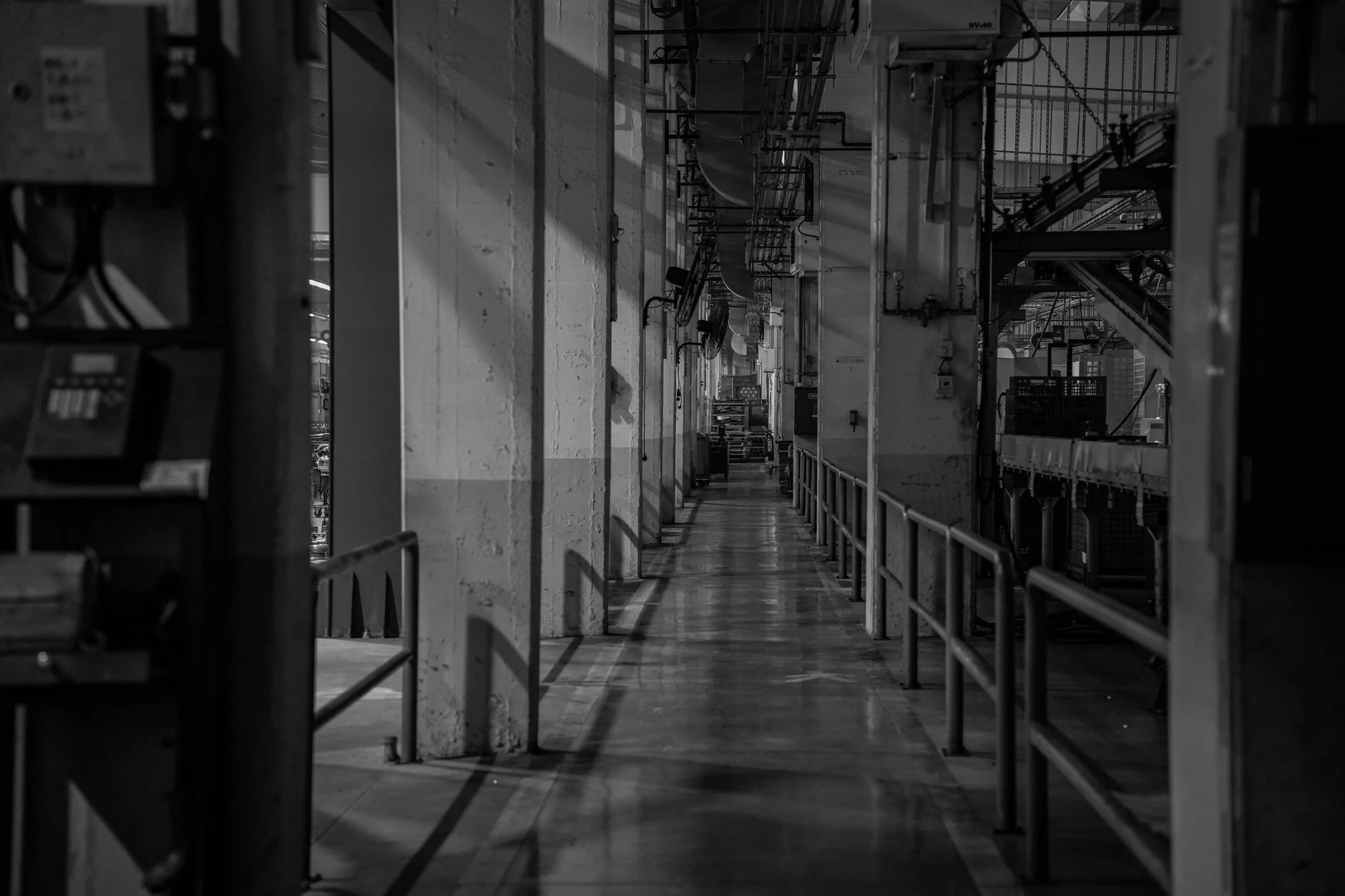
AI-assisted article. Alien: Romulus, directed by Fede Álvarez and released in 2024, moves through industrial spaces, compartments, corridors, cabins and abandoned structures where finding one’s bearings is a form of dramatic survival. The film has an official running time of 119 minutes and follows a group of colonists investigating an abandoned space station. That premise is enough to raise a formal question more useful than an inventory of callbacks: does the staging give the viewer an operational map of danger, or deny them one?
One methodological clarification is essential. The materials consulted document decisions in cinematography, production design and sound, but they do not replace a complete viewing of a legal copy, nor do they allow the precise timing of every shot, cut or transition to be certified here. The text that follows therefore works as a provisional critical reading of the film’s documented formal architecture and as a viewing guide, not as the settled judgment that an accredited, reviewable viewing would require.
One methodological clarification is essential. The materials consulted document decisions in cinematography, production design and sound, but they do not replace a complete viewing of a legal copy, nor do they allow the precise timing of every shot, cut or transition to be certified here. The text that follows therefore works as a provisional critical reading of the film’s documented formal architecture and as a viewing guide, not as the settled judgment that an accredited, reviewable viewing would require.
Finding one’s bearings is not the same as understanding the plot
In horror cinema, spatial orientation does not mean receiving an establishing shot every few minutes or immediately knowing what will happen. It means retaining a reasonably clear relationship between four pieces of information: where the character is, what exits or access points they have, which areas remain hidden, and from what direction a threat may arrive. A film may limit that information to create alarm, but it must decide what it retains. If no coordinates remain, fear risks turning into mere visual confusion.Alien: Romulus appears to be built around that tension. Naaman Marshall’s design distinguishes an abandoned station, a probe, and cargo or elevator spaces; Galo Olivares’s cinematography used light sources built into the sets and a small camera intended for deliberately claustrophobic interiors. These production choices do not by themselves guarantee the clarity of a scene, but they do signal a specific conception of space: not an abstract void, but machinery with surfaces, status lights, doors and compartments that can inform or deceive.
The relevant question while watching, then, is not whether every corridor recalls an earlier installment, but something simpler: before a character crosses a threshold, has the film shown us what lies on either side? When it cuts to a reaction, does it preserve the direction of the gaze? When it blacks out part of the set, does it leave sonic or visual cues so that the darkness still has volume? Orientation is a distribution of knowledge: the staging decides how much the viewer knows in relation to the characters, and for how long danger can be anticipated before it is seen.
Claustrophobia matters only when it still has geometry
Narrow interiors can produce two opposite effects. At their best, they make every movement consequential: a door takes time to open, a corridor permits only one direction, a cabin forces bodies to share the frame, and an object in the foreground blocks a decisive corner from view. At their worst, they crush so many points of reference that every location becomes interchangeable. The difference does not depend on the set being small, but on whether the film makes its organization perceptible.The production documentation identifies a precise material ambition. Olivares has explained that certain constructions were intentionally made extremely confined, citing the cabin in a physically extreme sequence as an example of a space designed to be uncomfortable. He also noted that the compact ALEXA 35 made it possible to place the camera inside those volumes. That capacity can encourage a gaze pressed close to the characters, but it creates an editing requirement: the closer the camera is, the more cuts must restore trajectories, doors, heights and distances.
The most favorable reading of Romulus would be that its tight framing does not erase space but turns it into a reserve of information. A bulkhead seen earlier can return as an exit; an illuminated background can signal a depth the foreground denies; a body leaving the frame can remain present through mechanical noise, a shadow or another character’s response. In this form of suspense, the camera does not show everything, but lets the viewer calculate what is missing.
The critical reservation must be equally clear. Confinement stops being expressive when the film introduces a new place only at the instant it needs it, when axis changes make it impossible to know where a character is moving, or when a cut turns every appearance into an unprepared surprise. At that point, disorientation no longer dramatizes a loss of control: it shifts onto the audience a task the narrative has not performed.
Light does more than decorate: it assigns priorities
Lighting in science-fiction film is often discussed as a matter of atmosphere, especially when metal, smoke, screens and emergency lights dominate. But in a film so dependent on interiors, its most decisive function is hierarchical. Light indicates which plane of the set matters now, separates a figure from the background, reveals a door before it is used, or makes an opening register as a latent threat.Olivares has explained that the crew worked with sources installed within the sets and with lighting effects present in virtually every shot. He has also described a search for color separation and for control over very different lights within the same image. These details should be treated as context, not as automatic proof of effectiveness. An image full of lights can be legible or chaotic. What matters is whether each lighting variation changes our understanding of depth and access points.
For a first-time viewer, the most useful test is to observe what happens just before tension spikes. If the film lights a corridor, outlines a silhouette or leaves a console active to establish a direction, it offers anticipation. If, by contrast, it darkens the space without retaining contrast or reference points, it may intensify the immediate jolt while weakening continuity. The most enduring fear does not come from seeing nothing; it comes from seeing enough to know that something may arrive from a defined place.
This distinction also prevents darkness from being confused with visual seriousness. An underexposed image may conceal limitations, but it may also compel attention to textures, sounds and reflections. Romulus must be judged shot by shot by this economy of clues: by whether each black area retains a boundary, and whether the human figure remains a spatial unit before becoming a potential victim.
Sound extends the walls beyond the frame
When the frame cannot show an entire room, sound can complete its construction. An engine in the distance fixes a direction; a pneumatic door makes it possible to gauge a distance; an alarm turns space into a sequence of compartments; a filtered voice can locate someone outside the image without making them abstract. Offscreen space is not simply what we do not see, but what the film keeps active despite not showing it.Lee Gilmore and Will Files’s work suggests that the sound design sought to distinguish technologies and scales: heavier cargo ships, the Renaissance station, and a technological texture that linked the world of the first two films without merely copying old materials. They describe the largely new creation of startup sounds, mechanisms and atmospheres, even as they studied archives and elements from earlier productions. This matters because it positions sound as narrative construction rather than nostalgic ornament.
The critical consequence is twofold. On the one hand, Romulus can use an alarm, a servomotor or an electronic reboot to orient without explaining: the ear knows where the machine is before the camera returns to it. On the other, inherited or recognizable sounds work only if they are integrated into the logic of the present space. If they become signals designed solely for recognition, they interrupt the threat in order to ask for outside complicity. An effective reference does not say, “remember this”; it makes a door, console or specific sound carry weight here and now.
The mix matters especially at home. A system that compresses bass, artificially raises dialogue or reduces surround channels can alter one’s reading of the film, because some of its coordinates likely travel through the soundtrack. The practical recommendation is therefore to watch it with as much control as possible over volume and dynamics, preferably through headphones with good response or in a room where side-channel sounds are not lost.
Provisional verdict: a promising form that requires verification
Interest in Alien: Romulus should not depend on approving or disapproving of its relationship to the franchise. Its material proposal is documented: tight sets, a camera capable of entering them, integrated lighting, physically built environments, and sound design that treats machines as audible architecture. All of this is compatible with a horror film that manages the viewer’s orientation very well: first it provides a route, then blocks it; first it makes an exit visible, then contaminates it; first it places the threat offscreen, then proves that absence had a direction.But that possibility does not authorize declaring the result settled. The critical question endorsed by this piece—when disorientation produces tension and when it harms dramatic clarity—can only be answered responsibly after reviewing the complete film, with sequence notes and recorded playback conditions. Production materials demonstrate intentions and methods; they do not demonstrate the final continuity of every scene.
For viewers unfamiliar with the series, the provisional recommendation is favorable only if they are seeking physical, dark space horror attentive to the interaction of bodies and machinery, and if they can watch it with carefully reproduced sound. It does not appear necessary to arrive with a mental catalogue of references in order to follow its premise. For those who do know the franchise, it is worth shifting attention from recognition to the present of each scene: what spatial information an element provides and what it withholds. If the film passes that test, its historical echoes will be texture; if not, they will be distraction.
The editorial conclusion is therefore conditional: there are enough documented indications of a coherent spatial and sonic conception to justify interest, but not enough evidence of an accredited viewing to publish this piece as a final review or issue a categorical recommendation. The outstanding step is not to seek more nostalgia; it is to watch the entire film and determine whether its spaces, from shot to shot, remain legible when it matters most.
Key takeaways
- Spatial orientation is not the same as explaining the plot: it depends on the viewer being able to gauge access points, directions, distances and hidden areas.
- Claustrophobic sets generate sustained suspense only if framing and editing preserve recognizable geometry.
- Lighting can orient by organizing depth, figures and exits; darkness without reference points can reduce tension to confusion.
- Sound design can extend space beyond the frame and should be assessed under listening conditions that preserve its dynamics.
- This version requires a complete, legal and documented viewing before it can be published as a conclusive review.
Sources and filmography consulted
- community.shotdeck.com. community.shotdeck.com. Consulted 16 Sep 2026
- www.oscars.org. www.oscars.org. Consulted 16 Sep 2026
- www.denofgeek.com. www.denofgeek.com. Consulted 16 Sep 2026
- theasc.com. theasc.com. Consulted 16 Sep 2026
- www.asoundeffect.com. www.asoundeffect.com. Consulted 16 Sep 2026
- www.space.com. www.space.com. Consulted 16 Sep 2026
- awards.britishfilmdesigners.com. awards.britishfilmdesigners.com. Consulted 16 Sep 2026
- www.youtube.com. www.youtube.com. Consulted 16 Sep 2026
- www.reddit.com. www.reddit.com. Consulted 16 Sep 2026
- theasc.com. theasc.com. Consulted 16 Sep 2026
- www.latimes.com. www.latimes.com. Consulted 16 Sep 2026
- www.youtube.com. www.youtube.com. Consulted 16 Sep 2026
- www.20thcenturystudios.com. www.20thcenturystudios.com. Consulted 16 Sep 2026
- www.arrirental.com. www.arrirental.com. Consulted 16 Sep 2026
