Film history
Cinema of the United States: Films, Contexts and the Limits of a Shared History
A national history of cinema cannot be established by listing titles or imposing a single periodization. The available sources point to a few frameworks and examples, but they also require us to distinguish what is documented from what still needs verification.
Content prepared with AI assistance and documented automated checks. This does not imply human review or first-hand viewing. Editorial methodology
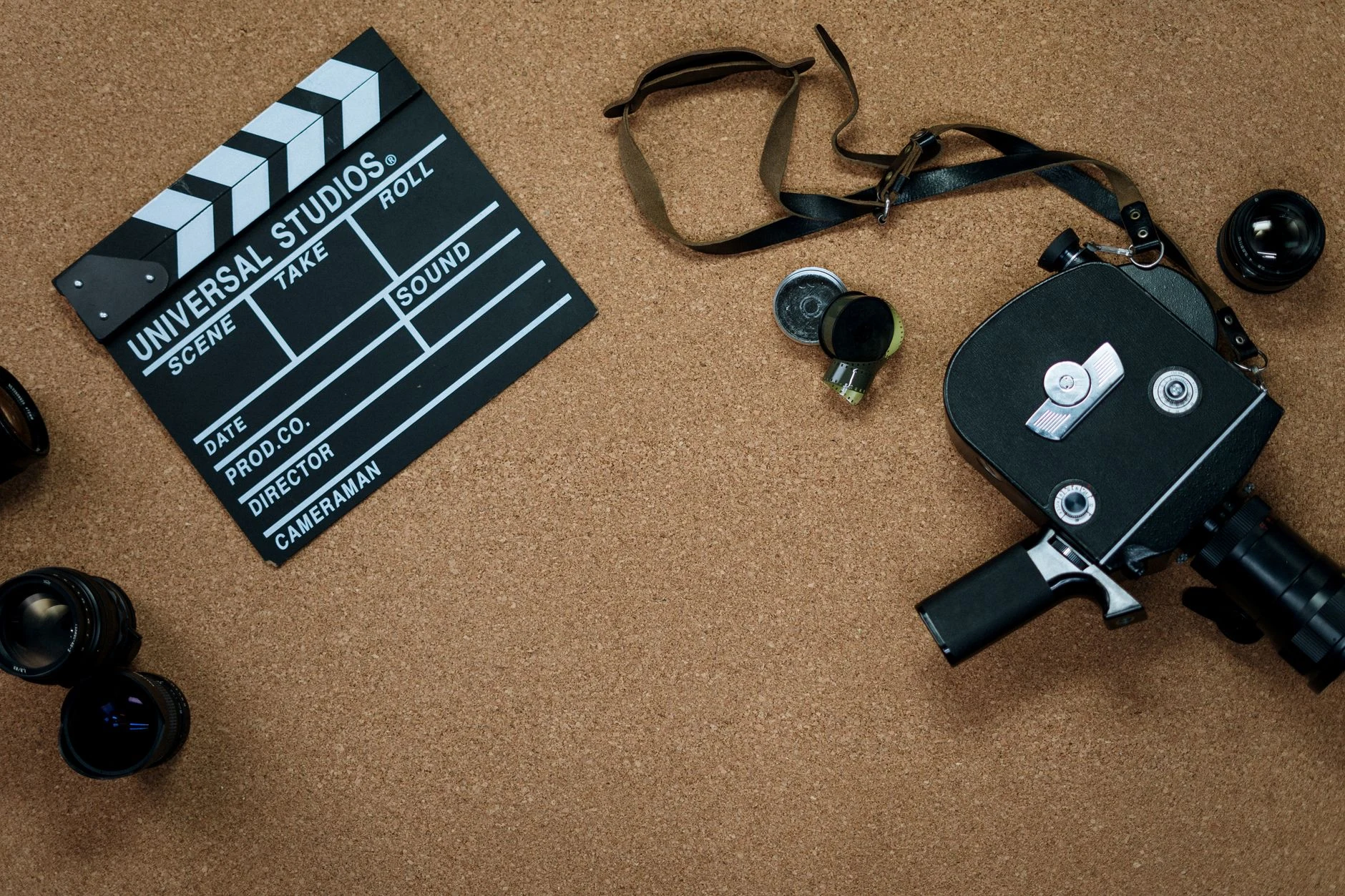
“Cinema of the United States” can refer to films, companies, production practices or a tradition later constructed by historians and catalogues. These categories are not interchangeable. A film can help us study a context without representing an entire country; a historical label can organize a bibliography without proving that every film of a given period shared the same style. Here, we connect a handful of documentary clues—a description of melodramas produced by Biograph and two titles associated with D. W. Griffith—to a broader question: what does the material consulted allow us to claim, and what does it not? The answer is deliberately limited: the available record is not enough to map out a general history of US cinema or to verify in depth the credits and contexts of every work mentioned. AI-assisted article. Not suitable for publication until it has passed the documented automated checks for sources, claims, localization, originality, quality and media rights.
What is documented—and to what extent
The first editorial decision is to distinguish the existence of a bibliographic framework from the verification of a complete history. The publisher Akal lists a volume titled Historia mundial del cine I. Estados Unidos I (World Cinema History I: United States I). The listing confirms that a publication devoted to the subject exists and that the United States is the focus of one of its volumes; on its own, it does not allow us to attribute conclusions, production dates or a particular thesis to the book. To do that, we would need to consult the book rather than infer its contents from its title.A listing available through Google Books offers another synthesis: it says that the dominant style of US cinema was classical Hollywood cinema and places its development between 1913 and 1969. This is useful as an example of a proposed periodization, not as a definitive chronology. The excerpt does not explain how it defines “dominant style,” which works it includes or what criteria support those dates. Nor does it show that every film produced in the United States during that period followed the same form. In this article, then, that span is treated as an editorial formulation attributed to a book, not as an indisputable boundary.
Material from a Film History course at the Faculty of Arts of the National University of Córdoba offers a more specific example of analysis. It describes melodramas made by Biograph as homogenized narratives set in idealized rural environments, where a family or community order is disrupted by urban crime and restored at the end. This is a characterization of a group of films, as presented in the excerpt consulted; it does not identify individual films or provide a list of titles that would make it possible to determine how far the observation extends. Its value here is to show an interpretive hypothesis—the relationship between setting, conflict and the restoration of order—not to turn that hypothesis automatically into a portrait of US society.
A PDF text on the history of North American cinema mentions The Birth of a Nation (1915) and Intolerance (1916) in connection with D. W. Griffith. These details allow us to identify two titles and two years that appear in the material consulted. The excerpt also gives them a prominent place in film history, but that kind of assessment is not the same as independently verifying their credits, production circumstances or reception. Nor is it enough to present the two works as representative of an entire country. They are examples that open up questions, not a statistical sample or a condensed history of the United States.
Context and change: periodizations are tools
Dividing time into periods helps organize research, but the resulting framework should not be mistaken for a historical law. The 1913–1969 chronology in the Google Books summary offers a framework for considering so-called classical Hollywood. The span, however, does not in itself explain what changed at either end, which processes continued beyond its boundaries or which exceptions disappear when different films are grouped together. Answering those questions would require reading the full study and comparing it with specific historical research.The Akal listing also invites us to think of history as a subject that can be developed across more than one volume: the title identifies this book as the first part devoted to the United States within a world history of cinema. That indicates an editorial structure, not a conclusion about the unity of the country’s film production. Organizing a work by geographical area may be practical; it does not prove that political borders correspond precisely to production networks, career paths or the ways films circulated.
The Biograph example adds another scale: the description focuses not on an entire national period but on narratives associated with a company. If we provisionally accept this characterization, the contrast between idealized rural life and the urban threat can be studied as a narrative convention described by the source. But two leaps must be avoided: assuming that every Biograph melodrama repeats the same formula, and concluding that the formula directly expresses the everyday lives of its audiences. A film organizes conflicts; without further evidence, it is not a transparent record of social reality.
This suggests a cautious way to connect cinema and history. First, identify what the source claims: here, a general description of certain melodramas. Next, ask what evidence is missing to test that claim: titles, dates, credits, scene examples, production documents and comparisons with films that do not fit the pattern. Finally, frame the interpretation as an interpretation. The restoration of order at the end may be a narrative pattern worth examining; on the material available, we cannot say that it defines an entire period, industry or national mindset.
Films and verifiable details: treating titles as questions
The Birth of a Nation and Intolerance can appear in a historical overview because the document consulted names them alongside their years, 1915 and 1916, and connects them with Griffith. In this record, that is all that can be verified in a limited sense: their mention and attribution in the text. No archive records, rights catalogues or institutional registers have been provided that would allow us to add information here about versions, running times, full credits or preservation history. We therefore do not assign these titles details that the material consulted does not confirm.Nor are the two films presented as a pair that demonstrates a linear evolution. The fact that two films appear one after another in a historical account does not prove that one led to the other, that they shared the same production conditions or that they represented an aesthetic consensus. Establishing such relationships would require sources on each work and a comparison of their forms and contexts. Their proximity in time is a starting point for research, not a causal explanation.
The Biograph case makes the same point from another angle. A company description can guide the search for films and narrative motifs, but without specific titles and supporting documentation it should not be turned into a list of works or a claim about their reception. Nor does an organization’s name, by itself, demonstrate the extent of its influence. Supporting such a claim would require independent sources documenting the relationships and allowing their scale to be assessed.
In a rigorous history, examples must do analytical work without being asked to prove more than they can. Here they serve to define questions: how does a story depict its settings? What conflict disrupts its world? How is that conflict resolved? Which sources describe the film, and from what perspective? The university resource suggests a pattern for Biograph melodramas; the PDF text names two Griffith films; the publisher’s listing identifies a project on US film history; and a book summary proposes a chronology for classical Hollywood. These are different kinds of evidence. They do not automatically add up to a complete history.
Limits and uncertainties: what should not be filled in
The main limitation is documentary. Much of the information supplied for this article consists of brief search-result excerpts, not a verified reading of the complete pages or the books cited. Excerpts can point us in the right direction, but they may omit definitions, qualifications and references that would change the interpretation. We therefore distinguish between what a bibliographic record confirms, what a secondary source proposes and what cannot yet be verified from this body of material.There is not enough evidence here to tell a balanced story from the beginnings of US cinema to the present, compare regions of the United States, explain changes in the industry or assess the international reach of its films. Nor have the credits and release dates of the films mentioned been verified against primary sources. The years given for The Birth of a Nation and Intolerance are repeated only because they appear in the document consulted; they are not presented as complete, independently corroborated filmographic records.
Caution does not mean pretending that nothing can be said. We can say that the sources consulted offer at least two scales of analysis: a general periodization of classical Hollywood and an analysis of narrative motifs associated with a company’s melodramas. We can also say that a historical text mentions two films, gives their years and links them to Griffith. What we should not do is present these clues as a consensus, generalize them to all US productions or turn a summarized attribution into our own critical conclusion.
A publishable version of a longer history would need to expand the research through film-archive catalogues, records for individual films, academic bibliography read in full, and institutional or primary sources for each claim about production and context. It would also need independent confirmation of dates and credits, and a clear distinction between production, distribution, exhibition and preservation. Until then, the most honest approach is to treat this map as provisional: it points towards avenues of research and records its limits rather than concealing them beneath an all-encompassing periodization.
A national history built from case studies, not shortcuts
This overview leads to a straightforward methodological conclusion. “Cinema of the United States” is a useful scale for organizing questions, but it is not a sufficient explanation of films. A description of Biograph melodramas does not automatically represent the country’s population; two titles associated with one director do not exhaust their period; and a chronology proposed by a reference work does not turn entire decades into a uniform block. Each interpretive leap needs its own evidence.For now, the available material supports a brief, cautious history: a volume on the United States exists within a world history of cinema; a summary of another book proposes dates for the development of classical Hollywood cinema; a university source describes a narrative pattern associated with Biograph melodramas; and a historical text mentions two Griffith films from 1915 and 1916. These claims do not have identical support or serve the same purpose, and none of them alone resolves questions about circulation, industry, reception or the diversity of films.
The best way to continue the research is to move from the label back to concrete evidence: choose a film, identify the record that documents it, verify its basic details and study what its form allows us to infer without confusing it with a complete portrait of the nation. This scale of work can produce a more plural and less spectacular history than a list of milestones; it is also a more reliable way to relate cinema to its contexts.
Key takeaways
- A periodization proposed by a book is a framework for reading, not a universal historical boundary.
- The description of Biograph melodramas documents a hypothesis about narrative motifs, but the excerpt does not identify specific films.
- The material consulted mentions The Birth of a Nation (1915) and Intolerance (1916) in connection with D. W. Griffith; it is not enough to verify their complete filmographic records or to make them representative of all US cinema.
- The available excerpts do not allow us to reconstruct a balanced history of the industry, its regions, circulation or reception.
- The article requires further research and should not be published until it has passed the documented checks for sources, claims, localization, originality, quality and media rights.

Sources and filmography consulted
- La Historia a través del Cine. Estados Unidos: una mirada a su imaginario colectivo 9788498604719 - DOKUMEN.PUB. dokumen.pub. Consulted 27 Sep 2026
- Cine de los Estados Unidos - Wikipedia, la enciclopedia libre. es.wikipedia.org. Consulted 27 Sep 2026
- Blog de cine - La estación del fotograma perdido: Breve historia del cine americano estadounidense (EE.UU.). laestaciondelfotogramaperdido.blogspot.com. Consulted 27 Sep 2026
- Historia mundial del cine I. Estados Unidos I - Akal. www.akal.com. Consulted 27 Sep 2026
- HISTORIA CRíTICA DEL CINE NORTEAMERICANO. ien.es. Consulted 27 Sep 2026
- Historia de EE.UU. a Través del Cine: Un Recorrido Temático - Studocu. www.studocu.com. Consulted 27 Sep 2026
- Los inicios del cine en Estados Unidos y Europa | Aprendiendo acerca del cine. amorenoyelcine.wordpress.com. Consulted 27 Sep 2026
- Estados Unidos | Cátedra "Historia del Cine". Dpto. "Cine y TV", Facultad de Artes, Universidad Nacional de Córdoba. ISSN 2422-6327. blogs.ffyh.unc.edu.ar. Consulted 27 Sep 2026
- Cine de Estados Unidos - EcuRed. www.ecured.cu. Consulted 27 Sep 2026
- La industria cinematográfica de los Estados Unidos - Vasil Teigens, Peter Skalfist, Daniel Mikelsten - Google Books. books.google.com. Consulted 27 Sep 2026
