After watching
Conclave: an access map for rereading who knows what, when and from where
Moderate spoiler warning: this guide does not reveal the ending, but it does discuss situations and staging decisions from the middle section. Its proposal is simple: return to Conclave not to reconstruct a chain of secrets, but to follow the permissions, doors and listening points that regulate what the characters and the audience know.
Three distinct kinds of access before you begin
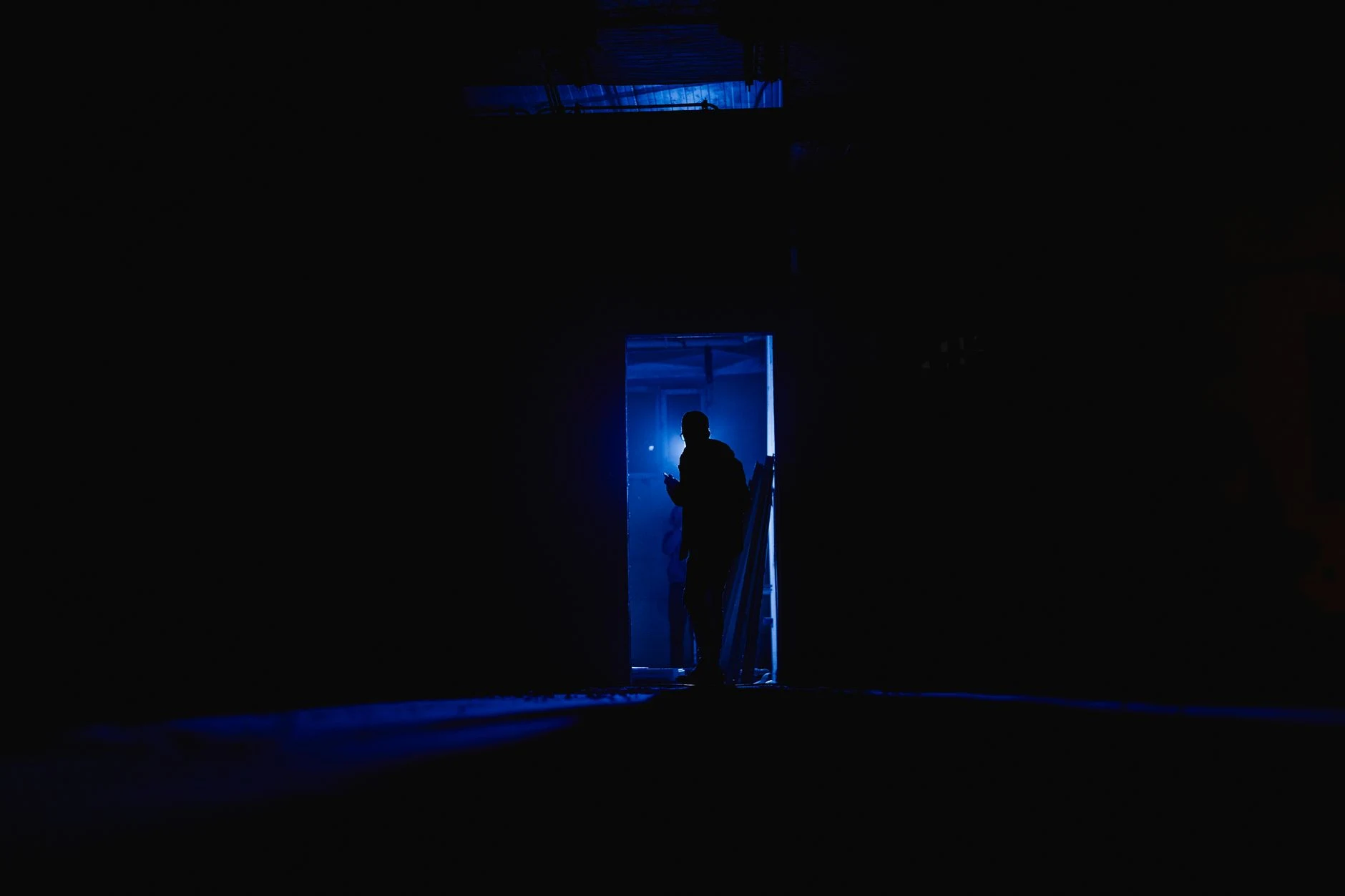
The word “access” brings together three things that Conclave separates with precision. First, there is physical access: who crosses a door, who may remain in a room and which space stays out of reach. Then comes informational access: who knows a fact, who suspects, who receives only an interested version and who can verify it. Finally, there is spectator access: what the film allows us to see and hear before, after or at the same time as its protagonist.Do not confuse them. Lawrence entering a place does not mean he immediately understands what he finds; the audience seeing his movement does not mean it holds a decisive advantage over him. The film may keep us behind him, cut before an answer, or return to a conversation through a later reaction. Space therefore does not function as decorative illustration of secrecy: it establishes concrete conditions for obtaining, withholding or transmitting it.
The first question for a rereading is therefore not “what clue appears?” but “what permission has changed?” Note whether that change is institutional, emotional or visual. One character may have a key, rank or proximity; another may have none of these and yet observe from the margins. Information may be available in a room while still not being legible to the person visiting it. That distinction drives much of the tension.
Also avoid attributing every effect of confinement to an alleged documentary fidelity to the Vatican. The production built and combined spaces for a fiction. Casa Santa Marta was conceived with a deliberate quality of enclosure, while the chapel offers another scale and another regime of exposure. The film’s interest is not in certifying a real architectural plan, but in turning movement between places into a scale of power.
A second-viewing method: record operations, not just events
Make a four-column table. In the first, write down the space: arrival exterior, corridor, room, chapel, dining room, waiting area or office. In the second, record the act of access: entering, preventing entry, knocking, listening, sealing, opening, watching, leaving. In the third, note who obtains verifiable information and who is left with a hypothesis. In the fourth, note what the audience knows that the focal character does not yet know, or what it does not know alongside them.Add two very simple signs. Draw an arrow when a fact passes from one character to another; draw a bar when it is blocked. You do not need to pause on every shot to begin. It is enough to do this at the end of each block: arrival and preparation; the group’s gathering; collective rituals; private encounters; searches; ballots; consequences of changes in information. On a third viewing, then, pause at the thresholds: the distance between the person asking and the person answering, the direction of looks, a third party in the background, the open or closed door.
The method is particularly useful because editing does not merely arrange dialogue. Nick Emerson explained that the team held shots until the point at which the audience needed something more and often cut a scene before its emotional closure in order to carry its tension into the next. This requires attention to transitions. Ask whether the cut confirms information, suspends it or brings you into a new situation carrying an expectation inherited from the preceding one.
Also listen to what happens when music appears without literally underlining the visible gesture. Volker Bertelmann described his approach as music able to add an unseen layer, closer to the film’s pulse than to a mechanical signal of suspense. Rather than asking only “what does the score announce?”, try “what does it make uncertain or weighty while the image seems administrative?” In Conclave, a repeated procedure can feel different each time without completely changing its form.
Sequence map: from partial orientation to permission to investigate
The map begins before the story states all its rules. The opening follows Lawrence urgently and does not grant the audience a reassuring overview of the whole. Emerson has said that the team discarded a more atmospheric prologue in order to get behind the protagonist’s head: the choice places us in motion, with enough information to feel the pressure but not to command the system. First note: the film gives us direction before explanation.The next major threshold is the gathering of the cardinals and the formalisation of the enclosure. Do not read it merely as a plot condition. Observe how the act of closing demarcates two worlds: the one participating in the procedure and the one excluded from it. The composer identified the closing of the doors as the beginning of the work’s musical journey. Here, separate three levels: the institutional rule of seclusion, the bodily feeling of being inside and the knowledge that can no longer circulate from outside.
In ceremonial sequences, especially those placing the characters in the chapel, information becomes visible as distribution. Bodies appear organised within an architecture that exceeds them, but composition does not make them interchangeable. Fontaine explained that the widescreen format allowed both the frame to be compressed and figures to be isolated, and that Lawrence’s perspective guided the treatment of doubt. During the opening address, do not attend only to the words: watch when the shot moves closer, when it opens onto reactions and which faces are given time to process what has been said. Emerson’s edit worked from anchoring points and distributed the assembly’s reactions from there.
The film then alternates collective space with sites of restricted conversation. This is the heart of the map. Every private meeting should prompt three questions: who invited whom? What hierarchical relationship allows the encounter? Which part of the conversation belongs to those present, and which part is later translated for others? Do not turn a corridor into a mere link between scenes. In a corridor, an answer can be delayed, an alliance detected, a movement intercepted, or a decision made to seem more dangerous before it is verbalised.
Two middle-section thresholds warrant pausing playback. In one, Lawrence hesitates outside another cardinal’s room before entering for a confrontation. Emerson described the cut as a calculated omission of the crossing: we see the beginning of the decision and, after the door closes, the film changes angle without cleanly showing the passage. In another, Lawrence breaks the seal on the papal rooms and the edit momentarily abandons its composure through several rapid micro-cuts. There is no need to anticipate what he discovers. What matters is comparing the operations: in the first, the cut makes intimate access strange; in the second, it fragments forbidden access. Form makes us feel that permission has been replaced by transgression.
Finally, revisit the ballots without treating them as pauses between revelations. Emerson explained that they were filmed in different ways and that editing varied speed, intercutting and rhythm so that each repetition expressed a different dramatic state. In your table, write beside every ballot what has changed since the previous one: not only in the count, but in who watches whom, which earlier conversation weighs upon the gesture and which shot preserves a doubt. The rite produces public information; the framing charges it with private information.
What belongs to each craft, and how not to oversimplify authorship
A rigorous rereading distributes observations without dividing the film into sealed compartments. Peter Straughan is the credited screenwriter: he is responsible for adapting the novel and for the written construction of conflicts, investigations and dialogue. Edward Berger directed the film and worked with a prepared visual plan that remained open to discoveries in performance. Stéphane Fontaine, the director of photography, linked Lawrence’s point of view to close or medium shots that retain the surrounding environment, as well as to widescreen format, isolation and slow zooms.Suzie Davies, the production designer, does not by herself “cause” the feeling of confinement, but she designed the spaces with which direction, cinematography, sound and editing can work. Her remarks are especially relevant here: she described the residence as a kind of elegant prison, with prison-resonant doors and windows that are rarely open. Nick Emerson edited the footage and has explained specific choices concerning the opening, abrupt cuts at thresholds and the rhythmic transformation of the ballots. Bertelmann composed the music and worked in early dialogue with sound design to prevent frequencies and expressive functions from competing.
The conclusion is not that every emotion has one owner. It is more accurate to say that the film organises a chain of decisions: the screenplay proposes a situation of unequal information; design makes its accesses practicable; direction and cinematography place the viewer; editing manages delay and ellipsis; music changes the weight of what cannot be seen. When a scene feels tense, first identify which operation is taking place before assigning it to a department.
For a third viewing: watch what the film leaves out
A third viewing can be shorter and more selective. Choose five doors or passages from one space to another. For each, answer: does the camera accompany the crossing, remain outside or arrive late? Do we hear the adjoining space? Does the cut give us a consequence before a cause? Does the person entering gain knowledge, authority or vulnerability? Does the composition isolate them or return them to a group?If this map works, Conclave ceases to be only a story of linked secrets. It emerges as a film that makes information felt as distance: the distance between a body and a door, between an assembly and a room, between a visible vote and its invisible motives, between Lawrence’s gaze and ours. This reading does not close off the film’s political, religious or moral meaning. It makes it more precise: before deciding what a revelation means, it is worth observing which material and formal conditions made it reach us in that way.
Sources and filmography consulted
- www.motionpictures.org. www.motionpictures.org. Consulted 14 Sep 2026
- www.yahoo.com. www.yahoo.com. Consulted 14 Sep 2026
- www.focusfeatures.com. www.focusfeatures.com. Consulted 14 Sep 2026
- video.dga.org. video.dga.org. Consulted 14 Sep 2026
- www.filmindependent.org. www.filmindependent.org. Consulted 14 Sep 2026
- www.focusfeatures.com. www.focusfeatures.com. Consulted 14 Sep 2026
- sightlines.media. sightlines.media. Consulted 14 Sep 2026
- thecontending.com. thecontending.com. Consulted 14 Sep 2026
- fangirlfreakout.com. fangirlfreakout.com. Consulted 14 Sep 2026
- www.cntraveler.com. www.cntraveler.com. Consulted 14 Sep 2026
- britishcinematographer.co.uk. britishcinematographer.co.uk. Consulted 14 Sep 2026
- a-rabbitsfoot.com. a-rabbitsfoot.com. Consulted 14 Sep 2026
- www.focusfeatures.com. www.focusfeatures.com. Consulted 14 Sep 2026
- my.romacinemafest.org. my.romacinemafest.org. Consulted 14 Sep 2026