Before watching
From 90 to 120 minutes: what the filter measures—and what it does not tell us
This range is useful for narrowing a search, but the available sources do not substantiate a list of films or a general rule that makes this interval cinema’s “default” runtime.
Content prepared with AI assistance and documented automated checks. This does not imply human review or first-hand viewing. Editorial methodology
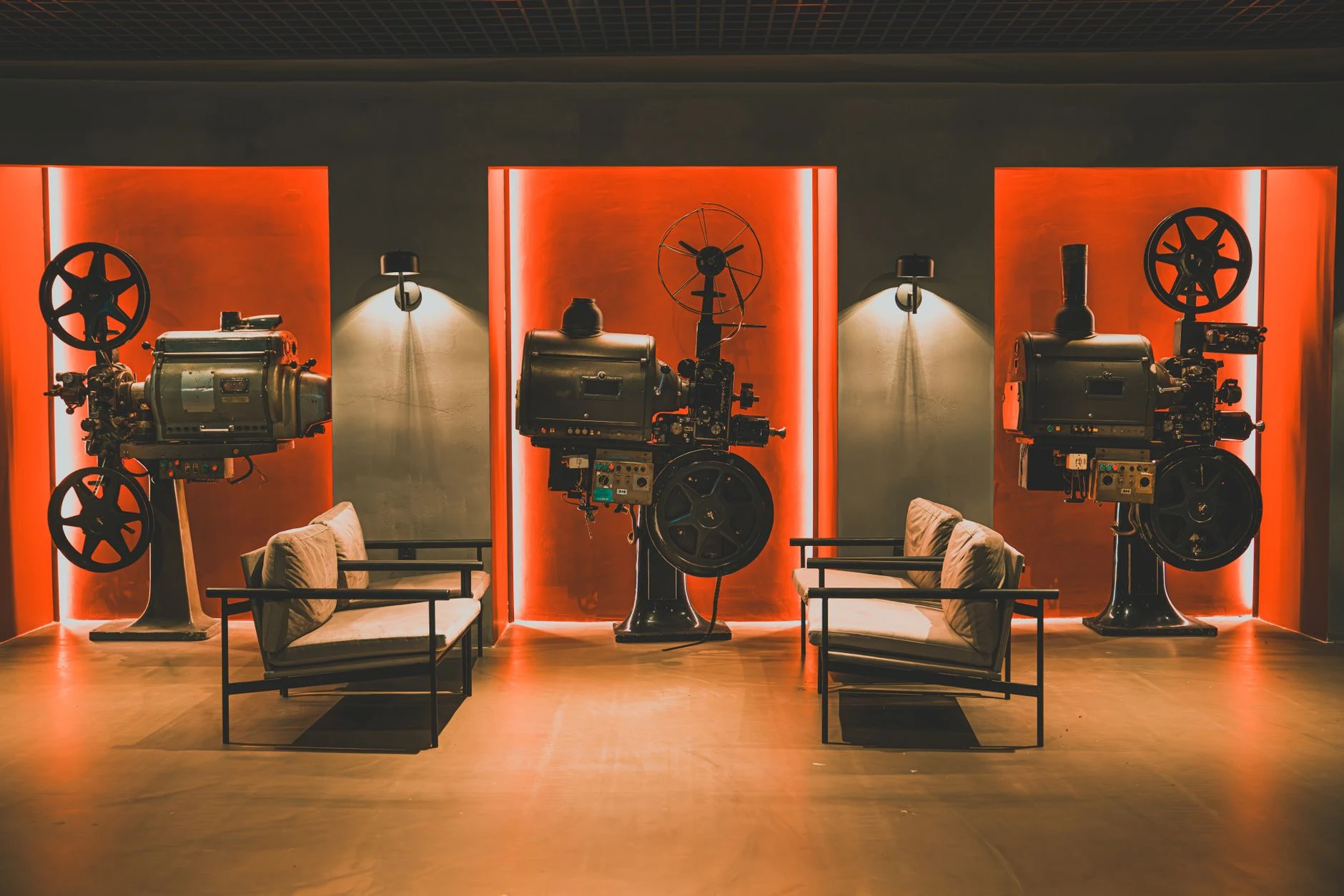
A runtime filter seems to offer a straightforward criterion: find films that run between 90 and 120 minutes. But an editorial range is not, by itself, a legal category, a historical explanation or a recommendation of quality. The documentation consulted allows us to compare it with two Spanish references—a law and an administrative procedure—and with an interview about programming. It is not enough, however, to establish why this runtime may have become widespread or to recommend specific titles with verified running times. The most rigorous reading is therefore a limited one: understand what the range classifies, distinguish it from other institutional uses of time, and identify what remains to be checked.
What is documented: an editorial range and several distinct uses of runtime
“From 90 to 120 minutes” functions here as the name of a search facet. That label can sort films by runtime, provided each record has a reliable running time and the platform applies clear limits. It does not demonstrate that a universal film category by that name exists, or that the works within it share a style, genre or value.The cited Spanish official sources offer different points of reference. The Cinema Law defines a short film, for the purposes of the law, as a film lasting less than 60 minutes, with an exception for works in 70 mm format. This definition sets a threshold for short films; the passage consulted does not define a “feature film” as a film running from 90 to 120 minutes. The administrative procedure for classification for cinema exhibition, meanwhile, sets out runtime brackets in relation to fees: one for works lasting from 90:01 to 120 minutes and another for those from 120:01 onward. A bracket used to calculate a fee is not the same as an aesthetic classification or a general exhibition rule.
Precision matters at the endpoints. The editorial label says “from 90 to 120,” but the cited administrative bracket begins at 90 minutes and one second; it also separates works of up to 120 minutes from those starting at 120 minutes and one second. These cut-offs should not automatically be carried over to the filter: first, we would need to know how the platform handles exact runtimes of 90:00 and 120:00, as well as how it rounds running times. The available documentation does not specify this technical criterion.
Context and evolution: a conversation about programming, not a causal explanation
An interview with Alexander Horwath about programming and comparative cinema relates 90- or 120-minute blocks to ways of organising leisure time, such as visiting a museum or attending a concert. This observation offers a framework for thinking about session length and programming habits. It does not, however, prove that films are generally made to fit this interval, or identify when or why such a pattern may have emerged.This distinction separates a plausible hypothesis from a documented conclusion. A film’s runtime may be shaped by artistic and production decisions, but establishing the weight of each factor would require specific sources: historical studies of film length, production and distribution data, catalogues that can be compared across periods, or documented accounts from filmmakers and programmers. The available research material does not provide this body of evidence. The range therefore cannot be presented as a historical standard or attributed, without further qualification, to the convenience of cinemas or audiences.
Nor is there a basis here for describing an evolution across decades or territories. The Spanish administrative procedure documents a bureaucratic use of certain cut-offs in a specific context; the law sets a legal criterion for short films; the interview offers a reflection on blocks of time. These are different subjects. Combining them as if they formed a linear history of film runtime would overstate what they actually say.
Films and recommendations: why we are not listing titles
Explaining the facet through associated films would require confirming, for each work, at least its identity and runtime using a traceable source. The evidence provided contains no film records, archive records, festival catalogues or rights-holder data that would allow this to be checked. It would therefore be irresponsible to list works or assign them running times based on matching titles or undocumented information.A publishable selection would require identifiable records—for example, from cinematheques, archives, festivals or distributors—that specify which version was timed. A single work may have different runtimes because of differences in editing, projection speed, restoration or edition. Without specifying the version and its provenance, an isolated figure can give a false impression of precision. It would also be necessary to check whether the platform stores runtimes in whole minutes or seconds, and whether the range includes both endpoints.
The absence of titles does not mean that no films fall within the range; it means that the sources available here do not let us document which ones meet the criterion. Nor can a film’s availability for viewing be inferred from the fact that an archive or catalogue records it. A collection record alone does not establish that a viewing option exists in a particular territory and on a particular date.
Limits and uncertainties: how to use the filter without reading it as a promise
The filter can be useful if interpreted modestly: as a tool for narrowing down the approximate length of a viewing session. On its own, it cannot predict a film’s pace, intensity, difficulty or narrative structure. Two works of similar length can organise time in very different ways; establishing this for specific titles would require its own analysis and documentation.The firmest conclusion is also the most limited: legal and administrative uses of runtime exist and should not be confused with the editorial facet, and a published reflection links certain time blocks with programming habits. The sources reviewed do not substantiate a complete explanation of the 90–120-minute range as a production norm, a historical evolution or a set of verified films. Until such evidence is available, the label is useful for searching, not for explaining on its own what kind of cinema you will find.
Editorial note
Article assisted by artificial intelligence. Suitable for publication only after passing the documented automated checks for sources, claims, localisation, originality, quality and media rights.Key takeaways
- The 90-to-120-minute range is a search filter, not a genre or a quality guarantee.
- The cited Spanish law sets a criterion for short films under 60 minutes; it does not define a feature film as a work lasting 90 to 120 minutes.
- The administrative procedure consulted uses runtime brackets to calculate fees, which is a different purpose from classifying films editorially.
- An interview relates 90- or 120-minute blocks to programming habits, but does not prove that they are the standard runtime for films.
- The available evidence is not sufficient to verify titles, version-specific runtimes, historical evolution or availability.

Sources and filmography consulted
- EXCLUSIVA: El Ministerio de Cultura obligará a los cines .... cortosdemetraje.com. Consulted 1 Oct 2026
- ¿Cuál es la mejor duración para distribuir un cortometraje?. ismaelmartin.com. Consulted 1 Oct 2026
- 19 buenas películas que duran menos de 90 minutos y .... www.sensacine.com. Consulted 1 Oct 2026
- Entrevista con Alexander Horwath. Sobre la programación y el .... www.ocec.eu. Consulted 1 Oct 2026
- 30 IMPRESCINDIBLES Películas de menos de 90 minutos Vol II. www.youtube.com. Consulted 1 Oct 2026
- ¿Cuánto tiene que durar una película? Técnicamente, si .... www.facebook.com. Consulted 1 Oct 2026
- Calificación de obras para explotación cinematográfica .... www.cultura.gob.es. Consulted 1 Oct 2026
- ¿Por qué 90-120 minutos es la duración por defecto de .... www.reddit.com. Consulted 1 Oct 2026
- Ley 55/2007, de 28 de diciembre, del Cine.. www.boe.es. Consulted 1 Oct 2026
- 20 películas de menos de 90 minutos para disfrutar este .... www.elespanol.com. Consulted 1 Oct 2026
