Film history
Hong Kong Is Not a Genre: How to Read a Cinema Across City, Languages, and Production Circuits
Reducing Hong Kong cinema to chases, neon, and combat choreography erases a history shaped by dialects, studios, migration, television, co-productions, and incomplete archives. This guide offers verifiable criteria for placing each film in context before turning it into an emblem.
Do Not Use an Aesthetic Label as a Passport
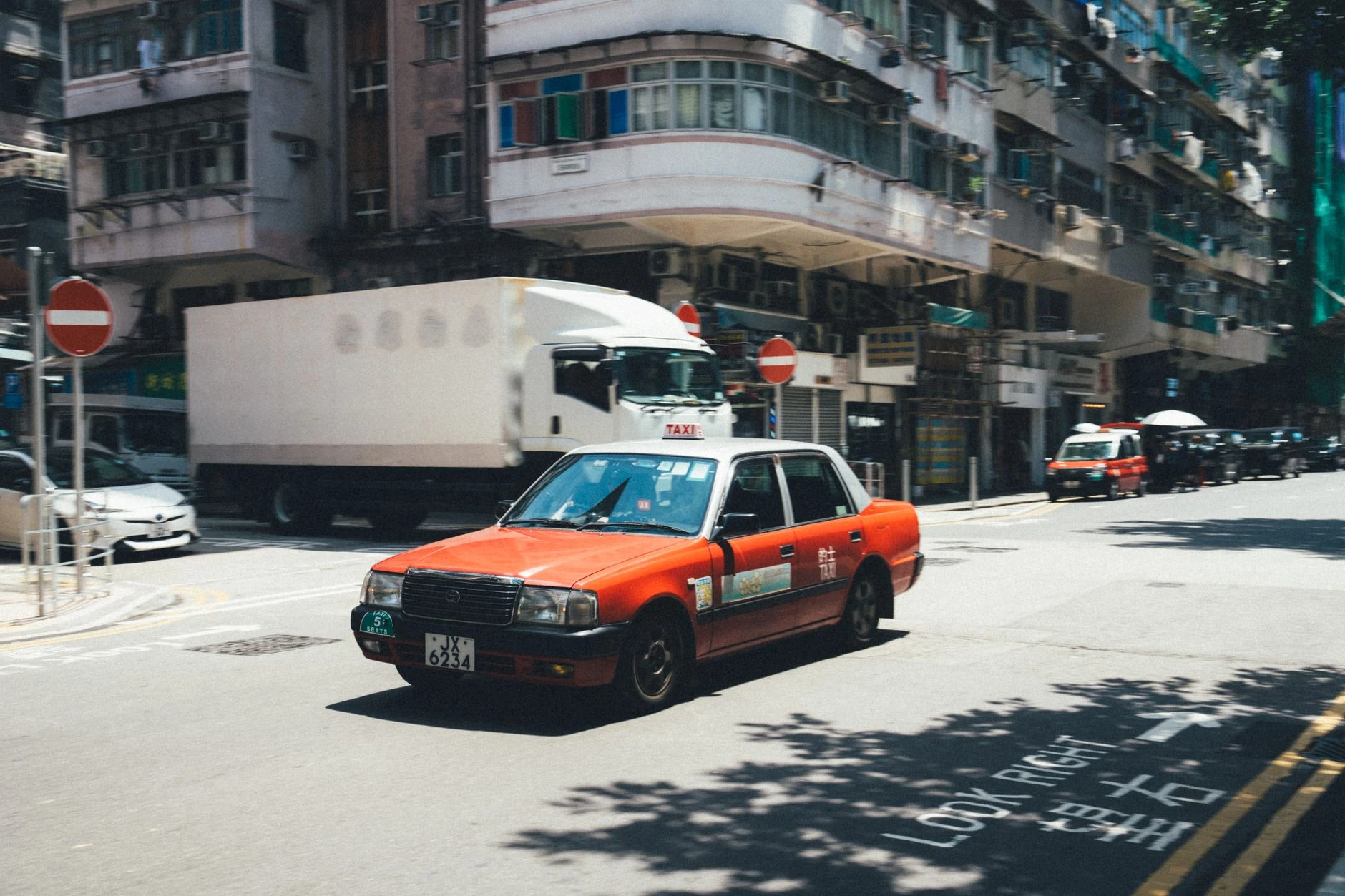
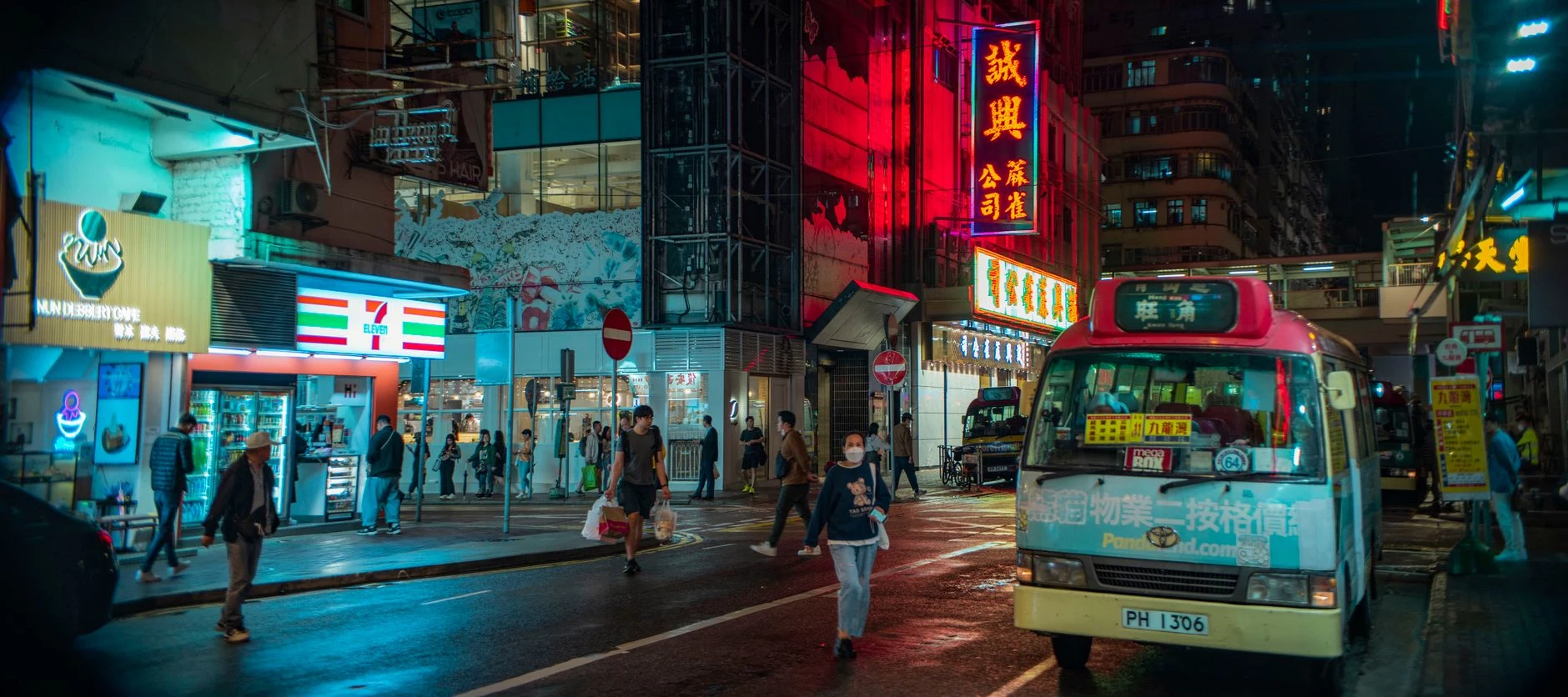
A high-speed chase, a densely framed neighbourhood, or abrupt editing does not in itself make a film Hong Kongese. These are formal choices that can appear in works from many industries. Conversely, a film firmly connected to Hong Kong may take place in Republican China, New York, or an imaginary setting, and may adopt the musical, melodrama, horror, satire, documentary, or art-cinema form.It is better to replace the question “Does it look like Hong Kong cinema?” with four more precise questions: where is its narrative world located? Which companies, people, and resources made the film possible? Which languages structure its soundtrack? Which markets and regulations shaped its release? The result will not be a single identity, but a historical profile.
This distinction also corrects a critical habit: treating the city as transparent scenery. Hong Kong can appear as a recognizable landscape, a transit space, a work destination, a production centre, or even an absence. The filmed city is one analytical dimension; it does not replace credits, nor does it by itself prove industrial affiliation.
Three Categories That Should Not Be Confused
First category: a film set in Hong Kong. Here the criterion is diegetic. What matters is where the character lives, which districts they move through, which institutions they encounter, and how the narrative constructs space. A work may meet this criterion without having been financed, shot, or conceived within the local industry.Second category: a production connected to Hong Kong. Here documents take precedence: production companies, credited producers, financing, laboratories and post-production, technical personnel, permits, locations, distribution format, and language versions. An archival record is more reliable than an intuition based on the cast or language. Institutional filmographies are especially useful because, where information exists, they record language, genre, companies, and crews.
Third category: a work situated within a Hong Kong cinematic tradition. This is the most interpretive category and must be argued, not proclaimed. It may rest on a film’s relationship to local audiences, dubbing practices, television networks, comic conventions, memories of migration, social debates, star systems, or genre genealogies. But it is not an automatic property of a director’s passport or a market label.
A single film may belong to all three categories, two of them, only one, or none. This matrix makes it possible to describe borderline cases without artificially excluding them from analysis.
A Chronology of Transformations, Not Heroes
Early history immediately dispels the illusion of homogeneity. Between 1914 and 1941, production in Hong Kong passed through distinct phases: silent film and early partial sound, the rise of Cantonese talkies, and later changes associated with censorship, war, and the market. Cantonese was crucial, but it did not operate apart from southern Chinese networks or regional circulation.After the Second World War, Hong Kong also became a major platform for Mandarin cinema. The rebuilding of the sector involved professionals and capital displaced from Shanghai, while Cantonese productions coexisted with films in other dialects, including Amoy and Teochew. Calling a film “local” simply because it is in Cantonese therefore simplifies an ecosystem that was multilingual and transregional.
The second half of the 1970s marked another reorganisation. The revival of Cantonese comedy, changes in martial-arts cinema, the emergence of new technical careers, and the arrival of filmmakers trained in television or film schools altered the available vocabulary. The Hong Kong archive has noted that in this period the inherited opposition between “Cantonese films” and “Mandarin films” lost its capacity to describe a cinema increasingly identified as Hong Kong production, with both local and international ambitions.
The so-called New Wave, associated from 1979 onward with several filmmakers who had television experience and international reference points, did not cancel earlier commercial cinema: it reordered it and entered into dialogue with it. A responsible chronology should therefore not mechanically oppose entertainment and innovation. It asks instead which conditions allowed particular ways of filming, editing, and financing to come into contact.
After 1997, the industrial question became still more decisive. Co-productions between Hong Kong and mainland China grew under the CEPA framework, which facilitated access for Hong Kong companies and films to the mainland market under conditions different from those applied to foreign imports. This does not require deciding that every co-production has ceased to be Hong Kongese, nor that it retains an unchanged prior identity. It requires examining the contract, intended market, approval criteria, language versions, creative personnel, and actual distribution.
Languages Are Not a Subtitle Detail
In this cinema, language can be dialogue, a class marker, an index of origin, a market requirement, or a layer added in post-production. Cantonese, Mandarin, English, and other Chinese dialects do not always occupy the same position. At times they organize a community and its untranslatable jokes; at others, they signal migration or distance between characters. They may also answer to an industrial dubbing regime that separates voice, bodily performance, and export version.An attentive viewing must therefore identify the specific version. Note the shooting language when it is documented, the language of the track heard, the presence of dubbing, the writing system used for subtitles, and the territories for which the print was prepared. Do not assume that a Mandarin edition reproduces the same sound work as a Cantonese edition, or that Spanish subtitles preserve shifts in register, kinship terms, or switches into English.
Comrades, Almost a Love Story offers a productive working question rather than a totalizing emblem: its archival record identifies it as a 1996 Cantonese production and places its narrative trajectory between migration from mainland China, life in Hong Kong, and a subsequent move to New York. Rather than using it to illustrate an urban essence, it is more useful to ask what makes Hong Kong a city of arrival, a work space, and an intermediate scale within a diasporic experience.
A Corpus Compared Through Problems
To study internal differences, I propose five stops, always in identified versions. The first is The Arch, by T’ang Shushuen: an independent Mandarin-language film released in 1968 and recently restored from surviving materials, not preserved original negatives. Its methodological value lies in preventing the contemporary city, Cantonese, and studio production from being treated as universal requirements.The second is a postwar Cantonese comedy or melodrama with documented regional circulation. She Said ‘No’ to Marriage but Now She Says ‘Yes’, from 1952, makes it possible to observe a Cantonese production and recall that Hong Kong and Singapore shared reception circuits; it also prevents popular melodrama from being treated as a minor appendage to history.
The third stop brings together films from the transformations of the 1970s and the New Wave. Here, comparison should not be limited to “action versus auteur cinema.” Compare production methods, the use of humour, the presence of television work in professional trajectories, and the relationship between generic tradition and technical innovation.
The fourth, Comrades, Almost a Love Story, shifts attention from the urban postcard to mobility: rents, employment, shared rooms, commercial music, language, and migration routes. The fifth, Fruit Chan’s The Midnight After, helps ask how a contemporary work can turn public transport, tunnels, neighbourhood shops, and urban emptiness into genre problems rather than automatic proof of authenticity.
These stops are not a list of “must-sees.” They are pairs of questions: independence and archive; dialect and market; television and renewal; migration and city; everyday infrastructure and the fantastic. A valid route changes titles if availability or the verifiable version changes, but retains the questions.
A Research Protocol Before Assigning Affiliation
Start with the on-screen credits and compare them with an institutional filmography. Record the original title, alternative titles, year, running time, companies, producers, director, screenwriter, cinematography, editing, sound, language, and the copy’s format. If two sources disagree, retain that disagreement rather than resolving it through conjecture.Then reconstruct circulation. Was there a local release, festival screening, export, home edition, restoration, or re-release? Which body owned or preserved the materials? The restoration of The Arch illustrates why these questions matter: knowing that the original negative was lost and that the restoration used distribution prints preserved in Berkeley and at the BFI changes the historical status of the version being watched.
Only then move to formal analysis. Describe a sequence through observable actions: approximate duration, camera position, movement, the relationship between voice and body, entrances into and exits from the frame, music, ambient noise, cut, and subtitles. Distinguish description from interpretation. “The camera maintains a distance” is an observation requiring review of the shot; “the distance expresses alienation” is a debatable reading requiring further argument.
This article does not substitute critical reputation, trailers, or clips for complete viewing. In particular, any publication promising scene analysis must retain dated viewing notes, an identified copy, and, where relevant, information about restoration or dubbing.
Editorial Route and the Limits of Availability
The follow-up route should be published as a verifiable itinerary, not as a permanent link carousel. For every title, record the territory, date and time of verification, platform or physical edition, audio language, subtitles, running time, restoration, and access restrictions. If the publication territory is the United States, availability observed in Hong Kong, the United Kingdom, or at a festival does not amount to availability in the United States.As of the stated editorial date, 17 September 2026, availability in the United States must not be declared without a manual check carried out that same day or later. For that reason, this version recommends the method and corpus but does not certify where to watch each film. Any promise of access can be activated only after this territorial verification.
The practical conclusion is less spectacular and more useful: do not ask whether a film “looks like” Hong Kong. Ask what specific combination of city, languages, labour, capital, regulation, archive, and spectators places it—or does not place it—within this history. Hong Kong cinema then ceases to be a stylistic display case and reappears as a plural, contested, and changing cinema.

Sources and filmography consulted
- openurl.ebsco.com. openurl.ebsco.com. Consulted 17 Sep 2026
- www.filmarchive.gov.hk. www.filmarchive.gov.hk. Consulted 17 Sep 2026
- www.filmarchive.gov.hk. www.filmarchive.gov.hk. Consulted 17 Sep 2026
- www.fdc.gov.hk. www.fdc.gov.hk. Consulted 17 Sep 2026
- www.mplus.org.hk. www.mplus.org.hk. Consulted 17 Sep 2026
- scholars.ln.edu.hk. scholars.ln.edu.hk. Consulted 17 Sep 2026
- academic.oup.com. academic.oup.com. Consulted 17 Sep 2026
- journals.ed.ac.uk. journals.ed.ac.uk. Consulted 17 Sep 2026
- experts.illinois.edu. experts.illinois.edu. Consulted 17 Sep 2026
- www.filmarchive.gov.hk. www.filmarchive.gov.hk. Consulted 17 Sep 2026
- www.filmarchive.gov.hk. www.filmarchive.gov.hk. Consulted 17 Sep 2026
- www.filmarchive.gov.hk. www.filmarchive.gov.hk. Consulted 17 Sep 2026
- www.tandfonline.com. www.tandfonline.com. Consulted 17 Sep 2026
- www.mplus.org.hk. www.mplus.org.hk. Consulted 17 Sep 2026
- www.tid.gov.hk. www.tid.gov.hk. Consulted 17 Sep 2026
- academic.oup.com. academic.oup.com. Consulted 17 Sep 2026
- www.ofnaa.gov.hk. www.ofnaa.gov.hk. Consulted 17 Sep 2026
- www.tandfonline.com. www.tandfonline.com. Consulted 17 Sep 2026