Film history
How Science Fiction Cinema Has Changed: A Critical Map with Documented Limits
This AI-assisted article explains what defines science fiction cinema, how it consolidated as a genre, what narrative resources distinguish it, and what limits the available documentation imposes. It offers a map for reading catalogue works without turning labels into certainties.
Content prepared with AI assistance and documented automated checks. This does not imply human review or first-hand viewing. Editorial methodology
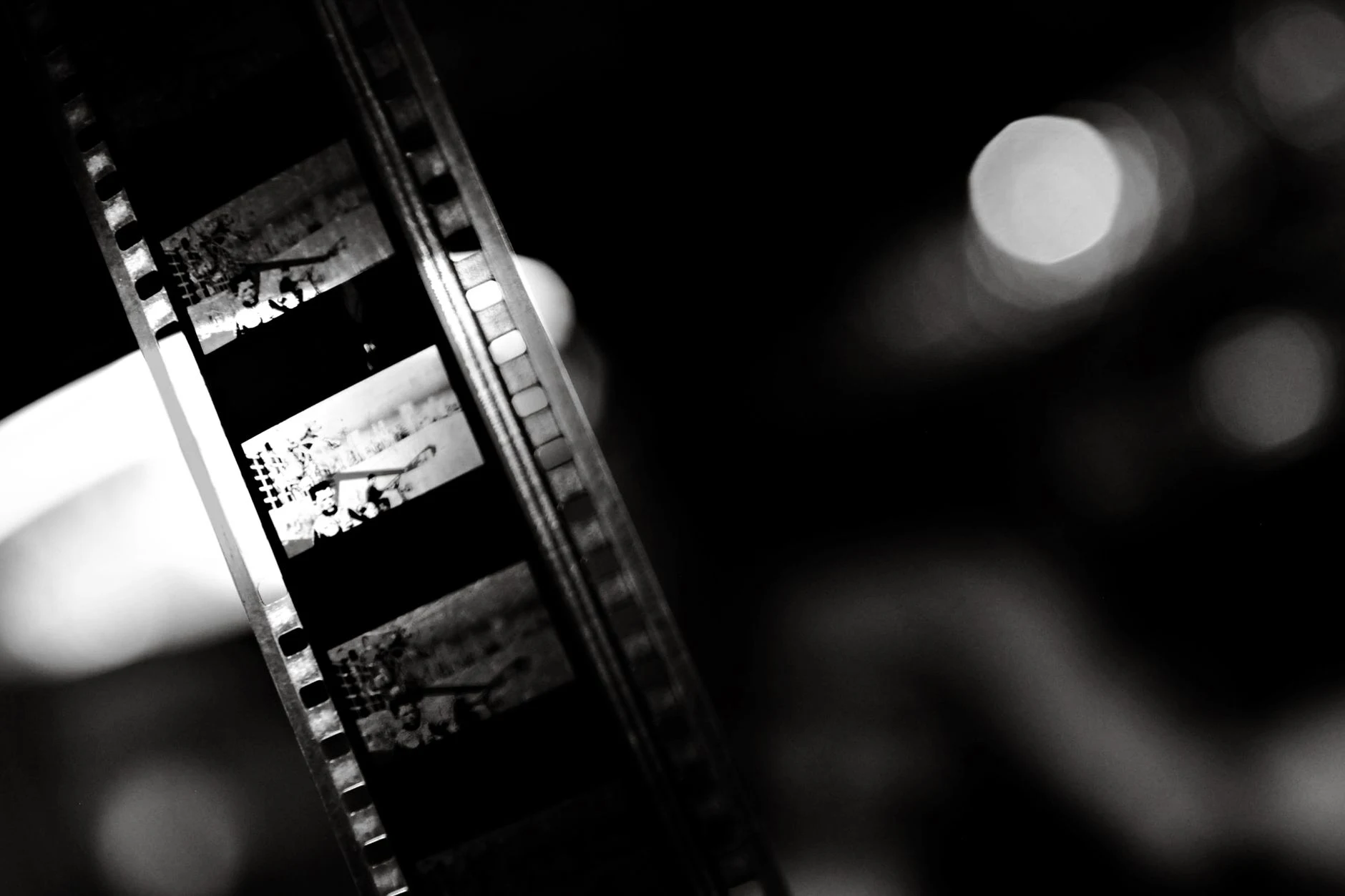
Science fiction cinema cannot be reduced to spaceships, robots, or distant futures. Its history is that of a genre that has served to think about science, technology, power, and collective responsibility. This AI-assisted article starts from a practical question: what can be rigorously affirmed when speaking of its evolution, and what must remain a hypothesis? The recovered sources allow us to sustain that the genre has been linked to Hollywood production, though also to Europe; that between the 1940s and 1960s it went through stages of consolidation; and that its relationship with philosophy and science teaching remains relevant. They also show that the popular image of science has been transformed by cinema, and that current technological advances bring back into debate what once seemed speculation. The goal is not to offer a list of titles or a closed genealogy, but to give the reader a critical map: definition, historical changes, narrative resources, subgenre limits, and criteria for reading catalogue works. Each important claim is supported by recovered sources; where documentation falls short, the text signals it without turning uncertainty into an obstacle.
What Defines Science Fiction Cinema and What It Is Not
Defining science fiction cinema requires separating three things: the setting, the plot, and the speculative function. It is not enough for a film to be set in the future, in space, or in a technological society to belong to the genre. What the available sources allow us to underline is its link to scientific ideas and reflection on reality. In this sense, cinematic science fiction is not just a set of images, but a mode of interrogating how science explains the world and how that explanation changes. The narrative dimension also matters: adventure and intelligent speculation appear as elements that sustain the genre's interest. This does not mean every science fiction film is didactic, but its strength usually lies in the ability to turn a hypothesis into a dramatic problem. Therefore, when reading a work, it is advisable to ask what scientific, technological, or social idea is at stake, what responsibility is attributed to science, and what kind of future is presented as possible, probable, or frightening. The definition should not be confused with fantasy, horror, or generic dystopia: those families can intersect with science fiction, but they are not exhausted by it. The useful limit is the speculative function: if the film uses science or technology as a tool to think about the human condition, it approaches the genre; if it only uses them as decoration, the relationship is weaker. This criterion helps avoid artificial lists and understand why science fiction cinema has been able to change without ceasing to be recognizable.Documented Origins and Historical Changes
The sources do not allow reconstructing a single origin or a foundational date. What is documented is that science fiction cinema has historically functioned as a genre produced mainly in Hollywood, though also in Europe. This dual presence prevents reading the genre's history as an exclusively American one. Another useful data point is that between the 1940s and 1960s, science fiction cinema went through a series of stages that consolidated it. This is not a straight line, but a process in which the genre incorporated itself into popular culture and reflection on science. The sources also situate cinema as a cultural reference and sociological phenomenon, which explains why its changes cannot be understood solely from technique or script. When a society undergoes scientific, political, or technological transformations, science fiction cinema often acts as a testing ground: it allows imagining consequences, measuring fears, and formulating questions that the present has not yet resolved. Therefore, speaking of historical changes is not just enumerating decades, but identifying what type of questions dominated each moment. In subsequent decades, the genre expanded its themes and forms, although the recovered sources do not allow detailing a complete chronology. It is prudent to affirm that there was consolidation, expansion, and redefinition, and to reserve for other research the details not documented in the current file.Narrative and Formal Resources
The term formal can be misleading if understood as a list of shots, effects, or visual styles. The available sources do not allow describing a unique visual grammar of science fiction cinema, but they do allow identifying resources of meaning that traverse the genre. The first is speculation: the film poses a situation that does not yet exist or only partially exists, and uses it to examine present reality. The second is scientific responsibility: cinema has changed the popular image of what was a serious reflection on the power of science and its final responsibility. This change is not minor, because it turns science into a moral character, not just a technical background. The third is the relationship with philosophy: the scientific ideas with which we explain reality change, and science fiction cinema participates in that movement. That is why many works of the genre function as thought exercises, even if they do not present themselves as explicit philosophy. There is also a pedagogical resource: science fiction cinema can be used in science teaching, not as a substitute for science, but as an entry point to discuss hypotheses, consequences, and values. On the narrative plane, adventure and speculative intelligence guarantee the genre's interest. This explains why cinematic science fiction can be both entertainment and reflection. When analyzing a film, it is advisable to observe how the speculative idea is introduced, what dilemma it produces, and what type of character embodies it. This avoids reducing the genre to its effects and recovers its dimension of thought.Subgenres and Limits
Speaking of subgenres is useful, but also dangerous if it becomes a rigid taxonomy. The recovered sources do not allow establishing a complete classification of science fiction cinema subgenres, so this article does not invent categories. What can be affirmed is that the genre has limits that should be respected. Not every futuristic film is science fiction, nor does every film with technology belong to that family. The boundary is not only in content, but in function: science fiction usually uses science, technology, or exploration as a means to think about society, identity, power, or the future. Therefore, a horror film can use a laboratory, an adventure film can travel to space, and a drama film can deal with artificial intelligence without, by itself, becoming science fiction. The key is the speculative weight. It is also necessary to distinguish between hard, soft, or social science fiction only when documentation allows it; otherwise, those labels become decorative. In the catalogue, this precaution avoids two errors: including works that only touch the genre in passing and excluding works that transform it. A subgenre is not a box, but a zone of affinity. The best way to read it is as a question: what type of future, what type of science, and what type of responsibility is at stake? With that question, the reader can recognize variations without needing a closed list.Catalogue Works and How to Read Their Evolution
This article cannot affirm that a specific film belongs to the catalogue or describe its plot, because the recovered sources do not include work sheets. This limitation does not prevent, however, offering criteria for reading the genre's evolution through available works. If a catalogue film explores the responsibility of science, its reading connects with the transformation of the popular image of science. If it presents a technology that forces a rethinking of identity, power, or society, it participates in the relationship between science fiction and philosophy. If it sets its story in a near future and uses speculation to criticize the present, it inscribes itself in the genre's critical function. If, instead, technology appears only as a setting for action, its relationship with science fiction may be more superficial. Historical context also matters: a work produced in a period of genre consolidation can dialogue with the documented stages between 1940 and 1960, although a direct influence cannot be affirmed without more sources. For the reader, the practical utility is simple: before classifying a film, it is advisable to observe what scientific or social question sustains it, what type of future it imagines, and what dramatic consequences it draws from that imagination. Thus, the catalogue ceases to be a list of titles and becomes a map of changes. The evolution of science fiction cinema is not measured only by its effects, but by the way each work turns speculation into a human problem.Conclusion: A Map, Not a List
The evolution of science fiction cinema cannot be summarized in an optimistic phrase or a nostalgia for a supposed original purity. What is documented shows a genre that has changed in scale, themes, and function. It has passed from being a product associated mainly with Hollywood to a family with European presence and the capacity to reflect on science, technology, and society. It has consolidated historical stages that allow speaking of changes, though not of a single line. And it has maintained a close relationship with philosophy and science teaching, because the ideas with which we explain reality are not static. Current technological advances bring back into debate what once seemed science fiction, but also force a distinction between what systems do and what systems think. This distinction is important: the genre should not become a prophecy, but a tool of thought. For the reader who wants to explore the catalogue, the best attitude is that of a cartographer: use the definition to orient oneself, historical changes to situate each work, narrative resources to understand its strength, and documentation limits to avoid exaggeration. Thus, science fiction cinema ceases to be a label and becomes a way of looking at the present from the future.Key takeaways
- Science fiction cinema is defined not only by futures or technology, but by its speculative function on science and society.
- Sources document the genre's consolidation between 1940 and 1960, though they do not allow a complete chronology.
- The relationship with philosophy and science teaching helps understand why the genre remains relevant.
- Current technological advances bring back into debate what once seemed science fiction, but require distinguishing systems that act from systems that think.
- To read catalogue works, it is advisable to observe what scientific or social question sustains the film and what type of future it imagines.

Sources and filmography consulted
- 🤖🎬 Lo que parecía ciencia ficción en el cine hoy vuelve a .... www.facebook.com. Consulted 21 Oct 2026
- (PDF) El cine de ciencia ficción como máquina del tiempo. www.researchgate.net. Consulted 21 Oct 2026
- HISTORIA del CINE de CIENCIA FICCIÓN y sus .... www.youtube.com. Consulted 21 Oct 2026
- ¿Cómo ha cambiado el cine desde la década del 2000?. www.reddit.com. Consulted 21 Oct 2026
- Cine de ciencia ficción - Wikipedia, la enciclopedia libre. es.wikipedia.org. Consulted 21 Oct 2026
- El cine de ciencia ficción del siglo XX (Primera parte). windumanoth.com. Consulted 21 Oct 2026
- La ciencia ficción en el cine - Gaceta CCH. gaceta.cch.unam.mx. Consulted 21 Oct 2026
- A propósito de la Ciencia Ficción en el cine. www.centrocp.com. Consulted 21 Oct 2026
- El cine de ciencia ficción - Revista Mètode. metode.es. Consulted 21 Oct 2026
- El cine de ciencia ficción para desarrollar cuestiones .... www.redalyc.org. Consulted 21 Oct 2026
