Craft and technique
How to read a long take without confusing duration, movement and apparent continuity
A long take is not simply “a camera that does not cut.” This guide offers a method for describing what organizes the image when editing is no longer visible: duration, framing, movement, performance, sound, light, choreography and, in some cases, continuity constructed in post-production.
First: separate four terms that are often mixed up
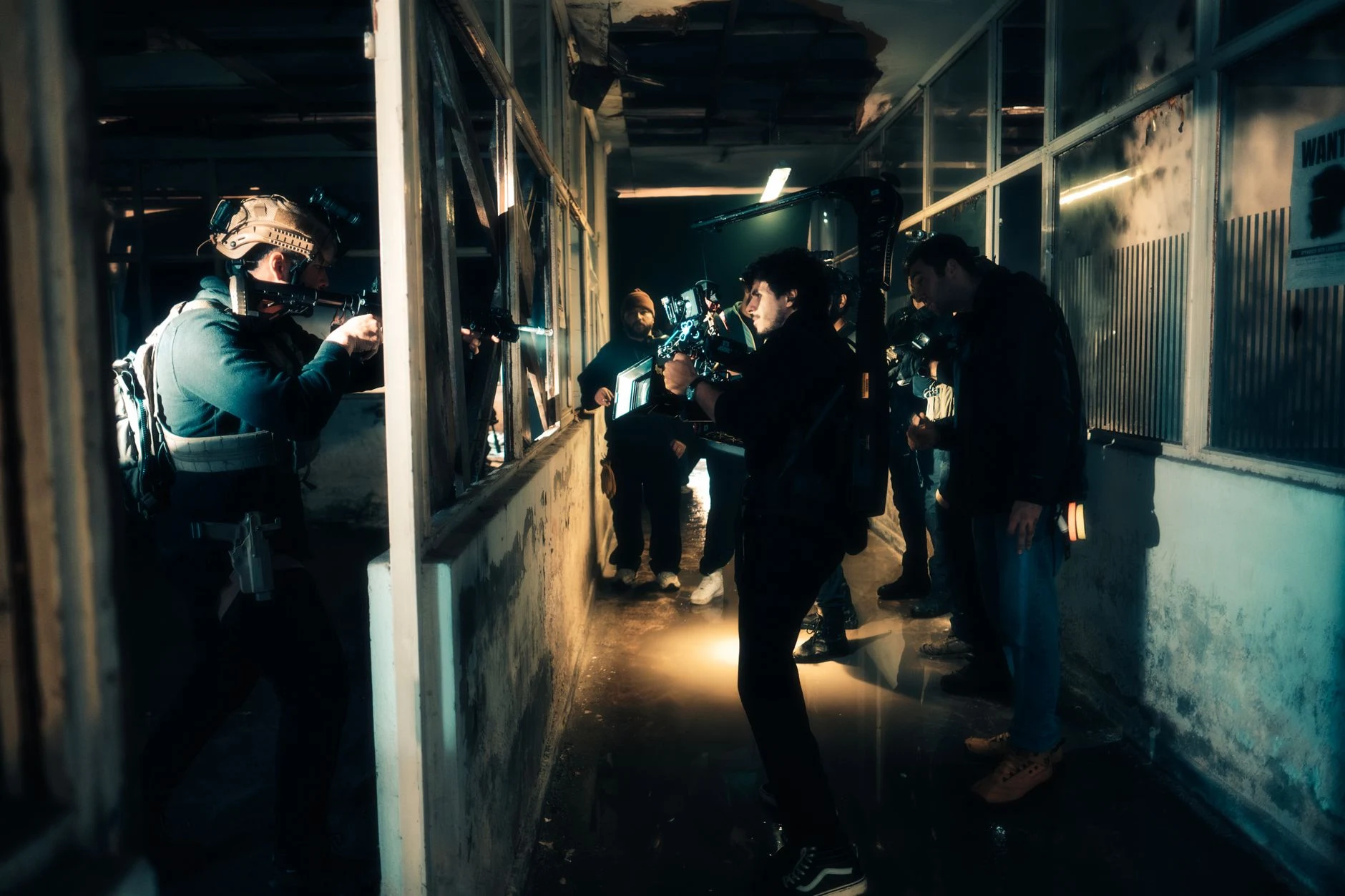
Depending on context, shot denotes both the visible unit between two cuts and the scale of the framing: long shot, medium shot, close-up. This double meaning accounts for much of the confusion. In this guide, shot means the image unit in the final edit; when referring to size, we will say scale or framing.A take is a specific filming attempt: the camera begins recording, the action happens, and recording stops. A crew may repeat the same action many times; each repetition is another take. A take does not guarantee that its material reaches the film intact, and a finished shot does not itself reveal how many attempts preceded it.
Long take names a relation of duration, not a fixed type of movement. It may be static, follow a character, pan, use a zoom or combine several movements. Nor does it necessarily mean a long shot: a lengthy take may remain close to a face. A sequence shot is more demanding: sustained continuity covers an extended dramatic unit. Professional and academic usage differs somewhat; more useful than policing a label is stating which unit is being described.
The two-pass protocol: experience the scene, then map it
On the first pass, take no notes. Ask only what the duration makes you feel: waiting, confinement, curiosity, intimacy, discomfort, exhilaration? Identify the moment when your attention changes object or character. That initial response matters because a long take is not a test of skill; it is an experience organized in time.On the second pass, divide the take into perceptible changes, even without cuts. Note the approximate moment when framing changes; someone enters or exits; a figure moves into the foreground; focus shifts; the direction of a gaze changes; a sound becomes active; or light changes. There is no need to time it to the frame: a mark such as 01:12, “enters in the background,” or “the conversation is heard offscreen” is enough to reconstruct a logic.
Then write a verifiable sentence: “The camera does not move closer; the characters reduce the distance,” or “Sound announces a presence before the frame shows it.” This kind of note is better than “the shot is impressive,” because it identifies a concrete operation while leaving its effect open to discussion.
When there is no visible cut, mise-en-scène edits from within
The absence of a visible cut does not mean the absence of selection. Mise-en-scène can shift the center of interest through bodies, objects, depth, entrances and exits, variations in light or changes in focus. If one character crosses in front of another, temporarily conceals one piece of information and reveals another, the frame has changed its priority even if the camera has not moved. If a door opens in the background or a voice breaks in from offscreen, the viewer mentally reorganizes the space.Observe choreography too. In a complex take, performers, extras, camera, props, lights and sound may depend on highly precise marks and timing. Precision, however, does not mean rigidity: staging may sometimes preserve a hesitation, a pause or an apparent mistake in order to retain the vulnerability of a performance. The productive question is not “how hard was this to make?” but “what relation among the elements makes this duration possible?”
Sound deserves its own column in your notes. It can connect spatially separated areas, sustain an action remaining outside the frame, anticipate an entrance or contradict what is visible. An apparently static shot may be highly dynamic if the soundtrack repeatedly shifts attention.
Hidden editing: how to form a hypothesis without trying to expose the film
Apparent continuity may be made from several takes joined through editing, digital compositing, stabilization, background replacement, light retouching or a combination of such methods. Areas traditionally favorable to a transition include framing covered by a dark or very close surface, a fast whip movement producing motion blur, a uniform wall, dense smoke, an explosion, an abrupt exposure change, or passage through an image region with little detail. These are possible technical opportunities, not proof.Avoid declaring “there is a cut” because the camera passes a pillar or because you notice something unusual in the movement. Platform compression, blur, image correction or incomplete perception can create false suspicions. Conversely, a very well-executed join may leave no observable sign. Production documentation, a technical interview or visual-effects material are much stronger evidence than isolated viewing.
It is therefore helpful to use three levels of language: “continuity is perceived,” “the shot presents a possible join point,” and “production documents a join.” The first describes experience; the second offers a revisable hypothesis; the third reports a fact. This distinction protects analysis from an obsession with the trick and returns attention to narrative effect.
Sustaining or fragmenting: two ways of constructing time, space and performance
A cut can compress an action, change scale, isolate a reaction, conceal a wait or connect different spaces. A long take temporarily gives up that visible fragmentation, but it does not require time to feel “real.” Music, performance, camera movement, the internal speed of bodies and offscreen information can stretch or accelerate the perception of the same duration.Sustaining a take can make viewers share a wait, examine spatial relations or experience the physical cost of movement. It can also create distance: keeping a character small within an environment does not guarantee intimacy. Likewise, an extended close-up can intensify a presence, but can also make it opaque or uncomfortable if it offers no legible reaction.
Spatial continuity does not depend solely on avoiding cuts. Continuity editing can preserve orientation, action and causality across several shots; research on event segmentation indicates that changes in space, time and action, together with editing transitions, influence how viewers perceive boundaries between events. The long take offers another negotiation: it lets viewers update their spatial map without a cut explicitly reorganizing it.
A short film-club template, and a necessary limit
To discuss a take, try this checklist: approximate duration; start and end points; initial and final scale; camera position and movements; who enters, exits or obscures whom; changes in focus and light; sounds in and outside the frame; shifts in attention; possible evidence of constructed continuity; proposed dramatic effect; detail you would check again.In discussion, separate description from interpretation. “The camera pulls back as the character advances” is an observation. “The scene expresses abandonment” is a reading that must be supported by that observation and other elements of the film. “There are no cuts” can be asserted with confidence only where reliable documentation exists, or when speaking strictly about what is visible: “I do not perceive cuts.”
The final critical limit is simple: duration does not certify merit, authenticity or immersion. A long take can be necessary, ornamental, comic, exhausting, revealing or indifferent. Its value lies not in overcoming an abstract technical difficulty, but in the precision with which duration, framing, bodies, sound and space make us think or feel something another editing design would not produce in the same way.
Sources and filmography consulted
- theasc.com. theasc.com. Consulted 11 Sep 2026
- theasc.com. theasc.com. Consulted 11 Sep 2026
- theasc.com. theasc.com. Consulted 11 Sep 2026
- theasc.com. theasc.com. Consulted 11 Sep 2026
- theasc.com. theasc.com. Consulted 11 Sep 2026
- Secuencia. Universitat Oberta de Catalunya. Consulted 11 Sep 2026
- books.google.com. books.google.com. Consulted 11 Sep 2026
- Rodeo helps Birdman soar with invisible FX. fxguide. Consulted 11 Sep 2026
- The Impact of Continuity Editing in Narrative Film on Event Segmentation. Washington University in St. Louis. Consulted 11 Sep 2026
- theasc.com. theasc.com. Consulted 11 Sep 2026
- theasc.com. theasc.com. Consulted 11 Sep 2026
- raindance.org. raindance.org. Consulted 11 Sep 2026
- books.google.com. books.google.com. Consulted 11 Sep 2026
- Event perception and memory. PubMed Central. Consulted 11 Sep 2026
- Glossary of Film Terms. University of California, Irvine. Consulted 11 Sep 2026
- Opposites Attract: Cold War. American Society of Cinematographers. Consulted 11 Sep 2026