Craft and technique
How to Watch Archival Footage: A Guide to Distinguishing Evidence, Memory and Decoration in Film
A pre-existing image may provide information, summon a past or simply create a feeling of authenticity. Before accepting it as evidence, it is worth asking where it came from, what has happened to it and what claim it now supports.
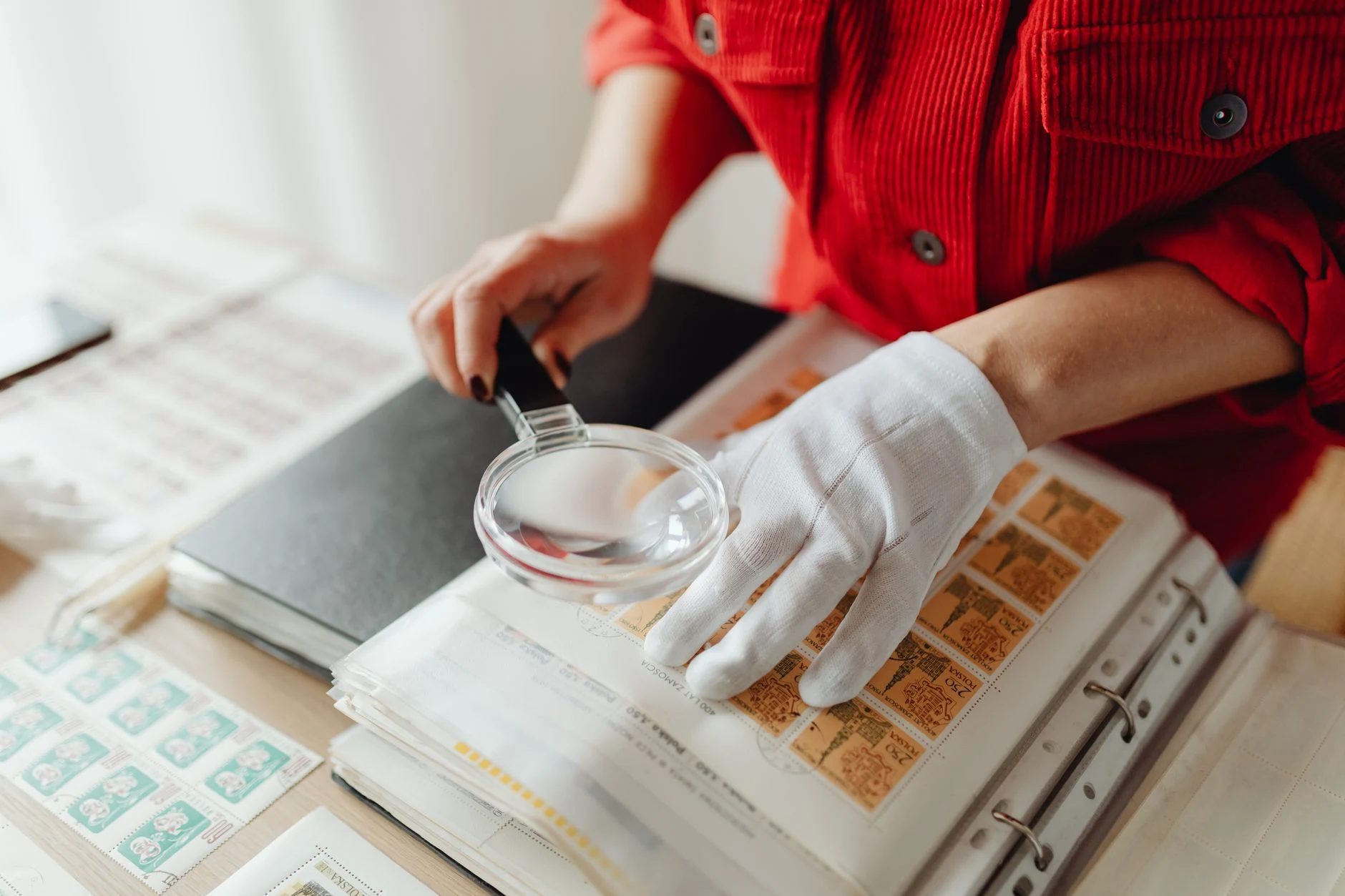
Archive, found footage and a useful definition for viewing
In everyday usage, we call images archival when they are preserved by a film archive, television broadcaster, public institution, company, family or community. For viewers, however, something else also matters: the sense that the material comes from a time, place or prior use that predates the film they are watching.That distinction explains why the boundary between “archival footage” and “found footage” is not entirely fixed. The former usually foregrounds provenance, preservation and cataloguing; the latter, reappropriation and new editing. A home movie donated to a collection may be both. A digital video downloaded from a platform may not belong to an institutional archive, yet it can create the same effect of a reused document. It is therefore more prudent to describe what we know about its provenance than to apply a label as though it settled every question.
Nor should access be confused with reliability, or public-domain status with neutrality. A copy available online may be incomplete, may carry a title imposed later, or may show a transfer different from the one consulted by the filmmaker. Conversely, a shot’s lack of public availability does not make it suspicious. The critical task is to demand a chain of context proportionate to the force of the claim the film builds with it.
The four-question protocol
First question: where does it come from, when, and from where precisely? Look for captions, archive credits, dates, collection names and locations, if the film provides them. Note the exact wording: “Europe, 1930s” is not the same as “newsreel produced in Berlin in 1936.” If there is no identification, write “unidentified,” rather than turning a hypothesis into a fact.Second question: under what conditions was it produced? Ask who filmed it, for whom, for what purpose and from what position. A military shot, a newsreel, a tourist film, a police record, an institutional advertisement and a family film do not bear the same relationship to what they show. An image’s being contemporary with an event does not free it from interests, access restrictions or staging.
Third question: what does the current film do to it? Watch the beginning and end of the shot: a crop may remove a gesture, an intertitle or a mark of origin; slow motion may make an ordinary action solemn; a loop may turn an instant into a symbol. Listen, too. Music, voice-over, effects and silences can direct interpretation as powerfully as a visual cut. If the audio sounds clean over a silent, old or damaged image, do not automatically conclude that it is fake: note that the sound probably belongs to the new work and check the credits.
Fourth question: what claim does the film make, and how much can the shot support? Distinguish among “we see that X happened,” “this image evokes how X was remembered” and “this image creates an atmosphere of X.” The first requires the strictest verification of date, place and continuity. The second may be legitimate even with partial information, provided it is not presented as conclusive proof. The third is not inherently a flaw, but it deserves to be recognized as expressive use rather than confused with evidence.
Three functions: evidence, memory and texture
Evidence does not mean absolute certainty; it means that the film uses the fragment to support a specific claim. The Atomic Cafe is a useful case: an assemblage built from institutional, television and newsreel material about US nuclear culture. Its credits detail archival sources, and the film arranges official statements, informational films and propaganda without adding an explanatory narration that corrects them from outside. Watching it, it is not enough to think, “these are real images”: we need to attend to who is speaking, for which audience each document was produced and what contrast their juxtaposition creates. Editing may reveal a contradiction between institutional promise and image, but it does not turn every isolated shot into a total explanation of an era.Memory describes a use in which the fragment does not merely inform us about a past, but makes its survival, gaps or transmission visible. Dawson City: Frozen Time makes it possible to study this function with documentary support: its starting point is a collection of nitrate films found in Dawson City and subsequently preserved by Canadian and US institutions. The film links the fragments to the history of the town, film exhibition and the collection itself. Here, scratches, losses and deterioration may be read as material traces of a preservation history; that reading does not replace the history of each title, but it prevents wear from being treated as a mere nostalgic filter.
Texture or atmosphere names the case in which the fragment’s materiality carries as much weight as its referent. Decasia is particularly instructive because it brings together deteriorated nitrate films from several collections and structures them around a contemporary musical composition. Viewers can observe that chemical decomposition invades, obscures and transforms the filmed figures. It is defensible to interpret the film as shifting attention from “what happened before the camera” to “what happens to the medium and to our gaze.” But this should be phrased as an interpretation: the presence of deterioration does not, by itself, prove a particular ethical, political or historical intention.
The three functions can overlap. A war image may provide information, activate collective mourning and, through its grain or instability, create a sensory quality. The error is not noticing that mixture, but allowing aesthetic emotion to masquerade as factual verification.
Formal signals worth noting
Pause when archival material appears and note an approximate timecode. Then review six operations: repetition, speed change, cropping or reframing, colour modification, superimposed text, and altered or added sound. Add two questions: does the film signal the intervention or make it invisible? Does that intervention limit what I can know about the shot?Colourisation, motion interpolation and digital clean-up require particular attention. They may improve legibility, but they may also erase indications of the medium or make a historical image seem recorded with contemporary technologies. Not every restoration is deceptive, and not every intervention needs to be visible within the narrative. What is reasonable is to look for a restoration note, technical credits, production materials or an archive record when the intervention is decisive to the film’s argument.
Also observe the relationship between shot and word. When voice-over names a date, a country or a victim while we see unidentified images, viewers receive a powerful association even if the exact correspondence remains unproven. The proper note is not “the film lies,” but “the correspondence between image and claim requires an additional source.”
Ethical limits: seeing does not mean having the right to reuse
Images of violence, death, persecution, internment or humiliation raise more questions than a simple matter of historical accuracy. Ask whether the film identifies people where it can, explains the context of production and gives affected communities room to contribute to interpretation. In colonial, police, medical or institutional material, the fact that someone appears before a camera does not demonstrate consent to the later circulation of their image.Avoid two shortcuts. The first is: “it is in an archive, therefore it can be used without limits.” Custody, access, ownership and ethical restrictions are different matters. The second is: “if rights exist, it can never be quoted or shown.” Legal exceptions depend on jurisdiction, purpose, the amount reused and other factors; this guide is not a substitute for legal advice. For viewers, the relevant question is whether the film offers clues about permission, attribution, context and sensitivity, and whether it acknowledges the limits of what a new edit can repair.
Dignity also has a formal dimension. Repeating a death, slowing an assault or scoring suffering can turn an image necessary to understand an event into spectacle. No mechanical rule resolves every case. There is, however, a minimum requirement: describe what the film does before attributing an intention to it, and consider who bears the cost of that circulation.
A note-taking template for responsible viewing
For each fragment, divide a page into three columns: observation, documentation and interpretation. Under observation, write: approximate minute; duration; black and white or colour; cuts; speed; captions; sound; visible people and places. Under documentation, write only what the film credits or what you can confirm later: archive or collection; original title; approximate date; creator or producing institution; record consulted; restoration condition; known rights or restrictions. Under interpretation, formulate a cautious sentence: “the editing suggests…,” “the music makes … unsettling,” “the lack of identification makes it difficult to verify…”.Finish with five questions: what do I know for certain? What only seems likely? What association does the editing create? What primary source might confirm or qualify my reading? What do I have no basis to accuse? If a doubt matters, first look for the full credits and the collection record; then interviews or production notes; lastly, studies that situate the work. Turning an uncertainty into a verifiable question is more rigorous than turning it into a theory of deception.
Watching archival material critically does not mean demanding that every film become a catalogue. It means recognizing that each fragment arrives with an earlier history and enters a new one. The best viewer is not the one who recognizes the most images from memory, but the one who knows when an image documents, when it remembers, when it decorates and when it needs someone to restore its context.
Sources and filmography consulted
- escholarship.org. escholarship.org. Consulted 11 Sep 2026
- cinemadev.cntv.usc.edu. cinemadev.cntv.usc.edu. Consulted 11 Sep 2026
- core.ac.uk. core.ac.uk. Consulted 11 Sep 2026
- copyright.gov. copyright.gov. Consulted 11 Sep 2026
- guides.loc.gov. guides.loc.gov. Consulted 11 Sep 2026
- www.loc.gov. www.loc.gov. Consulted 11 Sep 2026
- www.researchgate.net. www.researchgate.net. Consulted 11 Sep 2026
- SAA Core Values Statement and Code of Ethics. Society of American Archivists. Consulted 11 Sep 2026
- The Atomic Cafe. AFI Catalog. Consulted 11 Sep 2026
- Dawson City: Frozen Time — Press Notes. Kino Lorber. Consulted 11 Sep 2026
- s3-euw1-ap-pe-df-pch-content-store-p.s3.eu-west-1.amazonaws.com. s3-euw1-ap-pe-df-pch-content-store-p.s3.eu-west-1.amazonaws.com. Consulted 11 Sep 2026
- www.routledge.com. www.routledge.com. Consulted 11 Sep 2026
- www.copyright.gov. www.copyright.gov. Consulted 11 Sep 2026
- Bill Morrison on Decasia. Library of Congress. Consulted 11 Sep 2026