Craft and technique
How to Watch Editing: A Viewing Guide to Identifying What a Cut Changes
Editing is not synonymous with speed. It organizes relationships between shots and sounds: it can clarify a space, remove a stretch of time, alter an expectation, or make two images comment on each other. This guide suggests observing those effects before assigning them a label.
The problem: a cut does not measure speed alone
Counting shots can be useful as a starting datum, but it does not by itself explain rhythm or meaning. Two scenes with the same average shot length can produce opposite experiences: one may alternate increasingly tense looks; the other may repeat nearly identical framings until a wait becomes perceptible. Rhythm emerges from the combination of duration, movement within the shot, performance, silences, music, repetition, and contrast.So replace “fast editing” with a verifiable description. For example: “the cuts gradually move closer to the faces,” “the scene interrupts one action to show another,” “the image changes before the line ends,” or “the same gesture is spread across two angles.” These statements say what happens on screen and allow someone else to check your observation.
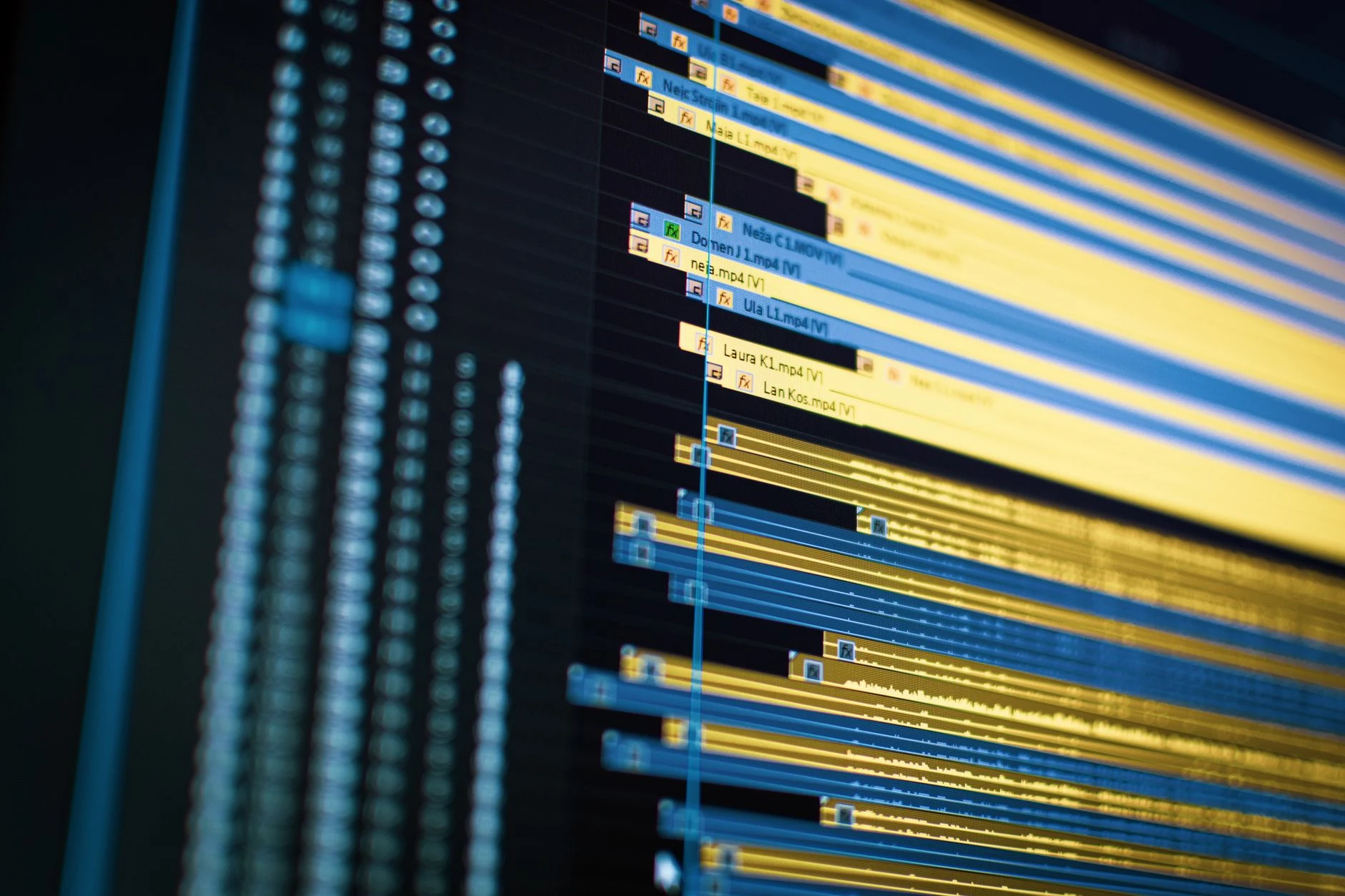
It is also useful to separate three levels. Editing, understood here as the construction of audiovisual relationships through the selection, ordering, and duration of shots and sounds, is a creative decision. Depending on the professional context, editing can refer both to that work and to the technical process of manipulating material. Post-production is broader: alongside editing, it may include sound mixing, colour correction, visual effects, graphics, and other finishing work. These tasks influence one another in a completed film, but they are not interchangeable.
First pass: note what changes, not what you think it means
Choose a short scene, one to three minutes long, viewed legally from an authorized copy. Do not pause during the first viewing. Then replay the scene and record each shot change in a minimal phrase. There is no need to time it to the frame: it is enough to mark relative durations—very brief, brief, sustained—and identify obvious changes.Use five columns: shot number; what is seen; relative duration; what is heard; what remains or changes from the preceding shot. In the last column, look for concrete signals: the direction of an eyeline, a body’s position, the direction of movement, background sound, lighting, costume, a dominant object, camera distance, or new information.
If two characters look at one another, note which side of the screen each looks toward. If someone exits on the right and later appears entering from the left, note the direction. If you hear a train before seeing it, mark that the sound arrived first. If the scene moves from a hand opening a door to a room already occupied, write down which portion of the action is not shown. The template is not meant to replace the experience; it preserves evidence before interpretation.
Five observable functions of the cut
First function: orient. Continuity aims to let viewers follow the time and space of an action clearly. Eyeline matches, consistent screen direction, matches on movement, and alternating between the speaker and listener are common devices. They are not natural laws, nor do they make the camera “invisible”; they are conventions that help connect one shot to the next.Second function: compress or expand time. An ellipsis occurs when a film omits an interval and asks us to reconstruct it. A door closes and the next shot shows another place; someone begins a task and the cut shows it finished; a conversation skips greetings or farewells. The question is not only how much time is missing, but what the omission does: does it speed up a routine, hide a cause, create surprise, or ask the viewer to complete information?
Third function: create rhythm. Identify patterns before judging speed. Do the shots become shorter? Is a regular alternation repeated? Does a prolonged shot interrupt a chain of cuts? Does the sound establish pulses that the image contradicts? Rhythm is a distribution of attention and expectation, not an isolated figure.
Fourth function: associate ideas. Two adjacent shots can suggest similarity, contrast, cause, irony, or a purely rhythmic relationship. Do not automatically assign a causal relation: frame a cautious hypothesis. “Their proximity invites us to compare the two images” is more accurate than “the film proves that one causes the other” when there is no further narrative evidence.
Fifth function: shift viewpoint. A cut may leave the speaking face to show the listener, reveal a detail a character cannot see, or keep us outside decisive information. Always ask: who knows what after this shot? This distinguishes perceptual point of view—where we see or hear from—from the moral judgment we may make about a character.
Ellipsis and off-screen space: observing an absence
Ellipsis refers to time or action not shown between two moments. Off-screen space, by contrast, is what belongs to the suggested world of the scene but lies outside the frame at that moment: a voice behind a door, a threat we hear but do not see, the direction in which a character looks. They can work together, but they are not the same thing.To distinguish them, ask two questions. First: “What probably happened between one shot and the next?” That examines ellipsis. Second: “What seems to exist right now beyond the edges of the frame?” That examines off-screen space. Note the clues: sound, looks, shadows, characters entering and exiting, dialogue, or visible consequences. An absence is not an information vacuum: it is often carefully measured out.
When sound arrives first or lingers afterward
Do not analyse cuts with the volume turned down. A split edit separates the moment when the image changes from the moment when the sound changes. In a J-cut, the audio from the next scene or shot begins before its image appears. In an L-cut, the audio from the previous shot continues over the next image. The names describe the shape of tracks on a timeline, but for viewers the effect matters: anticipation, emotional carryover, softening a spatial jump, or linking two spaces.Try covering the image for a few seconds and listening. Then mute the sound and watch again. If the transition seems radical without audio and smooth with it, you have identified an essential part of its construction. Sound does not simply “accompany” the image: it can prepare the place we are going, preserve the weight of what we leave behind, or introduce a contradiction between what is visible and what is audible.
A three-viewing protocol for film clubs
First viewing, uninterrupted: write a three-line overall impression. Did the scene feel clear, rushed, suspended, comic, uncomfortable? Do not yet discuss why.Second viewing, descriptive: complete the shot template. One person can take image notes and another sound notes. Mark only verifiable changes and, if there is disagreement, return to the specific moment rather than voting on an interpretation.
Third viewing, comparative: choose three cuts. For each, formulate four answers: what changes visually; what changes in the sound; what information is retained or omitted; what effect it seems to produce. Finally, imagine a modest alternative: “What would change if the preceding shot lasted two seconds longer?” or “What would happen if we heard the reply before seeing the speaker?” The point is not to improve the scene from outside, but to understand the function of the existing decision.
The template can end with a reading sentence: “The scene orients us through consistent eyelines and directions, but uses sound that comes in early to announce each change of location.” That conclusion is more useful than praising editing as “dynamic” without explaining how it works.
Limits and common mistakes
Continuity does not equal neutrality. A scene can be spatially clear while still strictly controlling which face we see, how long a response takes, or which detail remains outside the frame. Nor is every disorientation an error: a break in screen direction, a repetition, or a temporal jump may be organized to make us feel doubt, collision, or instability.The opposite mistake is to attribute everything to editing. A cut works alongside shot scale, camera movement, performance, mise-en-scène, lighting, and the mix. If a look feels intense, a close-up, the actor’s stillness, a silence, and the timing of the cut may all be involved. Describe that cooperation before assigning a single cause.
Finally, do not turn viewing research into automatic permission to reuse images. For a public presentation, publication, or video essay, use clips and stills supplied or authorized by rights holders where possible. Exceptions for quotation, criticism, teaching, or fair use depend on the country and the specific circumstances; there is no universal rule about safe percentages or seconds. A film club should also check that its screening and the materials it shares are covered by the applicable licence or legal rule.
Glossary of perceptible effects
Continuity: the organization of shots that makes it easier to follow an action in comprehensible time and space.Ellipsis: the omission of an interval of time, action, or information between two shown moments.
Parallel editing: alternation between two or more lines of action; it may suggest simultaneity, but it is worth checking whether the film confirms it.
Intellectual or associative montage: juxtaposition that invites an idea to be constructed from the relationship between images or sounds, rather than from following continuous action.
Match: a perceptible linking element between shots, such as an eyeline direction, gesture, movement, position, or sound.
Axis jump: a change in camera position that alters previously established lateral orientation; it may confuse, but it can also be used expressively.
J-cut: the sound from the next shot or scene enters first.
L-cut: the sound from the preceding shot or scene remains over the next image.
Off-screen space: the suggested part of the scene’s world that lies beyond the limits of the frame.
Reaction shot: a shot showing someone’s response to an action, word, or piece of information; it can alter our reading of what happened without adding dialogue.
Sources and filmography consulted
- press.uchicago.edu. press.uchicago.edu. Consulted 11 Sep 2026
- books.google.com. books.google.com. Consulted 11 Sep 2026
- books.google.com. books.google.com. Consulted 11 Sep 2026
- More Information on Fair Use. U.S. Copyright Office. Consulted 11 Sep 2026
- press.uchicago.edu. press.uchicago.edu. Consulted 11 Sep 2026
- books.google.com. books.google.com. Consulted 11 Sep 2026
- Effects of Continuity or Discontinuity in Actual Film Editing. SAGE Journals. Consulted 11 Sep 2026
- Perform J cuts and L cuts. Adobe. Consulted 11 Sep 2026
- 3D Spatial Continuity and 2D Screen Geography. Oxford Academic. Consulted 11 Sep 2026
- press.uchicago.edu. press.uchicago.edu. Consulted 11 Sep 2026
- Continuity, Discontinuity, and Scenes. ResearchGate. Consulted 11 Sep 2026
- Edit Blindness. Journal of Eye Movement Research. Consulted 11 Sep 2026
- books.google.com. books.google.com. Consulted 11 Sep 2026
- books.google.com. books.google.com. Consulted 11 Sep 2026
- press.uchicago.edu. press.uchicago.edu. Consulted 11 Sep 2026
- press.uchicago.edu. press.uchicago.edu. Consulted 11 Sep 2026