Editorial collections
Inhabiting Animation: Three Films for Reading Scale, Texture and Routine
The Wild Robot, Elio and Mufasa: The Lion King do not make a world inhabitable in the same way. This itinerary asks what bodies, edges, surfaces and tasks do to make a space seem to exist before a character arrives and to continue once they leave.
Before you begin: look for life beyond the main action
On a first viewing, choose an arrival or crossing sequence and do not follow the story’s turns just yet. Note three things: where a body enters the frame, which part of the space remains inaccessible, and what activity seems to continue without explanation. A set feels like a stage when it merely awaits action; a world feels like a place when it suggests that its rules were already operating.It is useful to separate observation from evaluation. “The shot leaves a character small before a wall, a mountain or a crowd” is an observation. “The scale is well handled” is already a judgment: it must explain which relationship among body, distance, sound, light or journey supports it. This distinction keeps adjectives such as immersive, realistic or spectacular from replacing description.
The Wild Robot: orientation, repetition and an island that does not welcome Roz
The first cue for The Wild Robot is Roz’s spatial learning. Her arrival on an island does not present the setting as a park ready to be explored: she must translate voices, identify dangers and adjust her behavior to rhythms she does not control. Rather than asking only what the forest looks like, watch how it restricts. What makes a slope, a fallen tree, a storm or the distance to a nest read as a concrete problem rather than as interchangeable scenery?The hatchling’s flight-training sequence and the later migration departure are especially useful. The film turns the air into a boundary: for the one taking off, the landscape opens up and arranges itself along a shared direction; for the one left below, that same expanse makes separation visible. Watch where Roz stands in relation to the cliff edge, the flock and the sky. Scale does not arise only from showing a great deal of territory, but from making the difference between ground and flight alter the bond between characters.
It is also worth tracking the material trace. The film contrasts Roz’s constructed silhouette with branches, mud, water, fur and painterly vegetation. There is no need to assume every texture amounts to naturalism: here, brushwork and abstraction can reinforce a sense of climate and fragility. Ask which surfaces hold light, which blur and which appear to offer resistance. Then look for routines: gathering materials, protecting, feeding, repairing or passing through the same place. Repetition turns care into a form of cartography; the world ceases to be territory merely contemplated and becomes a place that is maintained.
Elio: a world is understood through contrast, connections and overload
Elio poses a different test: world-building begins not in outer space but in contrast with Earth. The military base is organized around asphalt, concrete, uniformity and rectangular symmetries. Before deciding whether that design feels cold, observe what makes bodies seem aligned, halted or isolated within it. The insistence on repeated modules allows Elio to stand out without the film having to explain this through dialogue.The move from the beach to the encounter with the spacecraft is a good point to revisit. A highly saturated green light transforms a previously muted setting: it does not simply signal that something extraordinary is happening, but changes the color hierarchy and makes the scale of the shoreline uncanny. Notice whether the framing keeps enough terrestrial references to measure the intrusion, or instead removes them to make the experience disorienting.
Arrival at the Communiverse presents the opposite difficulty: how to keep an abundance of species, volumes, lights and biomes from making space illegible. The site brings together an interior structure, a central energy source and discs distinguishing aquatic, icy, green and volcanic realms. The method here is to follow connectors: walkways, rings, access points, changes in level, character groupings or lines of light. If you can reconstruct an approximate route after the sequence, the design has provided orientation as well as information. If you remember only an accumulation of stimuli, that does not necessarily mean the world fails; it may privilege surprise over geography. The critical task is to recognize that choice and its effect.
Elio also has a less obvious form of routine: the Communiverse’s constant motion. Pulsing architectures, flowing patterns and lights that appear to be under construction suggest activity beyond the protagonists. Watch whether these cycles help convey a functioning society or compete with decisive actions. Density is not depth in itself: it requires rules of circulation and pauses from which to look.
Mufasa: The Lion King: landscape as journey, climate as pressure
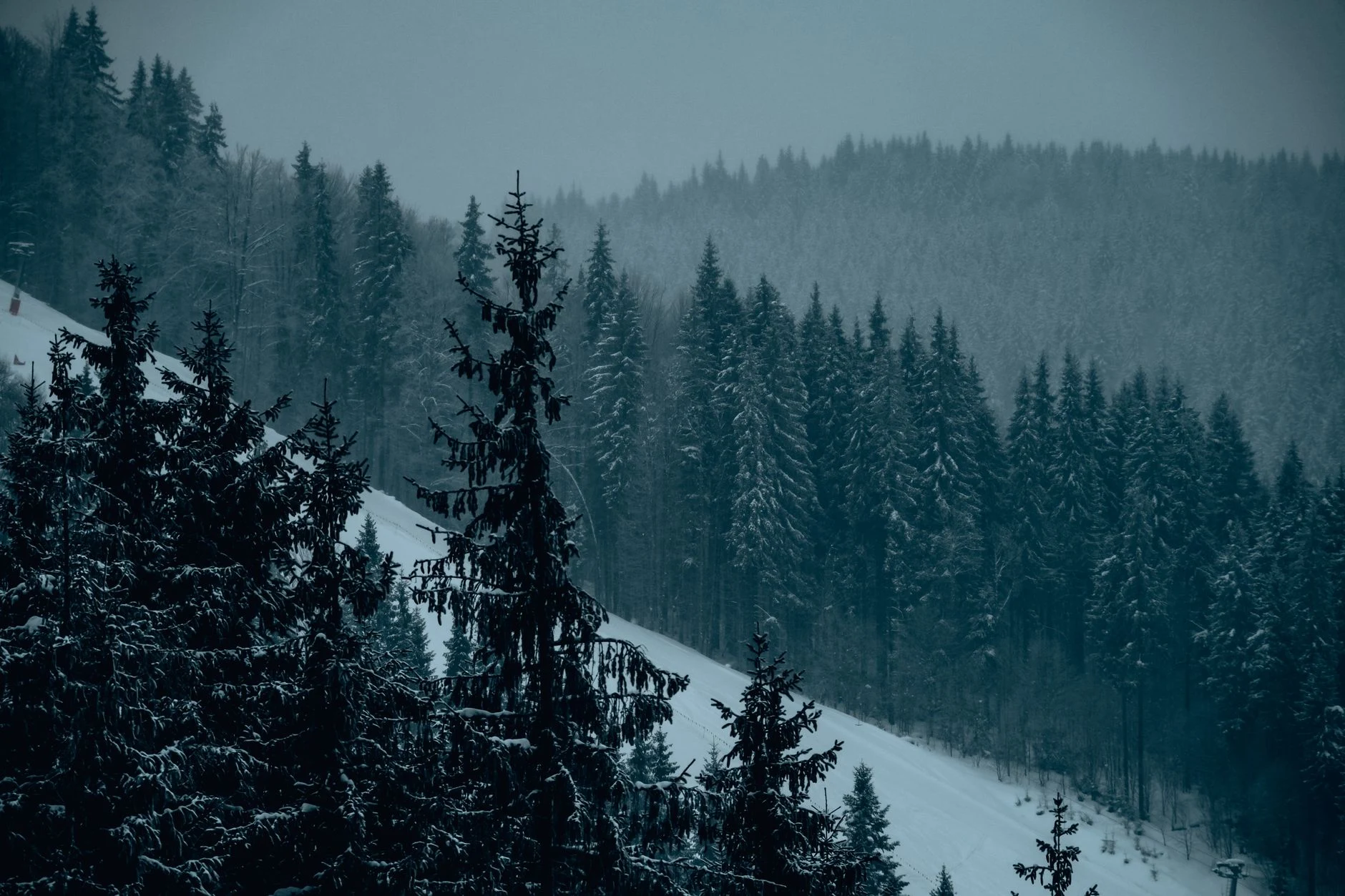
The third stop shifts attention from discovery and accumulation to travel. Mufasa: The Lion King is told through memories and follows a group crossing distinct terrains. Each transition should therefore be considered a new condition of movement: not only where characters are, but what the ground, water, vegetation, gradient or temperature demands of them.The passage through snowy mountains and the scene set beneath frozen waterfalls make texture available as dramatic information. Ice is not merely a glossy finish: its veins, bubbles, reflections and frozen surfaces can make the risk of slipping, stopping, taking shelter or keeping one’s distance legible. Compare that cold opacity with shots of plains, rain or dense vegetation. The question is not whether every hair or blade of grass looks real, but whether materials alter behavior, editing rhythm and the bodies’ positions.
Also attend to sequences of mass movement, such as the elephant stampede. There, scale is built through coverage and relationships: close shots identify a reaction, wide shots measure the threat, and trajectories prevent an immediate sense of where escape is possible. The film used virtual-production tools to explore camera, blocking and environments; on screen, the relevant question is whether that camera freedom preserves shared orientation. A moving shot can expand a world, but it can also dissolve its limits if it does not clarify points of departure, danger and arrival.
The crossing: three ways of giving a place a past and a future
The films create a productive contrast. The Wild Robot derives inhabitation from repeated adaptation: the same territory gains meaning because Roz returns to it for different tasks. Elio works through the difference between visual systems: Earth’s modular austerity prepares the Communiverse’s chromatic and biological expansion. Mufasa: The Lion King makes landscape change value through journey and climate: a space is not a fixed postcard, but a condition that transforms movement and alliances.Across all three, look for four reusable indicators. First, boundaries: a visible border makes crossing it matter. Second, wear: mud, water, snow, altered vegetation, fatigue or maintenance connect the body to matter. Third, routine: a repeated action reveals how a life is sustained. Fourth, transition: changing environments should alter at least one perceptible rule, whether light, sound, density, speed, temperature, direction or scale.
When these indicators are absent, a world may still be appealing, but it risks feeling illustrative: admired from the outside without the viewer learning how to inhabit it. This is not a technical or aesthetic condemnation; it describes the relationship a film proposes among space, character and gaze.
A short guide to applying the method to another film
Choose two sequences, one entering and one leaving an environment. For each, ask: what reference makes the size of the place measurable? What element forces a change in route? What secondary activity continues at the margins of the main action? What material registers the passage of time or of a body? What changes when the threshold is crossed?Then write in two columns. In the first, record only perceptible facts: “the camera pulls away,” “vegetation hides the character,” “the light shifts from matte to saturated,” “the crowd keeps moving.” In the second, formulate the interpretation: “the space seems hostile,” “the passage seems collective,” “the place retains a life of its own.” Finally, check whether each interpretation depends on at least two observations. Personal preference does not disappear this way, but it stops masquerading as evidence.
Sources and filmography consulted
- movies.disney.com. movies.disney.com. Consulted 16 Sep 2026
- www.pixar.com. www.pixar.com. Consulted 16 Sep 2026
- careers.picturehouses.com. careers.picturehouses.com. Consulted 16 Sep 2026
- www.yahoo.com. www.yahoo.com. Consulted 16 Sep 2026
- www.latimes.com. www.latimes.com. Consulted 16 Sep 2026
- www.creativebloq.com. www.creativebloq.com. Consulted 16 Sep 2026
- www.bfi.org.uk. www.bfi.org.uk. Consulted 16 Sep 2026
- awardsfocus.com. awardsfocus.com. Consulted 16 Sep 2026
- borisfx.com. borisfx.com. Consulted 16 Sep 2026
- embed.letterboxd.com. embed.letterboxd.com. Consulted 16 Sep 2026
- research.pixar.com. research.pixar.com. Consulted 16 Sep 2026
- www.thewrap.com. www.thewrap.com. Consulted 16 Sep 2026
- offscreencentral.com. offscreencentral.com. Consulted 16 Sep 2026
- definitionmagazine.com. definitionmagazine.com. Consulted 16 Sep 2026