Reviews
Inside Out 2: what justifies a sequel beyond repeating a premise
Pixar’s follow-up finds its reason for existing not in adding emotions to the board, but in shifting the conflict from managing what Riley feels to the fragility of how she begins to think about herself. It is a brisker and less revelatory sequel than the first, but one with a recognizable dramatic necessity.
Content prepared with AI assistance and documented automated checks. This does not imply human review or first-hand viewing. Editorial methodology
A sequel is not justified merely because its characters remain likable, or because it can turn up the volume of its imaginary world. It has to uncover a question the previous work could not answer. Inside Out 2, the 2024 animated feature directed by Kelsey Mann and written by Meg LeFauve and Dave Holstein, begins from a very visible risk: it retains Headquarters, its cast of emotions, and the alternation between Riley’s external life and its fantastical translation. At first glance, it might seem enough simply to age up the protagonist and add four new figures.
But the film does change the center of the problem. Inside Out told an adaptation crisis: eleven-year-old Riley faced a move, and the story discovered that an uncomfortable emotion was not a system error but a condition for rebuilding bonds. The new installment places Riley at thirteen and turns adolescence into a pressure of belonging, achievement and self-image. The question is no longer only who should take the controls in a difficult situation. It is what happens when a person tries to reduce herself to an efficient, admired or flawless version of herself.
That shift does not make Inside Out 2 as inventive as its predecessor. It reuses an exile, journey and return architecture that viewers will quickly recognize. Yet the sequel earns its legitimacy when it stops treating emotions as a lineup of gags and uses them to give visible form to a less orderly conflict: the move from having feelings to deriving an identity from them. This analysis contains no major spoilers.
The test it had to pass: not mistaking growth for mere expansion
The first film had built an exceptionally clear model. Emotions operated at Headquarters; memories sustained personality traits; and the inner adventure had a concrete counterpart in Riley’s difficulty inhabiting her new city. Its strength was not literal scientific accuracy but the dramatic clarity of that metaphor. The sequel could not simply repeat the discovery by revealing that more emotions exist. Indeed, the production premise itself acknowledges that the first film simplified a much broader emotional repertoire in order to make its world legible.Inside Out 2 solves this by accepting that adolescence makes that earlier order insufficient. Anxiety, Envy, Ennui and Embarrassment do not arrive as replacements for Joy, Sadness, Fear, Anger and Disgust, but as forces that alter the relationship among the five familiar emotions. The important choice is not numerical but functional: the film makes the problem cease to be a temporary malfunction and become the temptation to organize every present experience around a desired future.
That is its strongest argument as a continuation. Riley’s adolescence is not scenery for updating trends or multiplying supporting characters; it creates a different form of conflict. Friendships become unstable, athletic ambition acquires social weight, and every gesture seems open to public interpretation. The sequel understands that at this age, feeling bad does not always stem from an identifiable loss. It can arise from anticipating how one will be seen, wanting to enter a group, or trying to control every outcome in advance.
Its limitation is that the screenplay explains the mechanism of its new threat rather quickly. The first film made its instruction feel like discovery; here, some dialogue names the dilemma before the staging has made it wholly tangible. Even so, the central idea holds because it does not suggest that any emotion is an intruder or evil. What is truly unsettling is a logic of self-surveillance that promises safety while narrowing Riley’s field of action.
From emotion to self: the decisive shift in perspective
The most fertile formal leap lies in the so-called belief system. Unlike the personality islands of the first film, which organized already recognizable traits in Riley, this new mental image deals with something more vulnerable: the conclusions she draws about who she is. The film does not abandon its mechanics of buttons, spheres and brain zones; it redirects them toward less stable territory. An isolated emotion may be fleeting. An idea about one’s own worth, less so.The design of this space keeps the abstraction from becoming mere exposition. Luminous material suspended over blue darkness seeks a scale of wonder that contrasts with the bright, functional office of Headquarters. This is not an ornamental detail. When the film leaves the administrative colorfulness of the controls to enter this vaster zone, it suggests that identity cannot be controlled as easily as an immediate reaction. The animation creates a difference in weight between feeling something and turning it into a definition of oneself.
This choice also improves the relationship between inner and outer worlds. Riley is not reduced to a puppet of tiny figures: her athletic and social decisions have visible consequences, while the inner world expresses the speed with which an experience can be interpreted, exaggerated or absorbed by an expectation. The film is not a treatise on the adolescent mind, nor should it be taken as a clinical representation. It is, however, a fairly precise fable in observing that anxiety can present itself as a desire to protect the future and end up constricting the present.
The result is more self-contained than it may seem. Anyone who does not remember every detail of Inside Out will understand what Headquarters represents and why the new system matters. Knowledge of the first film heightens the emotion of seeing a familiar balance disrupted, but it is not essential to grasp this second chapter’s dramatic stake.
Scenes, pacing and animation: when the film turns pressure into motion
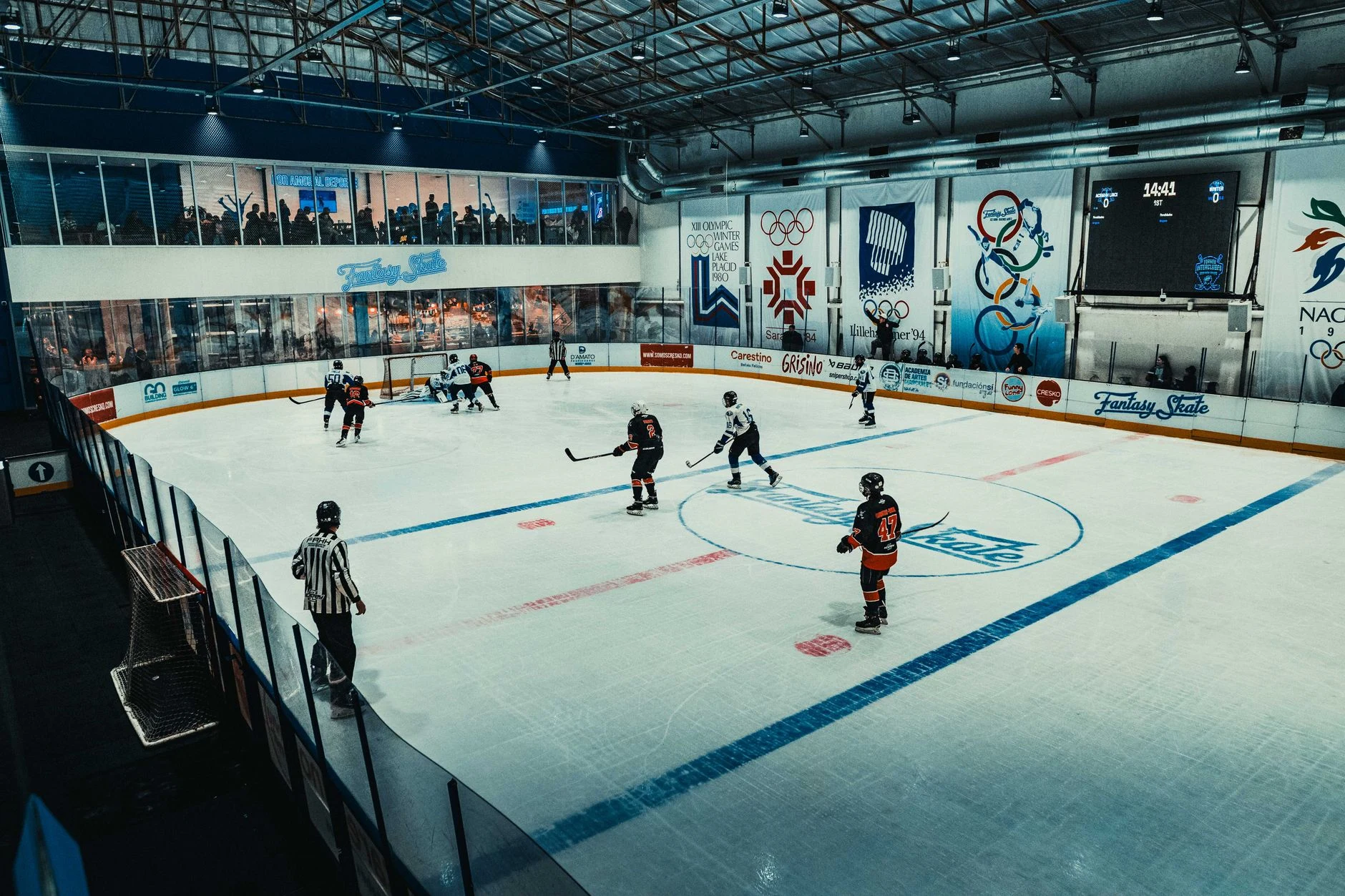
Inside Out 2 works best in scenes where it does not merely explain a concept and lets the editing generate the tension. The hockey setting is crucial for that reason. Riley is not simply competing in a sport: she moves through a space of selection, skill, hierarchies and other people’s gaze. The film uses this condition to quicken the cuts between rink and Headquarters, making each outer gesture seem immediate while every decision arrives burdened with inner calculation.The staging does not pursue sporting realism for its own sake. The dynamism of the games links Riley’s physical experience to a mind trying to get ahead of every consequence. It is an effective pacing choice: the film avoids stopping to diagnose every sensation and lets speed, noise, movement and urgency communicate part of what is at stake. The editing, especially in the hockey passages, brings competitive-film energy into a family structure without losing the spatial clarity it needs.
The other sound decision is not treating the new emotions as merely marketable designs. Anxiety has a more overflowing verbal and physical presence than the original figures; Ennui slows and cools interactions; Envy concentrates the desire to resemble someone else; Embarrassment retreats inward. They are comic, readable silhouettes, certainly, but they also propose rhythms incompatible with one another. The sequel makes adolescence visible as a coexistence of impulses that do not take turns in an orderly way.
Technically, Pixar updates the ethereal finish of the five original emotions without erasing their familiarity: particles, glows and outlines still distinguish them from the human world, but the new lighting possibilities give them a more flexible presence depending on the space. This visual continuity matters because the film does not seek to reboot the franchise. It wants viewers to recognize the mechanism and perceive a new imbalance within it.
Not every expedition through the mind has the same necessity. Some fantastical stops seem to exist to revive the pleasure of visiting a familiar geography. They are inventive and brief, but rarely match the force of scenes that remain close to Riley’s social decisions. The film is sharper when it observes a look, a tryout or a mistake than when it indulges in sightseeing through its own sets.
What depends on the first film and what the sequel achieves on its own
Prior familiarity is a tool of narrative economy. Inside Out 2 can introduce Joy as a manager intent on making everything go well without rebuilding her history from scratch; it can have Anxiety’s arrival change the atmosphere at Headquarters within minutes; and it can trust viewers to understand the mixture of affection and friction among the veteran emotions. That inheritance makes for a highly efficient opening.It also imposes a burden. Whenever the story physically separates a group from Headquarters or turns the journey back into the engine of the adventure, it recalls the most memorable structure of the 2015 film. Mann does not copy it shot for shot, but neither can the franchise fully conceal its return to a familiar dramatic solution. In these stretches, the desire to preserve a recognizable formula competes with the boldness of the new idea.
Its independence arrives by another route: that of a specific adolescent experience. A friendship changing in scale, the possibility of impressing someone, the fear of not measuring up, and the impulse to correct one’s own image are situations understandable without prior preparation. The film also succeeds by not confining all of its emotion to adult discourse. The weight belongs to Riley, even if the inner world is the one translating the process.
For that reason, revisiting Inside Out before watching is not essential, though doing so makes it easier to appreciate the transformation of Headquarters and Joy. The recommendation for a viewer seeking a self-contained experience is clear: they can go in directly, with the right expectations. They will not find a total reinvention of the first installment’s language; they will find a meaningful variation on its emotional question.
Verdict: necessary in its theme, conservative in its framework
Inside Out 2 justifies its existence because it identifies a stage in Riley’s life that demands another metaphor. The first film needed to defend the idea that sadness had a place. This one needs to show that an identity does not become truer the more perfectly it tries to shield itself from failure, rejection or uncertainty. That is a substantial dramatic difference, not a mere cast update.Kelsey Mann and his team sustain that intuition through pacing, animation that gives visual weight to Riley’s beliefs, and sports sequences that turn social pressure into continuous movement. The film is bright and accessible, but it does not entirely trivialize its subject: it understands that the comedy of the emotions can coexist with a real sense of overload.
Its weak point is structural. The inner journey and some detours through the mental world reveal how much it still depends on the grammar of its predecessor. The 2015 work had the unrepeatable advantage of inventing the rules and surprising viewers while explaining them; the 2024 film must work within them. As a result, there is less conceptual wonder and an occasional tendency to turn every stop into a display of franchise branding.
Even with that reservation, the balance is favorable. For solo viewing, its 96 minutes offer more than a comfortable repetition: a brisk film, emotionally intense without being devastating, and clear enough for those who do not have the original fresh in mind. For anyone who admires Inside Out, the reward lies not in recovering the familiar but in seeing that the sequel understands that growing up does not mean adding emotions, but surviving the stories one begins to tell oneself about who one is.
Key takeaways
- Yes, the sequel has its own artistic reason for being: it shifts the focus from emotional management to the formation of adolescent identity.
- You do not need to revisit the 2015 film to follow it, though remembering the original intensifies part of its effect.
- Its strongest passages use hockey, editing and the contrast between interior spaces to dramatize social pressure and anticipation.
- The film retains an overly recognizable inner-adventure structure, so it does not match its predecessor’s conceptual surprise.
- Recommended for solo viewing or for families with teenagers, with expectations of emotional comedy rather than radical reinvention.

Sources and filmography consulted
- lumiere-a.akamaihd.net. lumiere-a.akamaihd.net. Consulted 13 Sep 2026
- pixarpost.com. pixarpost.com. Consulted 13 Sep 2026
- www.pixar.com. www.pixar.com. Consulted 13 Sep 2026
- news.berkeley.edu. news.berkeley.edu. Consulted 13 Sep 2026
- movies.disney.com. movies.disney.com. Consulted 13 Sep 2026
- research.pixar.com. research.pixar.com. Consulted 13 Sep 2026
- www.pixar.com. www.pixar.com. Consulted 13 Sep 2026
- podcasts.apple.com. podcasts.apple.com. Consulted 13 Sep 2026
- thewaltdisneycompany.com. thewaltdisneycompany.com. Consulted 13 Sep 2026
- www.motionpictures.org. www.motionpictures.org. Consulted 13 Sep 2026
- prod.renderman.pixar.com. prod.renderman.pixar.com. Consulted 13 Sep 2026
- newsletter-dev.oscars.org. newsletter-dev.oscars.org. Consulted 13 Sep 2026
- thewaltdisneycompany.com. thewaltdisneycompany.com. Consulted 13 Sep 2026
- www.youtube.com. www.youtube.com. Consulted 13 Sep 2026
