Craft and technique
Jackie Chan and on-screen action: what the available documentation allows us to say
Credits can identify roles; a copy can support descriptions of formal choices; neither, on its own, proves who conceived or performed each action. The sources located here do not make it possible to carry out the film comparison this question requires.
Content prepared with AI assistance and documented automated checks. This does not imply human review or first-hand viewing. Editorial methodology
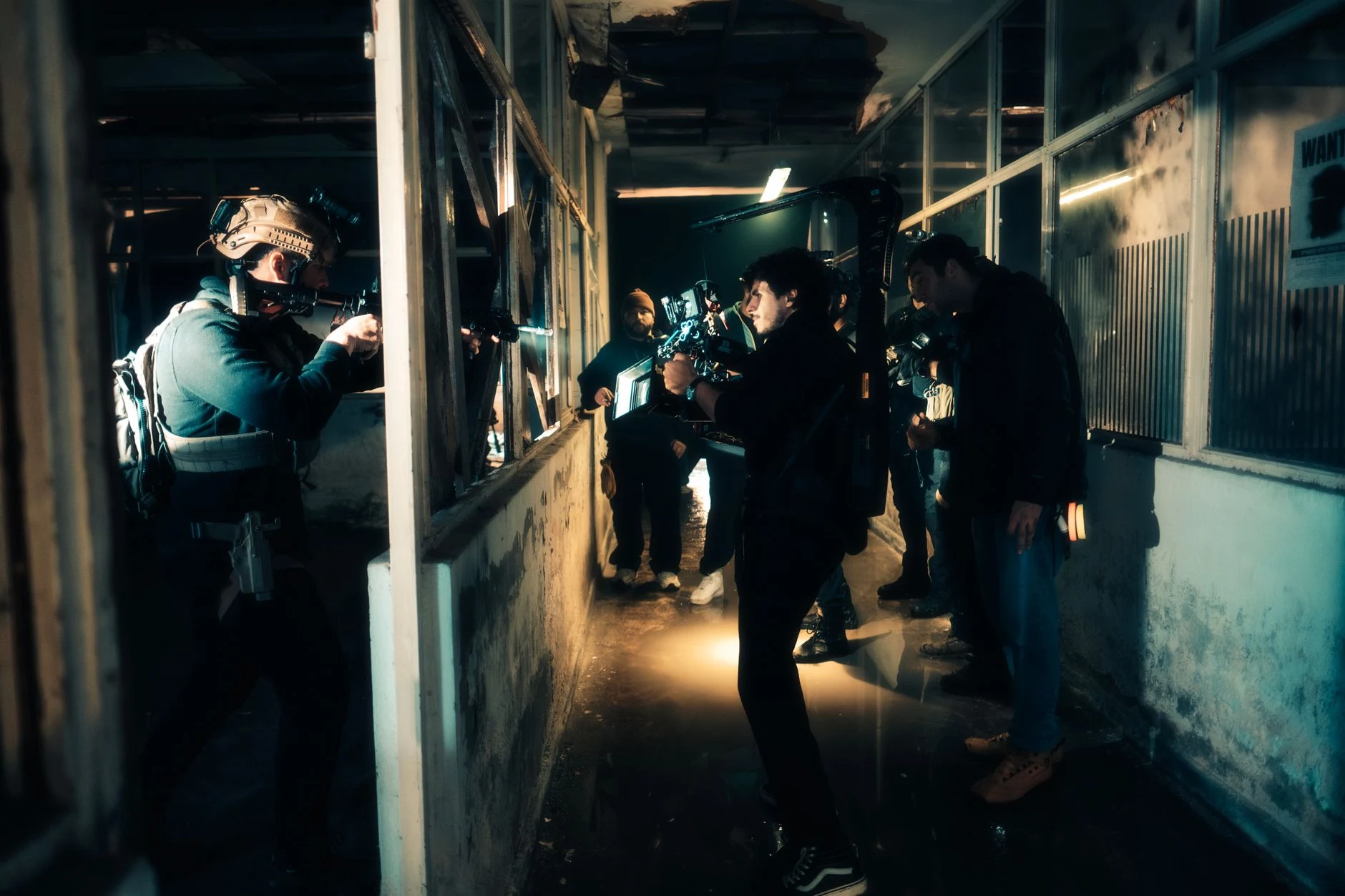
A film’s action is often distilled into a memorable image and attributed to a star. But identifying the person on screen is not enough to establish who designed the sequence, who coordinated the physical work, which decisions belong to the director or the editor, or who performed each movement. This investigation starts from that distinction and reaches a specific limit: the search materials available do not provide verifiable credits for particular films, identifiable copies that would allow scenes to be analysed, or suitable production testimony. It therefore selects no sequences and presents no observations as though they came from direct analysis. This is an AI-assisted article and is cleared for publication only after documented checks of sources, claims, localisation, originality, quality and media rights have been completed.
Attributing an action means asking several different questions
Saying that Jackie Chan appears in an action is a claim about the performance visible on screen. Saying that he designed it is a claim about a creative role; saying that he directed it is another claim about how the film was organised; and asserting that he performed it himself is a claim about the specific conditions of production. These questions are related, but they are not interchangeable. The first can be investigated by watching a copy; the others require different kinds of evidence.Credits offer a starting point for identifying named responsibilities. They do not necessarily detail every decision within a sequence, and on their own they do not establish who devised a movement or was present for a particular take. A formal description—for example, that a shot keeps an actor and an obstacle in view together, or that the editing cuts during a movement—can support an observation about what the copy shows. It does not turn that observation into proof of authorship. Moving from visible form to the production process requires testimony, documents or other sources that address that specific work.
Caution is particularly important when dealing with broad claims that a star always performs their own stunts or personally controls every action decision. The supplied search materials include a biographical description making an absolute claim about Chan and stunt doubles, but it provides no production documentation there that would allow the claim to be verified film by film. That wording cannot support a universal conclusion in this article.
Why no selection of films is made here
The brief calls for films to be selected only after their credits have been verified and analysable copies obtained. The supplied research file contains no transcriptions of on-screen credits, no verifiable credit records for specific titles, no identification of versions, and insufficient information to determine which copies could be analysed. Under these conditions, choosing a well-known Chan film out of familiarity or reputation would create the appearance of research without meeting the stated criteria.Nor can viewing availability be inferred from a mention, a catalogue entry or a search result. The material received does not establish legal access to a copy, its version or its completeness. It does not distinguish edits, territories, running times or possible presentation variations for particular films. It would therefore be inappropriate to propose a comparison between scenes or to treat a hypothetical version as a common reference point.
A sufficient research file would need to identify each film and the copy actually consulted; record the credits for direction, performance, action coordination or design, and editing as they appear; and cross-check them against an independent record where available. It would then need to note which version was analysed and describe only elements that could be verified in it. Those conditions have not been met here, so no sample list of titles is offered.
What scene analysis could establish
With an identified copy, a comparative analysis could describe how space is organised, what information the frame keeps visible, how long each shot lasts and when editing intervenes. It could also examine how a performance responds to objects, surfaces, distances and the movements of other performers. Such observations describe the scene’s form; they do not automatically prove how it was filmed or who made each decision.To support the analysis, precise moments would need to be identified and the observations made explicit, without turning an impression into a fact. A take that keeps several actions within the same frame allows us to discuss visual continuity in that copy; on its own, it does not prove that the movement was performed in one go, without tricks, retakes or support from a team. Similarly, rapid editing allows us to describe frequent cuts, but not to identify who proposed them without relevant production evidence or credits.
This limit does not diminish the value of formal analysis. It defines it. Staging can show how a film makes an action legible or directs the viewer’s attention. External documentation can help reconstruct the collaboration that produced it. Rigorous research keeps these two lines of inquiry connected without allowing either to stand in for the other.
Credits, testimony and the hierarchy of evidence
The supplied search materials include no documented first-hand interviews, identified audio commentaries, production notes, production records or contemporaneous materials describing how specific Chan sequences were designed or filmed. Nor do they provide independent historical or critical sources that verify these roles for a defined selection of films. The absence of such material from the research file does not prove that it never existed; it means it cannot be used as evidence in this article.The biographical result received lists several professions associated with Chan and also repeats the general claim that he performs his own stunts without doubles. At most, it indicates which claims would need to be checked; the description provides no specific references that would allow the performance of a particular action to be attributed. Other supplied results are social media posts repeating the idea that he does not use doubles, but they offer no independent documentary corroboration. Repeating an assertion across several platforms is no substitute for distinct, verifiable sources.
The hierarchy of sources matters too. A credit is evidence that a name is associated with a role, subject to the version of the record consulted; production testimony may document an experience or process, with the scope and limitations inherent in testimony; and an observation of a copy describes what that version presents. Stronger claims about creative authorship would require these materials to be cross-checked and the precise evidentiary value of each to be specified.
Supported conclusions and open questions
On the material available, only a methodological conclusion is defensible: Chan’s presence on screen, a general credit or a professional reputation is not enough to assign him automatically the performance, design or control of every sequence. The original brief itself recognises that such attributions require corroboration; the present research file does not provide it for specific films and scenes.This article therefore makes no claims about which titles would make the best case studies, who designed a particular action, whether Chan performed it in a given take, or how its interpretation might differ between versions. Nor does it conclude that the credits for any specific film are incomplete: no credits for a selected film have been supplied here for evaluation.
The next editorial step is not to fill these gaps with generalisations, but to extend the research: locate identifiable, legally accessible copies; record their credits; verify roles with independent sources; and seek production testimony linked to the selected sequences. Only then can the project deliver on its promise of comparison. Until that point, presenting scene analysis would mean attributing observations and evidence that this research file does not contain.
Key takeaways
- A person’s presence on screen does not prove who designed or performed each action.
- Credits identify named roles, but do not by themselves settle who made particular decisions.
- Analysis of framing, shot duration and editing describes a copy; it does not automatically establish how the scene was filmed.
- The available research file does not make it possible to verify specific films, versions, credits or production testimony.
- No scenes are selected and no actions are attributed to Chan until suitable evidence has been gathered.
Sources and filmography consulted
- Jackie chance cada vez que hacía sus películas. www.facebook.com. Consulted 5 Oct 2026
- Jackie Chan - Jackieverso de los créditos finales | Amazon Prime. www.youtube.com. Consulted 5 Oct 2026
- Jackie Chan se jugó el pellejo haciendo sus propias escenas y .... www.facebook.com. Consulted 5 Oct 2026
- Jackie Chan. es.wikipedia.org. Consulted 5 Oct 2026Colaboradores de Wikipedia · Jackie Chan · CC BY-SA 4.0
- Jackie Chan afirma que nunca va a retirarse y critica el uso .... www.espinof.com. Consulted 5 Oct 2026
- Si hablamos de escenas de acción sin doble de riesgo, .... www.instagram.com. Consulted 5 Oct 2026
- En 1998, el actor y especialista Jackie Chan protagonizó una .... www.instagram.com. Consulted 5 Oct 2026
- es Jackie Chan deslizándose por la fachada de cristal .... www.instagram.com. Consulted 5 Oct 2026
- El día que "Jackie Chan" casi pierde la VOZ grabando esta .... www.facebook.com. Consulted 5 Oct 2026
- Jackie Chan: Un Ícono de la Acción Sin Dobles. www.tiktok.com. Consulted 5 Oct 2026
