Film history
Restoration Is Not a Return to the Past: How to Read the Decisions That Change a Film
A restored print may recover shots, stabilize an image or reconstruct colour; that does not erase the film’s material history or turn every technical choice into transparent truth about its original release.
Content prepared with AI assistance and documented automated checks. This does not imply human review or first-hand viewing. Editorial methodology
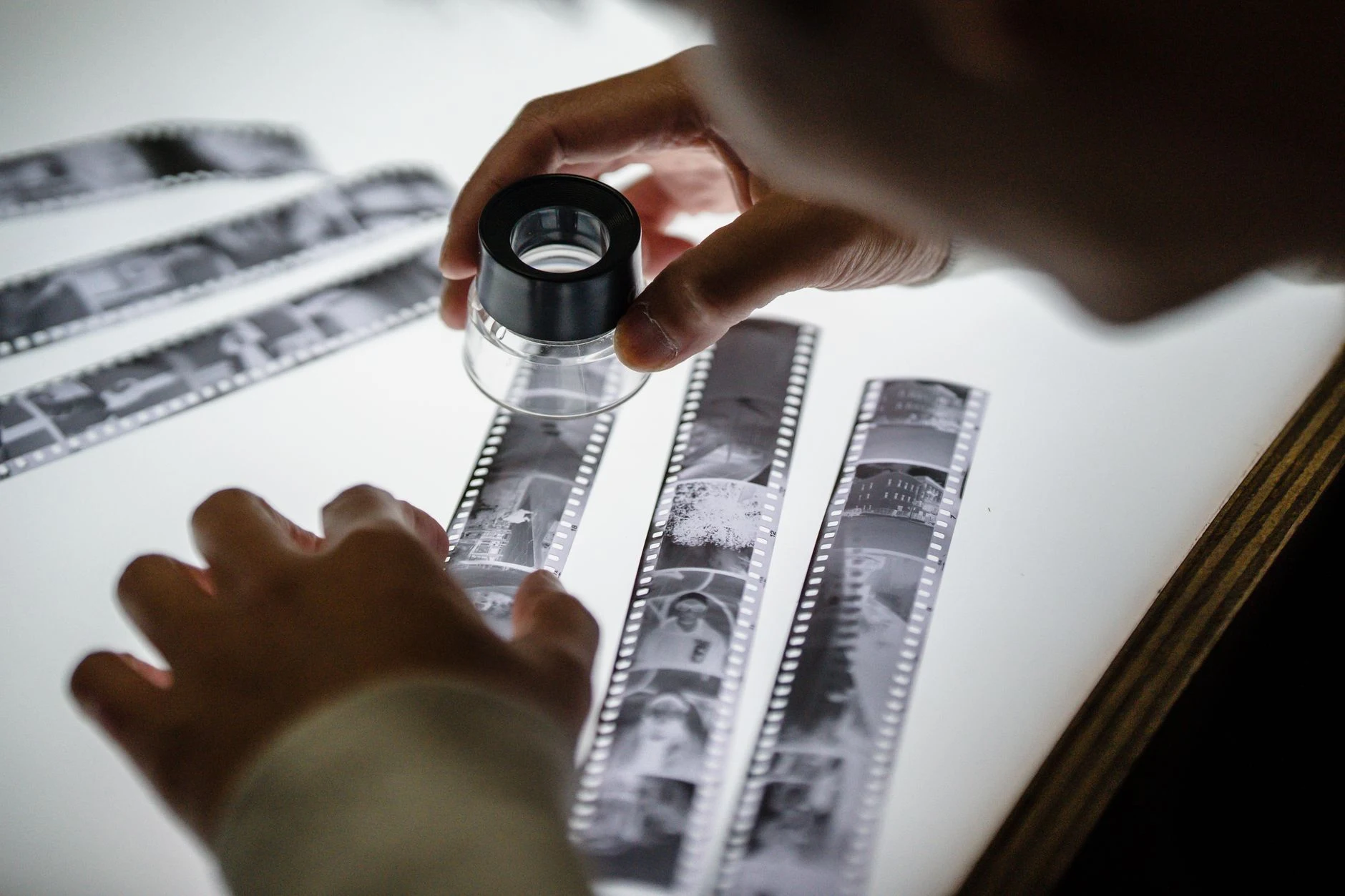
The label “restored” often works as a reassuring promise: now we will see the film as it was. It is better received differently. A restoration does not unearth an intact object from the past; it creates a new access version from surviving materials, documentation, testable hypotheses and technical decisions. Some of those decisions are imperceptible to viewers; others alter running time, order, legibility, colour, texture, speed or sound. The good news is not that a definitively pure version emerges at the end of the process. It is that the best projects leave a documentary trail that lets us ask what they are made of.
This article offers a way to read that information without confusing aesthetic preference with historical proof. The cases of Metropolis, The Passion of Joan of Arc and The Red Shoes reveal three different problems: reconstructing a fragmented work from materials of disparate provenance; the coexistence of presentations with different speeds and intertitles; and the digital restoration of colour built from three technically misaligned negatives. They are not intended to declare one version universally superior, but to help us specify what, exactly, we are comparing.
This article offers a way to read that information without confusing aesthetic preference with historical proof. The cases of Metropolis, The Passion of Joan of Arc and The Red Shoes reveal three different problems: reconstructing a fragmented work from materials of disparate provenance; the coexistence of presentations with different speeds and intertitles; and the digital restoration of colour built from three technically misaligned negatives. They are not intended to declare one version universally superior, but to help us specify what, exactly, we are comparing.
“Restored” does not automatically mean “original” or “better”
Preservation, restoration, reconstruction, scanning and remastering do not mean precisely the same thing. Preservation encompasses measures intended to prevent loss or deterioration and ensure the continued survival of materials; it may include storage, inspection, duplication and the creation of new elements. Restoration begins with research and seeks to recover, repair and present a work from specific elements. Reconstruction goes a step further: it attempts to reconstitute a version of a film when it survives only across incomplete, divergent or mutilated sources.The difference is not merely academic. Removing dirt embedded through decades of circulation may make a shot more legible without necessarily altering its photography. By contrast, erasing grain, correcting instability already present in the camera negative, standardizing colours that historically varied from print to print, or smoothing a processing defect may transform a feature of the original manufacture. An intervention can be flawlessly executed and still call for historical discussion.
That is why “better” must be broken down. It may mean better physical preservation, greater narrative continuity, less wear-related damage, a more intelligible soundtrack, more visible information on screen, or more comfortable playback on a current television. None of those claims, by itself, means “closer to the first exhibition.” Even contemporary prints from an original release could differ across territories, print runs, censorship regimes, projection speeds or colour processes.
A responsible formulation would be: “This edition presents a digital restoration based on these elements and makes these documented choices.” An excessively strong formulation would be: “This is how it was always seen” or “this is definitively what its author intended,” unless specific production and exhibition evidence supports that conclusion.
A film is not a single object: from surviving elements to an access version
Before reaching a cinema, disc or platform, a film may exist as a camera negative, editing negative, duplicate, interpositive, release print, reduction in another format, optical track, magnetic track, sound separations, continuity lists, censorship records, scores, photographs and publicity documentation. Not all these elements contain the same information, nor do they carry the same authority for every question.A negative may retain extraordinary definition while lacking distribution intertitles, the tinting or toning of a period print, a final mix, or cuts imposed in a particular country. A worn print may look poor but preserve a sequence, title card or shot relationship absent from the negative. Archival work consists both in assessing material condition and in determining what each element testifies to.
Metropolis is an especially clear lesson. The 2010 reconstruction incorporated footage found in Buenos Aires in a badly damaged 16 mm duplicate, derived from an Argentine 35 mm print. That discovery supplied numerous shots and scenes believed lost, but its texture and condition could not be magically made equal to those of better-preserved 35 mm materials. When an edition allows changes in definition, scratches or contrast to remain perceptible in recovered fragments, it is not necessarily failing: it may be making the reconstruction’s heterogeneous provenance visible.
The useful question is not “Why does that section look worse?” but “What documentary role does this element serve, and how has its difference been indicated?” In an honest restoration, deterioration does not automatically become a desirable aesthetic effect, but neither is it erased until a precarious source becomes indistinguishable from a negative of another generation.
Decisions we see, decisions we hear, and decisions that often go unnoticed
Viewers can readily spot a removed scratch, a stabilized image or more intense colour. Yet many decisive choices cannot be perceived without a prepared comparison.Colour is a delicate case. A scanner does not by itself recover historical colour: it captures a present-day material that may be faded, shrunken or affected by particular photographic processes. References are needed to grade the result. A release print may be highly valuable, but it is not necessarily definitive; different contemporary prints may have varied. Laboratory documents, colour charts, production materials and knowledge of period processes can guide a decision, though they do not remove all uncertainty.
The Red Shoes illustrates the scale of the issue. The restoration overseen by the UCLA archive worked from more than two hundred reels of material, including three-strip Technicolor camera negatives, dye-transfer prints and sound elements. The negative’s three records had shrunk differently, producing colour halos; there were also flicker, stains, contrast problems and dirt. Aligning the records and repairing damage can restore chromatic coherence and legibility. But the result should not be described as a simple intensification of colour: it is a technical interpretation supported by a body of references and by a decision about which anomalies came from the passage of time and which belonged to the original process.
Stability requires a similar distinction. It may be appropriate to reduce jitter introduced by a warped print or digitization. It is not, without exceptional justification, appropriate to correct motion inherent to the shot, original camera instability or a feature of the historical assembly. The same applies to grain: it is not dirt, but part of photographic structure. Indiscriminate reduction can create a smooth, modern-looking image that has lost information and texture.
An equivalent question applies to sound. Was a period track restored, were different sources mixed, were lost passages reconstructed, was noise reduced without affecting consonants, ambience or music? A cleaner track may be preferable for access, but cleanliness alone does not demonstrate that it more faithfully reproduces the original acoustic experience.
Finally, there are speed and intertitles. The edition of The Passion of Joan of Arc offers a digital restoration presented at 24 frames per second and an alternative presentation at 20 frames per second with original Danish intertitles. That coexistence is not a menu curiosity: it reminds us that the rhythm of a silent film is not a neutral number, and that the texts between shots form part of the version being shown. Changing the speed, typography, language, wording or placement of titles can alter both running time and dramatic cadence, as well as narrative information.
How to compare without turning taste into a historical claim
Comparing two versions begins by identifying exactly what they are. Note the edition year, restoring organization, viewing format, stated aspect ratio, running time, declared speed, soundtrack and on-screen texts. Two digital files available online may derive from the same restoration yet differ because of compression, tonal-range conversion, subtitles or platform settings. Two discs may use different transfers. Two screenings of the same master may change with calibration, lamp, projector or venue.Then separate three levels of language. The first is observation: “in this edition, the shot contains less visible dirt,” “this sequence runs longer,” “the frame reveals additional information at the edge.” The second is documented fact: “the notes attribute the added shot to a 16 mm element found in Buenos Aires,” or “the edition declares two playback speeds.” The third is interpretation: “the new cadence makes the performance seem less frenetic,” or “the contrast changes my perception of space.” All three are legitimate, but they should not be conflated.
Avoid attributing a difference to restoration when you have compared only home-viewing reproductions without controlling the device. Crushed blacks may come from the television; a cooler image from display settings; harsher sound from volume normalization. To speak with some confidence about changes in colour, framing, duration, speed or mixing requires a chain of evidence: credits, a technical report, identified comparison materials and, where possible, a screening or file supplied by the responsible institution.
Nor is it wise to treat an earlier restoration as an error erased by a newer version. An older edition may document the state of knowledge and the materials available in its time. In Metropolis, the appearance of Argentine material after earlier reconstructions does not make those versions useless: it explains why the film had different running times, intertitles and continuities for decades.
What to look for in the credits, and what should prompt caution
The best restoration notes answer, even briefly, five questions: who initiated the project; which elements were inspected; which was used as the principal source; which materials served as references; and which operations or gaps shaped the result. They should also identify the responsible archive, laboratory or team, along with the date and final access format.Look for words that name limitations rather than only triumphs: “fragmentary,” “missing,” “reconstructed,” “recreated intertitles,” “material from another generation,” “incomplete track,” “combined elements,” “period-print reference.” These are signs of traceability, not prestige defects. By contrast, phrases such as “completely remastered,” “better than ever” or “definitive” say very little if they do not clarify sources and method.
There are visual reasons for caution, too. A shot from a different source may retain more grain, lower definition or residual damage. That does not justify concluding that the work was left unfinished. Conversely, absolute uniformity may invite questions: what was removed to achieve it? Restoration ethics do not require retaining every flaw acquired through use, but they do require avoiding tools that erase historical evidence, photographic texture or the original characteristics the work aims to convey.
Not all documentation will be publicly available. Rights restrictions, the space constraints of a commercial edition and technical complexity may limit it. In that case, the answer is not to replace missing information with certainty. It is to moderate the description: “restored edition whose methodology is not detailed in the materials consulted” is more precise than assigning invisible intentions to it.
A brief protocol for describing a restoration precisely
First, identify the complete edition: title, year of restoration, distributor or institution, running time and format. Second, read the technical credits before drawing conclusions about the image. Third, identify the stated source element and historical references; if they are not given, say so. Fourth, distinguish between repairing later damage and altering original characteristics. Fifth, treat colour, speed, intertitles and sound as separate decisions: a restoration that is well grounded in one respect is not automatically well grounded in all of them.Sixth, compare only what you can identify. Describe observable changes, and do not turn a screenshot, a viewing memory or television settings into definitive evidence. Seventh, name uncertainties: lost material, an inferior-quality source, reconstructed titles, an incomplete mix, no reference print, or divergences between sources. Eighth, frame the conclusion in proportion to the evidence.
Perhaps the most useful sentence is not “this is the true film,” but “this is a restored version that makes these sources, decisions and limits visible.” Far from diminishing the pleasure of cinema, such precision restores something fundamental: the film not only as a projected narrative, but as a historical object that has survived through many hands, formats and choices.
Key takeaways
- A restoration is an access version grounded in materials and decisions, not a machine that removes all distance from the past.
- Preservation, restoration and reconstruction overlap but are not synonyms: reconstruction often means reassembling a version from multiple sources.
- Colour, grain, stability, speed, intertitles and sound require separate questions and specific documentation.
- A reliable comparison distinguishes observation, documented fact and personal interpretation.
- Notes that acknowledge gaps, substitutions and heterogeneous provenance provide more information than promises of a “definitive” edition.
- Visual or sonic cleaning alone does not demonstrate historical fidelity; one must know which element was treated and against what reference.
Sources and filmography consulted
- tile.loc.gov. tile.loc.gov. Consulted 22 Sep 2026
- www.murnau-stiftung.de. www.murnau-stiftung.de. Consulted 22 Sep 2026
- www.loc.gov. www.loc.gov. Consulted 22 Sep 2026
- www.criterion.com. www.criterion.com. Consulted 22 Sep 2026
- www.loc.gov. www.loc.gov. Consulted 22 Sep 2026
- guides.loc.gov. guides.loc.gov. Consulted 22 Sep 2026
- www.loc.gov. www.loc.gov. Consulted 22 Sep 2026
- kinolorber.com. kinolorber.com. Consulted 22 Sep 2026
- www.loc.gov. www.loc.gov. Consulted 22 Sep 2026
- www.loc.gov. www.loc.gov. Consulted 22 Sep 2026
- www.criterion.com. www.criterion.com. Consulted 22 Sep 2026
- www.criterion.com. www.criterion.com. Consulted 22 Sep 2026
- merchant2.videotex.net. merchant2.videotex.net. Consulted 22 Sep 2026
- www.filmportal.de. www.filmportal.de. Consulted 22 Sep 2026
- www.fiafnet.org. www.fiafnet.org. Consulted 22 Sep 2026
