Analysis
Train Dreams: Measuring a Life’s Time Through the Film’s Form
Clint Bentley arranges decades of work, love and loss as memories that return in fragments. Editing, narration and the scale of the landscape turn an ordinary life into a measure of historical change.
Content prepared with AI assistance and documented automated checks. This does not imply human review or first-hand viewing. Editorial methodology
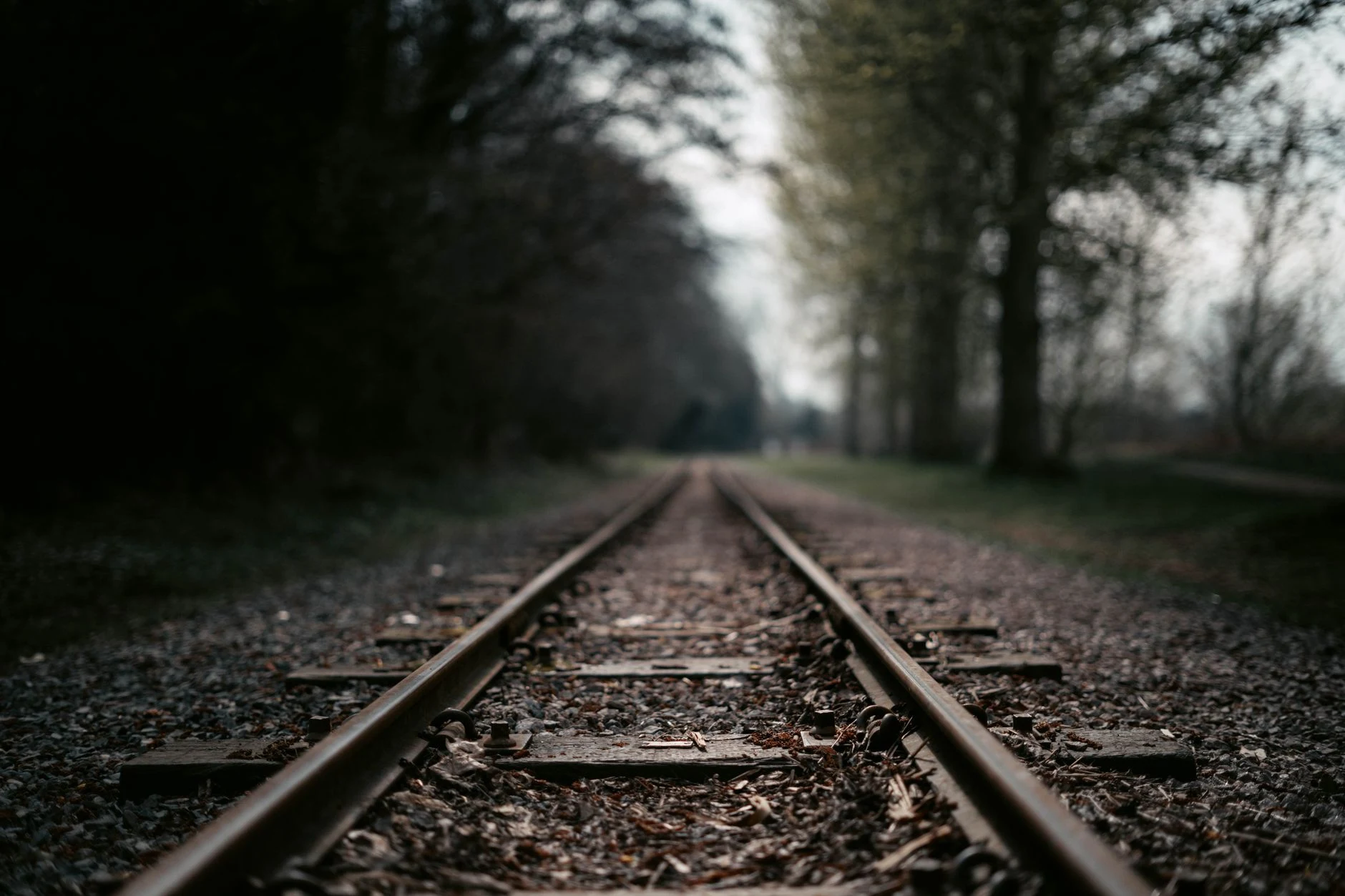
The analysis is hidden by default so you decide when to read it.
Train Dreams is a 2025 feature directed by Clint Bentley and co-written with Greg Kwedar, starring Joel Edgerton as Robert Grainier. The American Film Institute’s listing gives its running time as 102 minutes and credits Adolpho Veloso with cinematography and Parker Laramie with editing; Netflix’s official catalogue identifies the film as a 2025 production available on its service. The literary source is also documented: Denis Johnson’s novella first appeared in a slightly different form in The Paris Review in 2002 and was published as a standalone book in 2011. The more fruitful question is not whether the film reproduces every episode, but how it translates a narrative made of memories into an audiovisual experience of time. The scenes and choices discussed here are limited to those documented in interviews with the filmmakers and independent criticism; they are not presented as observations from a direct viewing of the complete film.
A life told in leaps, not by the clock
The first formal choice is one of scale: to span decades without turning every year into a dramatic chapter. Robert works in the forests and on railroad construction; he starts a family, suffers a loss and grows old as the world around him changes. Critics have described the story as a succession of episodes and glimpses, closer to fragments of memory than to a continuous chain of explanatory scenes. This structure does not remove chronology, but makes it uneven: some encounters are given duration and weight, while other periods are compressed between images, narration and ellipses.The editing helps show that this order was constructed, not simply inherited from the plot. Parker Laramie explained that the opening changed substantially in the edit: material originally intended for later was moved to the beginning to introduce Robert and bring the audience closer to him before the tragedy that reshapes his life. Because this concentration of information felt excessive, the sequence called Passageways was added ahead of it, conceived as a gentler, more poetic entrance. The effect is to invite viewers to settle into the film’s rhythm before it compresses time and events.
This production detail illuminates a specific narrative experience: the opening functions not only as exposition but as an agreement about how to watch. Rather than promising a biography arranged around milestones, it prepares us for a story that retrieves images and makes them meaningful when they return. Laramie also describes how the moose sequence in the middle of the film was reworked with memories of Gladys hunting and fragments of the courtship. The editing links Robert’s present to an earlier life without requiring him to explain what he feels. The past does not appear as a separate timeline, but as material breaking into the emotional present.
The landscape measures what the protagonist does not say
The film’s point of view combines a reserved central figure with a narrator who can tell us more than Robert puts into words. Bentley said he wanted to preserve Johnson’s literary voice and that voice-over narration was an early idea. He also justified it as a way of bringing viewers closer to a man of deep feeling who, in the director’s view, would not have remained true to character if he suddenly expressed himself in long speeches. The voice therefore does more than add information: it distributes interiority between narrated words and a body that remains silent.That solution has a double effect. The narrator can pass over intervals that a dialogue scene would have to dramatize, allowing the film to traverse Robert’s life with episodic economy. At the same time, it places a verbal frame around images that might otherwise remain open. Not every image is explained, but nor does the film offer a purely silent perspective limited to what Robert understands in the moment. Critics have noted that the narration can bring fluency and humour, while other viewers may feel it reduces some of the ambiguity. This is not a flaw settled by a single answer; it is a tension inherent in the form.
The cinematography carries this distribution of scale into the frame. Veloso has explained that the team wanted to treat nature as a character, show both its beauty and its danger, and alternate close views of faces with very wide shots in which people seem small. An analysis of the film also highlights the 3:2 aspect ratio and its capacity to bring figures and the expanses of the Pacific Northwest into the same frame. Taken together, these features create a visual measure: close-ups individualise experience; the landscape exceeds it. The forest is not merely the setting of a life story, but a workplace that makes railroad expansion possible and at the same time imposes its own rhythms and risks.
The naturalistic lighting, which Veloso described as a way to reduce the distance sometimes created by period films, reinforces the contrast. The story takes place amid technological transformation, but does not view the past from a pedestal: it situates its characters within the material conditions of work, rest and danger. Critics have drawn attention to scenes in which falling trees interrupt the tranquillity of the surroundings. The contemplative duration does not turn logging into an abstraction; it lets us perceive it as repetitive labour and as an alteration of a landscape that is itself changing on a historical scale.
From fire to memory: cuts that make loss visible
One especially clear example of temporal compression is the sequence linking Robert’s loss to memories of his relationship with Gladys. In a discussion of the editing, Bentley describes how shots of a moose hunt are connected through cuts to images of Gladys hunting; the edit then brings in moments from the beginning of their relationship and their plan to build a cabin. The present scene does not merely record grief: for a few moments, the cut opens the emotional archive contained within it. Robert’s weeping is not sustained by a long verbal explanation, but by the juxtaposition of death, subsistence and memories of a shared life.The fire is another turning point. Bentley explained that he wanted to show destruction as a material force while not giving up the strange beauty of a fire on that scale. The editor’s interview identifies the beginning and end of this tragedy among the moments that shaped the editing process; an independent review describes the fire breaking out and the ellipsis to Robert in a desolate landscape. The relationship between spectacle and loss is deliberate: the image may draw us in through its intensity, but that magnificence coincides with the disappearance of the domestic world that shaped Robert’s life.
Time also becomes perceptible through technologies that replace one form of work with another. One review identifies the arrival of the chainsaw as a sign that Robert is growing old and that his trade is no longer the same. There is no need to turn every innovation into a single, unambiguous symbol: its presence is enough to contrast a body accustomed to dangerous labour with the acceleration of its surroundings. At the opposite extreme of experience, the scenes in which the protagonist looks out from an aeroplane and contemplates outer space, noted by critics, widen the distance between the scale of an individual life and that of the century containing it. The temporal leap is measured not only by how much Robert has aged, but by how much the world he can see has changed.
Johnson’s novella and the film: kinship without equivalence
The relationship to the literary text is not a conjecture based on a shared title. Denis Johnson published Train Dreams in The Paris Review in 2002; the magazine’s page identifies it as a work of fiction in that issue, and publisher Farrar, Straus and Giroux lists the standalone 2011 edition. Bentley and Kwedar’s film adapts the novella, but the filmmakers themselves have described an act of interpretation: preserving the spirit and strangeness of the book while allowing the story to find its cinematic form.That difference makes it possible to compare techniques rather than keep a tally of fidelity. Johnson’s prose can leap and compress through the written voice; the film translates some of that mobility into voice-over, ellipses, framing and memory montages. Bentley has said that the book covers an entire life, is organised around memories and is deliberately “messy”; for him, the challenge was to carry that quality into a film structure without erasing its strangeness. The moose sequence documents how a memory became a visual relationship between scenes; the reordered opening shows that editing also determines when viewers receive certain fragments.
The comparison also reveals that “keeping the spirit” does not mean preserving the moral perspective intact. An independent review notes that the film softens Robert’s complicity in the racist assault on a Chinese worker, which is present in the novella, and thereby alters the portrayal of the character. This is a significant narrative change: the film may guide empathy differently by making Robert more clearly a witness to the violence. It should not be reduced to a minor adaptation detail, nor should we claim that every difference is resolved by visual beauty. Temporal form and moral form intersect: what a work places in the foreground or pushes to the margins also determines which parts of the past remain attached to its protagonist.
A rhythm that invites lingering, without erasing conflict
Critical assessments agree on the importance of the patient rhythm and landscape imagery, though they need not assign them the same effect. One review describes episodes and extended scenes of work; another appreciates how the voice-over moves easily between different times; the editor’s analysis explains, from the perspective of the production process, why material was brought forward and how memories were inserted. Taken together, these sources support the view that slowness does not consist simply of holding shots: it also results from distributing events, leaving intervals and allowing certain images to return with a different meaning.But a complete reading of time must include the collective history pressing on this intimate story. Logging, the railroad and changing tools connect Robert’s personal timeline to the transformation of the land. The staging may make a life seem small beside the forest, but the workers are not mere observers of the landscape: they take part in its alteration and bear the conditions of that labour. Individual loss and historical change are not parallel lines; the film brings them together in places, bodies and memories.
That is how the title can be understood as more than a literal reference to the train. The film does not offer a transparent clock for a life: it combines narration, memory, ellipsis and contemplation so that viewers perceive time through its traces. A scene of work, a voice skipping an interval, the fire that interrupts a home and the return of images of Gladys all help measure what remains. Its most precise wager is to turn duration into a relationship: between a person and a landscape, between a present and a memory, between the intimate time of loss and the accelerated time of a nation in transformation.
The analysis is hidden by default so you decide when to read it.
Key takeaways
- The film adapts Denis Johnson’s Train Dreams, first published in 2002 and issued as a standalone book in 2011.
- Voice-over and memory editing allow the story to span decades without a uniform chronology.
- Close and wide shots contrast Robert’s inner life with the scale of the landscape and historical change.
- Interviews with Bentley and the editor document how the opening’s order and the editing of the grief sequence were shaped in post-production.
- The adaptation changes moral nuances in the source: one critic notes that it softens Robert’s complicity in a racist assault.
Sources and filmography consulted
- criticalpopcorn.com. criticalpopcorn.com. Consulted 24 Sep 2026
- www.theguardian.com. www.theguardian.com. Consulted 24 Sep 2026
- www.timeout.com. www.timeout.com. Consulted 24 Sep 2026
- www.washingtonpost.com. www.washingtonpost.com. Consulted 24 Sep 2026
- www.redsharknews.com. www.redsharknews.com. Consulted 24 Sep 2026
- www.netflix.com. www.netflix.com. Consulted 24 Sep 2026
- www.csmonitor.com. www.csmonitor.com. Consulted 24 Sep 2026
- www.netflix.com. www.netflix.com. Consulted 24 Sep 2026
- www.theparisreview.org. www.theparisreview.org. Consulted 24 Sep 2026
- www.hammertonail.com. www.hammertonail.com. Consulted 24 Sep 2026
- www.netflix.com. www.netflix.com. Consulted 24 Sep 2026
- fest.afi.com. fest.afi.com. Consulted 24 Sep 2026
- www.latimes.com. www.latimes.com. Consulted 24 Sep 2026
- www.rogerebert.com. www.rogerebert.com. Consulted 24 Sep 2026
- screenanarchy.com. screenanarchy.com. Consulted 24 Sep 2026
- time.com. time.com. Consulted 24 Sep 2026
- www.netflix.com. www.netflix.com. Consulted 24 Sep 2026
- us.macmillan.com. us.macmillan.com. Consulted 24 Sep 2026
- www.netflix.com. www.netflix.com. Consulted 24 Sep 2026
