Film history
United Artists: creative control beyond the founding myth
The company was created to distribute films by artists who wanted to negotiate from a different position. But its history does not describe a state of permanent independence: it shows how financing, distribution, ownership and creative decisions could separate and later intersect again.
Content prepared with AI assistance and documented automated checks. This does not imply human review or first-hand viewing. Editorial methodology
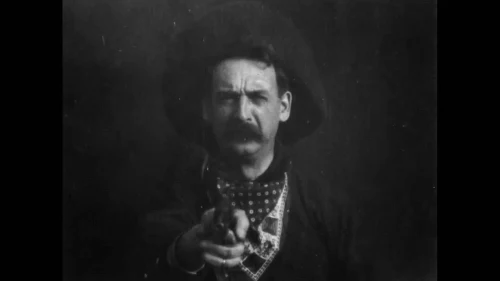
United Artists is often summed up as a promise: four Hollywood figures joined forces to control their films. The story has a documentary basis, but it becomes misleading if that founding is turned into a guarantee of lasting autonomy, or if functions that changed with the company’s owners and business model are attributed to the same entity without distinguishing between periods. The company founded in 1919, the United Artists reorganized by Arthur Krim and Robert Benjamin from 1951, and the company acquired by Metro-Goldwyn-Mayer in 1981 did not occupy the same position in the industry. To understand what a filmmaker could control at each stage, it helps to distinguish who produced a film, who financed it, who distributed it and who owned the company. This AI-assisted article is suitable for publication only after automated checks of sources, claims, localization, originality, quality and media rights have been documented and passed.
A company founded in 1919, not eternal independence
This account examines United Artists Corporation as a film company from its founding through its acquisition by MGM in 1981. It is not a history of every later entity that used the words United Artists, nor a continuous genealogy of every brand that revived them. The distinction matters: a company can change owners, financing arrangements and operations while a trade name survives or reappears.The Charlie Chaplin Archive holds a memorandum of agreement dated February 5, 1919, between Chaplin and United Artists Corporation. Its catalogue specifies that the articles of incorporation were signed on April 17 of that year by Chaplin, Mary Pickford, Douglas Fairbanks and D. W. Griffith. There is no need, then, to resolve the familiar difference in dates by choosing one and rejecting the other: the February document records an agreement, while the archival catalogue dates the act of incorporation to April. A photograph of the founders signing, by itself, does not explain how the company worked; contractual documents offer a more useful basis for investigating the relationship between artists and the company.
The Wisconsin Center for Film and Theater Research describes United Artists as a privately held corporation created to distribute films made by its founders and other independent producers. That wording supports a more precise version of the familiar story: the artists organized their own distribution company, not simply a collective workshop where every filmmaker had absolute authority over every aspect of their films. Distribution—putting a film into circulation, promoting it and negotiating its access to markets—is itself an exercise of corporate power, even though it is not the same as directing a shoot or deciding on an edit.
It is therefore best not to portray the original company as an exception to all commercial logic. Its promise was to change who negotiated with the distributor and who could share in the films’ proceeds. But its capacity to distribute still depended on a business organization and specific agreements. The founders’ autonomy—backed by their exceptional bargaining power as prominent figures—does not prove that every filmmaker associated with the company enjoyed the same terms.
From 1951: from distributor to financier
The second phase began under financial pressure. Tino Balio’s business history dates Arthur Krim and Robert Benjamin’s assumption of operational control to February 1951, through a management agreement with owners Mary Pickford and Charles Chaplin. The arrangement gave them an option to acquire a stake if United Artists made a profit in one of the specified initial years. Contemporary press coverage likewise described a transfer of management and an option conditional on profitability. Rather than a straightforward purchase or an immediate replacement of the owners, it was a negotiated transition that changed who ran the company.Krim and Benjamin did not suddenly turn United Artists into a traditional studio with a stable roster of stars and in-house production comparable to the major vertically integrated studios. They developed a model that linked the financing of independent films with their distribution. According to Balio’s account, producers could retain ownership of their films under certain agreements, while UA provided resources and organized their commercial release. The key word is “agreements”: the form and extent of financing, profit participation and distribution obligations could vary from one project to another.
This shift expanded UA’s role. It could no longer be thought of simply as a distribution outlet receiving completed films. When a company advances or provides financing, it takes on economic risk and acquires contractual interests in a project’s performance. That may give it influence over budgets, schedules, advertising or delivery terms without, by itself, proving that it selected every shot or imposed the final cut. Evidence for a claim of creative control requires documents or specific testimony about a decision, not merely the appearance of a logo in the credits.
The case of Bryna Productions, founded by Kirk Douglas, illustrates the distinction. The company began active production after signing a six-picture contract with United Artists in 1955. James Fenwick’s academic study, drawing on company papers and Douglas’s correspondence, addresses precisely the gap between the autonomy attributed to the agreement and later conflicts. The friction he examines was not limited to who directed a film: it also involved advertising and distribution, areas in which Bryna believed it should have greater latitude. This example does not justify generalizing about all UA contracts, but it does make it impossible to treat “autonomy” as a single, indivisible condition.
A court case offers another kind of evidence. In United Artists Corporation v. Fields Productions, the court describes financing and distribution contracts connected with the film Anniversary Waltz and payments claimed by people involved in the project. The case concerns financial obligations; it does not establish who had the final artistic say. That is precisely why it is useful: it reminds us that production, distribution and financing roles can overlap in a single contract, and that reconstructing them requires reading the relevant document rather than inferring them from a screen credit.
Independence changes when ownership changes
In 1967, United Artists came under the ownership of Transamerica Corporation. Financial press coverage at the time presented the transaction as the acquisition of a company that financed and distributed independently produced films. The change did not immediately erase its film business or turn every day-to-day decision into an order from the parent company. It did alter the ownership framework: a company that had operated under a different structure became a subsidiary of a conglomerate with other businesses and interests.This transition shows why “independent” needs a definition. It can mean that a production company does not belong to a major studio; that it retains the rights to a work; that it negotiates financing on a project-by-project basis; or that the distributor does not own the production company. These are not synonyms. An independent producer may depend on a major distributor to reach cinemas; a distributor may finance projects without producing them directly; and a company with some operational autonomy may still have a corporate owner. In that sense, UA under Transamerica could continue working with outside producers without being independent in terms of corporate ownership.
Nor was the relationship with the parent company uniform. Balio’s history records United Artists’ commercial growth during Krim and Benjamin’s tenure, but it does not turn that success into evidence of unrestricted creative freedom. Later, disagreements over the company’s direction led executives to leave and found Orion Pictures in 1978. The corporate chronology and interpretations of that conflict should be kept distinct: the fact of an executive split does not by itself show that Transamerica intervened in every production decision, or that the departure had a single cause.
A rigorous way to assess autonomy is to ask which decision is documented and for which project. Who approved the financing? Who could demand budget changes? Who controlled the advertising campaign? Which company owned the rights? Who had contractual authority over the edit? If the sources document only distribution or ownership, the conclusion should be limited to those functions. Corporate structures make some creative choices possible, restrict others or make them more costly; they do not automatically determine a film’s content.
Heaven’s Gate and the risk of an overly convenient explanation
The sale of United Artists to MGM in 1981 is often told as a direct consequence of Heaven’s Gate. The film does appear in contemporary sources as a major financial blow: in June 1981, The Washington Post reported that UA had charged $44 million against the investment in the film and the costs of advertising and distribution, and that MGM had agreed to buy the company from Transamerica for $380 million. UPI coverage recorded the completion of the acquisition on July 29, 1981, and noted that United Artists would continue to operate as a separate entity within the new group.This evidence supports the conclusion that the film was a significant factor in the transaction and that the accounting impact was not limited to production costs: it also included advertising and distribution. It is not enough, however, to claim that one film “killed” United Artists. Academic sources describe a broader corporate history, involving tensions between parent and subsidiary, changes in leadership and industry pressures. Reducing the sale to one film’s failure confuses the newsworthy trigger with the full explanation for a change in ownership.
Nor should acquisition be confused with immediate disappearance. The July 1981 report said UA would continue to operate separately under MGM. In terms of corporate control, it ceased to be independent of its former parent and came under MGM’s ownership; operationally, the brand and organization did not disappear that same day. These statements are compatible, but they describe different dimensions.
What “independent” can mean at each stage
The company’s trajectory allows us to replace the myth of constant autonomy with a verifiable account of change. In 1919, the company was organized to distribute films by its founders and other producers. From 1951, financing became a central part of its relationship with independent producers. In 1967, corporate ownership changed when it became part of Transamerica. In 1981, the sale to MGM transferred ownership again, although the entity continued to operate separately in the short term.None of these milestones, on its own, answers who controlled a particular artistic decision. Establishing that would require contracts, correspondence, production memoranda or corroborated testimony tied to the project. The Bryna study offers a case in which company papers and the relationship with UA shed light on a dispute about autonomy and distribution. The Fields case, by contrast, documents financial and distribution commitments without resolving the question of aesthetic control. Both are reminders that the evidence must fit the question.
Calling United Artists independent makes sense if the period and the aspect are specified: for example, a distribution model outside the major studios’ typical integrated structure, a network for financing independent producers, or a company owned outside the film industry. Without that precision, the word can conceal contradictions. At different stages, UA distributed films made by others, financed productions and belonged to conglomerates. Independence was not an essence protected by the name, but a changing relationship among creators, contracts, capital, distribution and owners.
It is also worth distinguishing the historical company from later revivals of the name. In 2017, MGM and Annapurna announced a joint venture for theatrical distribution in the United States; years later, the partnership revived the United Artists Releasing brand. That later use of the name does not make the joint venture the same corporation founded in 1919, nor does it demonstrate continuity in its structure or rights. Brand, legal entity, catalogue and operating model are distinct matters, each requiring its own documentation.
Key takeaways
- The agreement between Chaplin and United Artists is dated February 5, 1919; the archive dates the articles of incorporation signed by all four founders to April 17.
- The initial company is more accurately described as a distribution business for films by its founders and other producers, not as a universal guarantee of artistic control.
- From 1951, financing independent productions broadened UA’s role and created new contractual dependencies alongside new opportunities.
- The Bryna Productions case shows that autonomy could vary across production, advertising and distribution.
- The acquisitions by Transamerica in 1967 and MGM in 1981 changed ownership; they do not, by themselves, show who controlled each creative decision.
- Heaven’s Gate had a documented financial impact, but attributing UA’s sale exclusively to the film oversimplifies a broader corporate history.

Sources and filmography consulted
- www.washingtonpost.com. www.washingtonpost.com. Consulted 26 Sep 2026
- www.bibliovault.org. www.bibliovault.org. Consulted 26 Sep 2026
- www.latimes.com. www.latimes.com. Consulted 26 Sep 2026
- en.wikipedia.org. en.wikipedia.org. Consulted 26 Sep 2026
- research.manchester.ac.uk. research.manchester.ac.uk. Consulted 26 Sep 2026
- fraser.stlouisfed.org. fraser.stlouisfed.org. Consulted 26 Sep 2026
- escholarship.org. escholarship.org. Consulted 26 Sep 2026
- www.sec.gov. www.sec.gov. Consulted 26 Sep 2026
- books.google.com. books.google.com. Consulted 26 Sep 2026
- www.charliechaplinarchive.org. www.charliechaplinarchive.org. Consulted 26 Sep 2026
- wcftr.commarts.wisc.edu. wcftr.commarts.wisc.edu. Consulted 26 Sep 2026
- law.justia.com. law.justia.com. Consulted 26 Sep 2026
- www.jstor.org. www.jstor.org. Consulted 26 Sep 2026
- www.upi.com. www.upi.com. Consulted 26 Sep 2026
