Analysis
What Counts as Mystery? Mapping Its Boundaries with the Thriller and Crime Film
Genre labels help people find films, but they do not form a universal taxonomy. A small sample of archival records shows how mystery, criminal investigation and suspense overlap—and how a catalogue can separate them differently.
Content prepared with AI assistance and documented automated checks. This does not imply human review or first-hand viewing. Editorial methodology
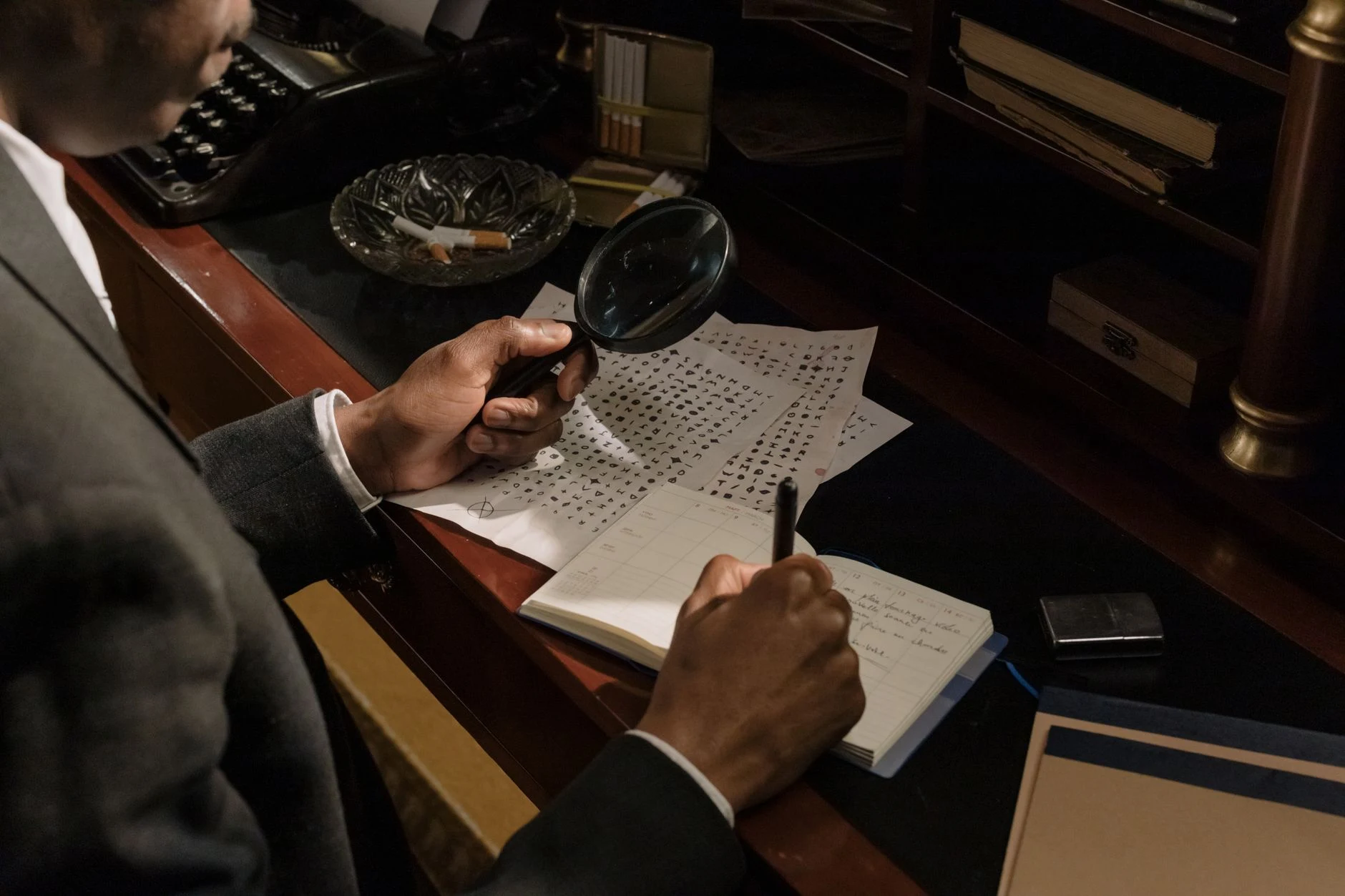
Is a film a mystery because it contains a crime, because someone investigates, or because the audience is kept in the dark about something it wants to know? The question seems simple until catalogue labels are compared. The same story may revolve around an inquiry and be classified as film noir; another record may call a film a “mystery” while reserving “suspense” for a subgenre. Rather than treating mystery, thriller and crime film as boxes with stable boundaries, it is more useful to ask which aspect each classification emphasizes. To test this, this article compares five American titles with archival records consulted on September 25, 2026, and considers them alongside historical and critical sources. The result is not a census of genres, but a limited, verifiable map of their overlaps.
A label describes a system, not an essence
The starting point is straightforward: a catalogue’s labels express that catalogue’s classification decisions. On their own, they are neither a universal definition of a film nor an exhaustive account of how it works. The US Library of Congress, for example, includes mystery, police and thriller among the specific forms that can be used to describe a film centred on a crime formula; its guide recommends choosing the most specific form when that is the film’s main aspect. This is a useful organizational tool, not a law requiring every film to belong to a single category.Critical scholarship confirms that this difficulty is not an accidental flaw in the records. Philippa Gates’s academic article defines detective film by its investigation of a criminal mystery, but notes that detective films cross genres and that the field is often grouped under broader categories such as crime film or film noir. That definition serves as a working criterion here: we will call a film police or detective film when the investigation and the person conducting it are identifiable central elements; mystery will refer to the question or unknown that organizes the story; thriller, meanwhile, will describe a way of sustaining anticipation or danger, without assuming that all uses share a single narrative template.
A small, deliberate and reproducible sample
The sample brings together five films with searchable records: The Maltese Falcon (1941), Laura (1944), Rear Window (1954), Gaslight (1944) and Chinatown (1974). These American titles make it possible to compare investigation, suspicion and classification within the same institutional corpus. The selection is deliberate, not random: the films were chosen to show differences among labels, not to measure how many films from a given period belong to each genre. Each title’s record allows its credits, year and classification to be checked; where a record includes a synopsis, that synopsis serves as evidence about the general structure of the investigation, not as a substitute for formal analysis of the film.The labels counted in this sample should not be inflated into a historical statistic. According to its own description of its scope, the catalogue consulted covers American feature films released theatrically between 1893 and 1993. This article reads five records; it neither downloaded nor reviewed an exhaustive set of results. For that reason, the figure of 262 films mentioned in the proposal has not been verified: the system that produced it, its date, the search criteria, and whether it counts primary genres, subgenres or both have not been identified. Without those details, it cannot be reproduced or compared with this sample.
Mystery and investigation do not always share a category
Rear Window offers a particularly clear case for observing levels of classification: its record identifies it as a mystery and lists suspense as a subgenre. The synopsis describes a photographer who suspects that a neighbour has committed murder and looks for clues from his apartment. The unknown and the investigation are connected, even though the investigator is not a professional directing a police inquiry. The record supports the claim that the film is catalogued as mystery and suspense; without documented viewing, it does not authorize conclusions about its framing, editing or pace.Gaslight occupies a different position. Its record classifies it as psychological mystery and includes psychological torment and police detectives among its subjects. The label brings together an unknown and a conflict of perception, but it does not require the story to be reduced to police procedure. Chinatown, for its part, is listed as mystery and romance, with “historical” in the subgenre field; its synopsis and subjects mention a private detective, murder and water. These examples show that “mystery” can coexist with other descriptions, and that the presence of an investigation does not mean every record adopts the label “police.”
Detective films can fall outside “mystery”
The reverse comparison helps avoid confusing a label with a plot. The Maltese Falcon’s record classifies the film as drama and assigns “detective” as its subgenre. Laura is presented as film noir, although its synopsis begins with a police lieutenant investigating a murder. In both cases, the investigation is documented; nevertheless, “mystery” does not appear as the main genre in those records. Rear Window’s record also shows that the catalogue can place suspense under mystery as a subgenre, while The Maltese Falcon places detective under drama.The thriller category does not provide a third box that can be counted cleanly here, either. In this small selection, the word appears as “suspense” within a genre-and-subgenre hierarchy, not as a label applied uniformly to all five films. This does not prove that the titles cannot be critically analyzed as thrillers; it shows only that, within the structure of these records, “thriller” is not an equivalent, parallel option in every entry. Before comparing counts, it is necessary to check which field is being counted and how the categories relate to one another.
The boundary also shifts with history
Current labels can obscure how categories were understood at other times. A peer-reviewed historical study of silent-era trade and popular press documents that “mystery” could encompass detective stories and horror films, two forms then associated with the investigation of the strange or inexplicable. This historical usage makes it impossible to project the modern division between police film, thriller and horror straightforwardly onto films from earlier decades. A retrospective label can make a film easier to find, but it does not show that audiences, distributors or critics used the same category when it was released.It also matters to distinguish an archival label from a narrative strategy. Oxford describes detective film as a narrative in which viewers can try to solve the puzzle before the detective does. This model emphasizes the distribution of information: what the investigating character knows, what the viewer knows, and when the solution is revealed. A reading focused on the thriller, by contrast, might ask how anticipation or threat is sustained, even when the protagonist is not a detective. These are compatible analytical questions, not proof that every mystery is a thriller or that every police film depends on a puzzle.
A practical map, not a rigid boundary
As a guide to reading, one can begin with three questions. What unknown does the story promise to resolve? If the answer drives the narrative, “mystery” is a useful description. Who investigates, and what procedures or institutions are involved? If the focus is on a detective or police inquiry, “crime film” or “detective film” helps specify the mechanism. Is anticipation and danger central even without a professional investigation? Then “thriller” may illuminate a dimension the other labels do not capture. None of these answers necessarily excludes the others: they describe different emphases and can coexist.The sample allows us to say that an archival record may classify films featuring an investigation as film noir or detective drama, and may also combine mystery with suspense, psychology or romance. It does not allow us to decide once and for all what those films “are,” calculate the overall proportion of genres, or attribute mise-en-scène features to them without analysis based on viewing. The strongest conclusion is a modest one: labels work better as search coordinates than as natural boundaries. To understand a film, we need to consider both the category assigned by the catalogue and the narrative question that its verifiable sources allow us to pose.
Editorial note
AI-assisted article. Eligible for publication only after passing the documented automated checks for sources, claims, localization, originality, quality and media rights.Key takeaways
- Genre labels depend on the catalogue and its structure; they are not universal definitions.
- In the sample, some films with documented investigations appear as film noir or detective drama, not as mystery.
- Suspense, mystery and crime film describe different emphases that can overlap.
- The figure of 262 films cannot be verified without knowing the system, date and counting criteria.
- The evidence consulted does not support claims about mise-en-scène based on viewing.
Sources and filmography consulted
- catalog.afi.com. catalog.afi.com. Consulted 25 Sep 2026
- catalog.afi.com. catalog.afi.com. Consulted 25 Sep 2026
- catalog.afi.com. catalog.afi.com. Consulted 25 Sep 2026
- aficatalog.afi.com. aficatalog.afi.com. Consulted 25 Sep 2026
- catalog.afi.com. catalog.afi.com. Consulted 25 Sep 2026
- academic.oup.com. academic.oup.com. Consulted 25 Sep 2026
- catalog.afi.com. catalog.afi.com. Consulted 25 Sep 2026
- catalog.afi.com. catalog.afi.com. Consulted 25 Sep 2026
- catalog.afi.com. catalog.afi.com. Consulted 25 Sep 2026
- www.bfi.org.uk. www.bfi.org.uk. Consulted 25 Sep 2026
- www.tandfonline.com. www.tandfonline.com. Consulted 25 Sep 2026
- catalog.afi.com. catalog.afi.com. Consulted 25 Sep 2026
- wwws.loc.gov. wwws.loc.gov. Consulted 25 Sep 2026
- catalog.afi.com. catalog.afi.com. Consulted 25 Sep 2026
- catalog.afi.com. catalog.afi.com. Consulted 25 Sep 2026
- catalog.afi.com. catalog.afi.com. Consulted 25 Sep 2026
- catalog.afi.com. catalog.afi.com. Consulted 25 Sep 2026
- catalog.afi.com. catalog.afi.com. Consulted 25 Sep 2026
- catalog.afi.com. catalog.afi.com. Consulted 25 Sep 2026
