Analysis
When Netflix Appears on a Film: How to Tell Distribution, Production and Acquisition Apart Without Treating a Brand as Authorship
AI-assisted article. The phrase “a Netflix film” may describe an in-house production, a rights acquisition or an exclusive streaming window. Three case files show why a brand alone cannot reconstruct who made, financed, sold or released a work.
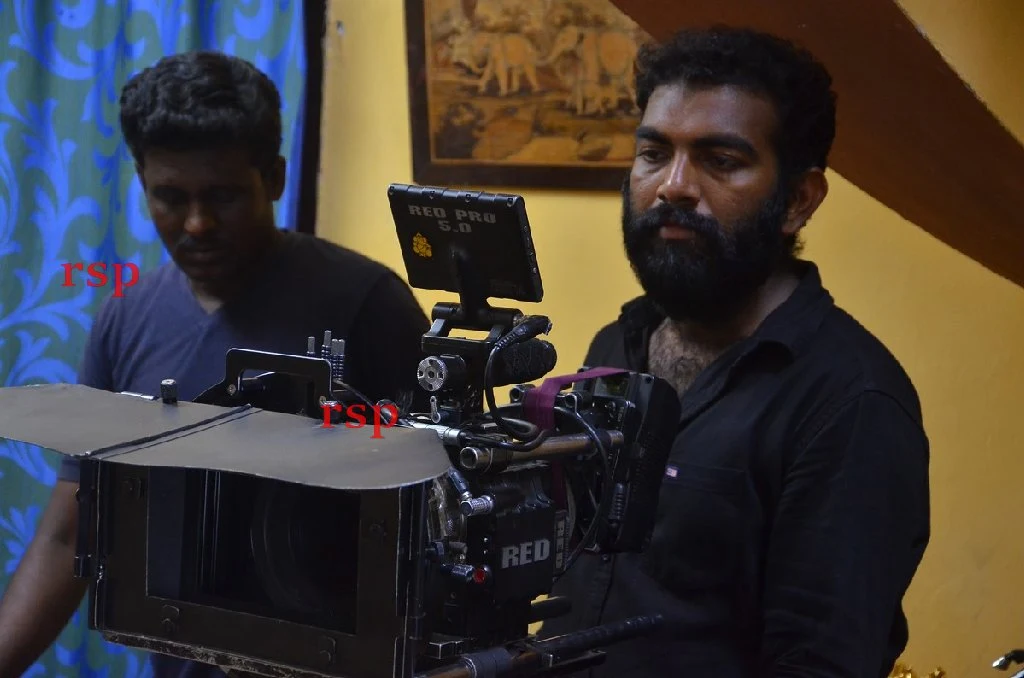
“A Netflix film” is shorthand, not a single category
Marketing uses the brand to guide viewers: it promises a recognisable route of access and release framework. But that commercial role is not a list of responsibilities. “Netflix presents”, “only on Netflix”, “a Netflix film”, and Netflix appearing among several companies can coexist with very different industrial chains.It is useful to reserve “distributes” for the party organising or exploiting a release in the relevant market; “acquires rights” for an operation after the project’s development, through which a company obtains exploitation rights; “produces” for a company credited as producer or a division documented as participating in production; and “finances” only when a reliable source identifies a financial contribution or backing. All four roles may be concentrated in one company, but they need not be.
It also matters to distinguish a film commissioned or produced for a platform from one bought for its catalogue. In the first case, the platform may be involved in the production organisation. In the second, it may arrive after the project already has producers, a crew and sometimes a release strategy designed by others. The distinction neither diminishes nor elevates a work’s artistic value: it prevents a false attribution of origin.
What to look for in credits, and what they cannot prove
End credits are the first document to consult, but they are not a device that settles everything. They identify names, roles and companies the film chooses to credit. If a company appears under a production heading, that supports the role stated by that heading. If it appears as distributor, that supports its role in circulating that version, in that market or at that stage. If the brand merely leads the presentation or promotion, the evidence is narrower: it establishes brand visibility, not the full range of industrial decisions.Credits should then be checked against external materials. An acquisition announcement may specify territorial scope. A production company’s statement may identify who developed or backed the project. A festival listing can help establish a date and first screening, although it does not replace a rights contract. A studio’s corporate page may show that a physical edition, domestic distribution or later exploitation remains with another company.
Three mistakes recur. The first is treating “original” as synonymous with “made from scratch by Netflix”. The second is reading distribution as evidence of financing. The third is inferring creative control from ownership of an exhibition window. Public documents rarely map every approval, discussion and contribution in a production; responsible criticism therefore does not fill those gaps with a brand.
Case file 1: The Sea Beast and documented production involvement
The Sea Beast represents the case in which Netflix is not simply the place of release. Netflix’s corporate materials place the film within Netflix Animation’s activity, and the company’s professional documentation presents that division as a feature-film production structure. In this case, the cautious wording is that the film is connected to Netflix Animation’s production and was released by Netflix.Even here, a decisive distinction must be maintained. Netflix Animation being credited as a production company does not make Netflix the individual author of the staging, screenplay, design or every animation decision. Those tasks belong to credited people and departments: directing, writing, producing, production design, animation, sound and many other areas. The company expresses a business and production position; individual credits make the concrete division of labour visible.
For viewers, this model often affects access: the release is organised primarily around the service and its global launch. But a work produced by a platform’s structure remains a collective work. The precise phrase is not “Netflix made the film”, but “Netflix Animation is credited as a production company; the film credits its creative and technical contributors in specific roles”.
Case file 2: The Power of the Dog, acquisition and worldwide distribution with exceptions
The Power of the Dog offers a different and especially revealing model. In May 2019, Netflix announced its acquisition of worldwide rights to the film from Cross City Films, the sales arm of See-Saw Films. The same announcement identifies See-Saw Films, Big Shell Films/Max Films Production, Brightstar and BBC Films in the production chain, and specifies that BBC Films had developed the project and was backing its production.The deal was therefore not evidence that the film originated entirely as a Netflix production. What is documented is an acquisition of rights and a worldwide distribution agreement, with explicit limits. UK free-to-air television rights were retained by BBC Films; Transmission Films also released the film theatrically in Australia and New Zealand, while Netflix worked with local partners on other theatrical releases.
This case file teaches two rules. First: a platform may be a film’s worldwide distributor without being its only credited production company. Second: “worldwide” should almost never be read as an absolute word without checking the exceptions. A viewer who watched the film under the Netflix brand had a genuine distribution experience, but that experience does not erase the production companies, sales agent, co-producers or rights holders excluded from the agreement.
Case file 3: The Imaginary and an exclusive streaming licence after its Japanese theatrical release
The Imaginary requires even greater precision. Studio Ponoc presented the film as a studio work, with Yoshiyuki Momose as director and Yoshiaki Nishimura as producer. Netflix later announced an agreement for global streaming rights to Studio Ponoc’s forthcoming feature films and described the platform as the exclusive streaming home. The film, however, had an exclusive Japanese theatrical release before its worldwide Netflix launch.It is not advisable here simply to say that Netflix “distributed the film worldwide” without adding what type of rights is documented. The wording supported by the announcements is more specific: Netflix acquired global streaming rights and hosted the worldwide platform release after Japanese theatrical exploitation. Studio Ponoc continued to describe the work as its film and communicated its production, language versions and releases.
The lesson is that exclusivity does not necessarily mean exclusivity across every window. A film may be exclusive in streaming while having previously belonged to a particular theatrical circuit, retaining physical editions in one market, or being subject to different agreements by language, territory and format. A catalogue shows current availability; it does not by itself summarise a work’s full circulation history.
What changes for the person watching the film
The industrial relationship can alter the viewer’s experience, even though it does not authorise conclusions about authorship. It can determine when a film arrives at home, the priority given to theatrical release, the availability of dubbing and subtitles, campaign design, the number of release territories, and a title’s later permanence in or departure from the catalogue. It can also shape which promotional materials become most visible: a platform promotes its shared brand even when the production genealogies of its titles differ greatly.This does not mean viewers must conduct an audit before every screening. It is enough to replace a vague question — “whose is it?” — with verifiable ones: “who produced it?”, “who released it here?”, “what rights did the platform buy?”, and “what territorial or window exception appears in the announcement?” The result is a more accurate critical conversation, less dependent on commercial packaging.
The method’s limits: what neither credits nor announcements can settle
Credits do not necessarily reveal every source of financing, presale agreement, public incentive, music right or internal decision. Announcements, meanwhile, are interested-party documents: they usually describe what a company wishes to emphasise and may simplify a complex transaction. Claims must therefore be calibrated.It is reasonable to state that a company acquired rights if its announcement says so; reasonable to state that a company is credited as producer if it is credited that way or listed as such in a reliable institutional record; and reasonable to note exceptions if the agreement lists them. It is not reasonable to leap from those facts to “the platform creatively controlled the film” without a statement or documentation proving it.
Nor should current availability be assumed to confirm permanent rights. Contracts may be temporary, territorial or tied to specific windows. A work leaving a catalogue does not prove a dispute; remaining there does not prove total ownership either. The method describes published evidence, not the contents of private contracts.
A brief guide to describing the relationship precisely
First, name the film and the territory or window being discussed. Second, copy or consult the credits: separate production companies, individual producers, distributors and any presentation credit. Third, find Netflix’s release or acquisition announcement and, where available, that of the producer, selling studio or sales agent. Fourth, identify the scope literally: production, financing, worldwide rights, streaming rights, theatrical distribution or exclusive licence. Fifth, note the exceptions: countries, free-to-air television, theatres, physical media and dates.With these five steps, the article’s three formulations become clear. For The Sea Beast: production connected to Netflix Animation. For The Power of the Dog: rights acquisition and worldwide distribution with exceptions, built on a production involving several companies. For The Imaginary: global streaming rights and exclusive Netflix availability after a Japanese theatrical release. None of the three is adequately summarised by the same phrase, even though all three may appear to users under the Netflix umbrella.
Precision does not make the platform’s name less useful; it restores it to the proper scale. Netflix may be decisive in enabling a film to exist, reach a country or be viewed on a particular date. But its presence should be read as a documentable function, not an automatic signature of authorship.
Sources and filmography consulted
- www.ponoc.jp. www.ponoc.jp. Consulted 17 Sep 2026
- about.netflix.com. about.netflix.com. Consulted 17 Sep 2026
- about.netflix.com. about.netflix.com. Consulted 17 Sep 2026
- about.netflix.com. about.netflix.com. Consulted 17 Sep 2026
- about.netflix.com. about.netflix.com. Consulted 17 Sep 2026
- www.ponoc.jp. www.ponoc.jp. Consulted 17 Sep 2026
- about.netflix.com. about.netflix.com. Consulted 17 Sep 2026
- www.sonypictures.com. www.sonypictures.com. Consulted 17 Sep 2026
- about.netflix.com. about.netflix.com. Consulted 17 Sep 2026
- about.netflix.com. about.netflix.com. Consulted 17 Sep 2026
- about.netflix.com. about.netflix.com. Consulted 17 Sep 2026
- www.netflixanimation.com. www.netflixanimation.com. Consulted 17 Sep 2026
- about.netflix.com. about.netflix.com. Consulted 17 Sep 2026