Film history
Swiss cinema: a film history shaped by languages, public support, and co-productions
Local production coexisted for decades with screens dominated by imported films. The support approved in 1962 and the rise of an independent cinema in the 1960s and 1970s help explain a history that does not fit into a single national aesthetic.
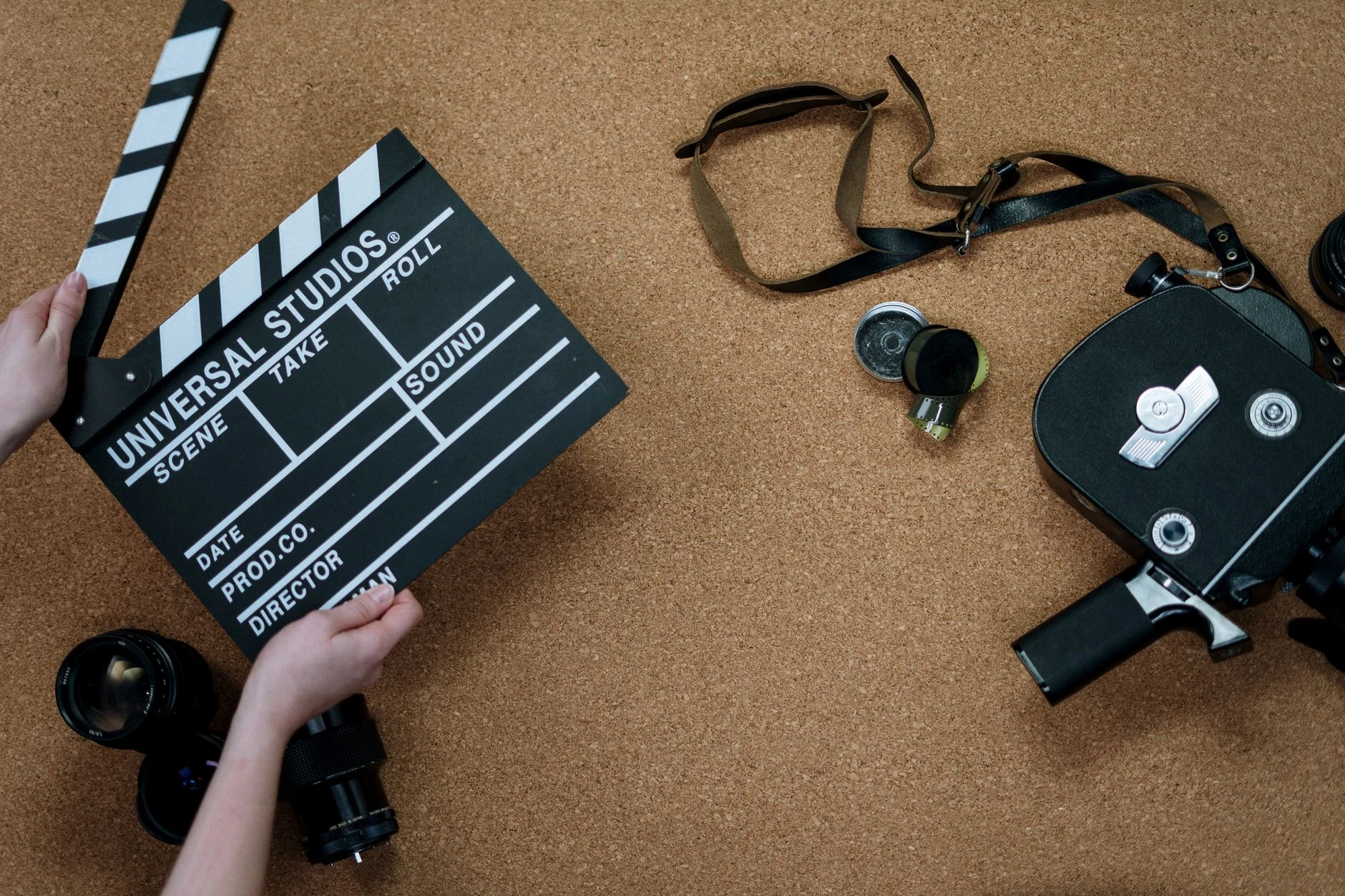
The history of Swiss cinema combines an active local production with an exhibition market dominated for decades by imported films. It is also marked by several linguistic communities and by works whose production nationality does not always coincide with the place where they were filmed. The public support approved in 1962, along with lightweight shooting and sound equipment, contributed to the rise of an independent and critical cinema in the late 1960s and throughout the 1970s.
Local production in an import market
The first film screenings in Switzerland took place in 1896; the first permanent cinemas appeared eleven years later. In those early years, local filmmakers specialized in actualities, especially landscapes and travel films, a practice that fed the country's documentary tradition.Local activity did not equate to a consolidated industry. Between 1908 and 1964, more than two hundred 35 mm feature films were produced in Switzerland, but the screens were dominated by imported films, especially from the United States and France. Before the mid-1960s, there was no established film industry.
Language also influenced circulation. After the arrival of sound, popular comedies were made in the Swiss-German dialect, but their audience was mainly local in a country with four linguistic communities. Thus, producing films in Switzerland did not imply that they reached a unified national audience.
Public support and the independent cinema of the 1960s and 1970s
In 1962, the Swiss government approved legislation aimed at subsidizing domestic production. Along with the availability of 16 mm cameras and lightweight sound recording equipment, this support contributed to the emergence of an independent and critical cinema. Its filmmakers worked in documentary or combined documentary and fiction; their films aimed to show the contradictions beneath the appearance of order and calm in Swiss society.Alain Tanner and Claude Goretta, who had learned their craft in the British Free Cinema group, formed the core of the so-called Group of Five along with Michel Soutter, Yves Yersin, and Jean-Louis Roy. The movement drove the new Swiss cinema of the late 1960s and 1970s. Among its key films are Jonah Who Will Be 25 in the Year 2000, by Tanner, and La dentellière, by Goretta, a French-German-Swiss co-production.
State support was one part of that change, not a single explanation: lighter production tools and the work of filmmakers who crossed the boundaries between documentary and fiction were also part of the context.
Production nationality is not the filming location
A film can gather financing and partners from several countries, even if it is filmed in just one. La dentellière, by Claude Goretta, is an example of a French, German, and Swiss co-production. Un mundo para Raúl, a 2012 short film by Mauro Müller, was presented as a co-production between Switzerland, Mexico, and the United States, and was filmed in the Mexican state of Morelos.These are distinct data points: the production nationality, the filming location, and the circuits through which a film circulates. Considering them separately avoids reducing a work to its setting or to the nationality of its director.
Archives and international exhibition
Founded in 1948, the Cinémathèque suisse preserves films and materials related to Swiss and international cinema. Its non-film department includes documents that allow the study of the production, direction, and distribution of films in Switzerland, as well as the history of institutions, associations, and festivals. The institution collaborates with cinemas, film libraries, and festivals around the world by making its collections available.Exhibition outside Switzerland also leaves concrete traces. In December 2015, the Cineteca Nacional de México presented the cycle Joyas del cine suizo, featuring thirteen feature films and one short film, in collaboration with SWISS FILMS and the Embassy of Switzerland in Mexico. The selection included examples of the new wave, such as La salamandra, La invitación, and Las pequeñas fugas. The cycle shows how a retrospective can gather Swiss works for a specific audience on a given date; it does not by itself establish their general reception or subsequent commercial availability.
Reading Swiss cinema without seeking a single style
Swiss production developed in a market dependent on imports and crossed by linguistic differences. The public support of 1962, the new lightweight filming and sound tools, and the work of independent filmmakers contributed to a particularly distinguished period in the 1960s and 1970s. Co-productions and international retrospectives show, in turn, that a film's trajectory does not stop at its country of production.To understand a specific work, it is useful to distinguish who produced it, where it was filmed, and through which circuits it was exhibited. These questions allow us to speak of Swiss cinema as a history connected with other countries, without turning a language, a landscape, or a movement into the essence of an entire cinematography.
Key takeaways
- Between 1908 and 1964, more than two hundred 35 mm feature films were made in Switzerland, although the screens were dominated by imports, especially from the United States and France.
- The subsidy legislation approved in 1962 and the availability of lightweight equipment contributed to the rise of the independent and critical cinema of the late 1960s and 1970s.
- Production nationality, filming location, and circulation are different data points, as shown by the co-productions of La dentellière and Un mundo para Raúl.
- Archives and international retrospectives help study the preservation and exhibition of films, but they do not prove their current commercial availability.

Sources and filmography consulted
- CINETECA NACIONAL. www.cinetecanacional.net. Consulted 12 Nov 2026
- Exile, Identity, Cinéma des copines: Women Filmmakers in Switzerland. www.sensesofcinema.com. Consulted 12 Nov 2026
- Cinema of Switzerland. en.wikipedia.org. Consulted 12 Nov 2026
- Collections. staging.cinematheque.ch. Consulted 12 Nov 2026
- Our mission. www.swissfilms.ch. Consulted 12 Nov 2026
- The Cinémathèque suisse. staging.cinematheque.ch. Consulted 12 Nov 2026
- The National Film Institute. www.jstor.org. Consulted 12 Nov 2026
- Non-Film Department. staging.cinematheque.ch. Consulted 12 Nov 2026
- Film museums in Switzerland - WhichMuseum. whichmuseum.com. Consulted 12 Nov 2026
- La Cineteca Nacional exhibirá Joyas del cine suizo. www.gob.mx. Consulted 12 Nov 2026
- Switzerland - National Cinemas - Research Guides at University of .... guides.library.utoronto.ca. Consulted 12 Nov 2026
- Film Studies: National Cinemas: Switzerland - Research Guides. researchguides.dartmouth.edu. Consulted 12 Nov 2026
- BFI Film Studies Collection. www.screenstudies.com. Consulted 12 Nov 2026
- Program | Switzerland. www.sciencefilm.ch. Consulted 12 Nov 2026
