Film history
Czech Cinema: Why the History of Czechoslovakia Matters Too
Czech cinema did not begin with the Czech Republic. Its early milestones and the New Wave belong to a shared Czechoslovak history, while today’s film production operates within a different institutional framework.
Content prepared with AI assistance and documented automated checks. This does not imply human review or first-hand viewing. Editorial methodology
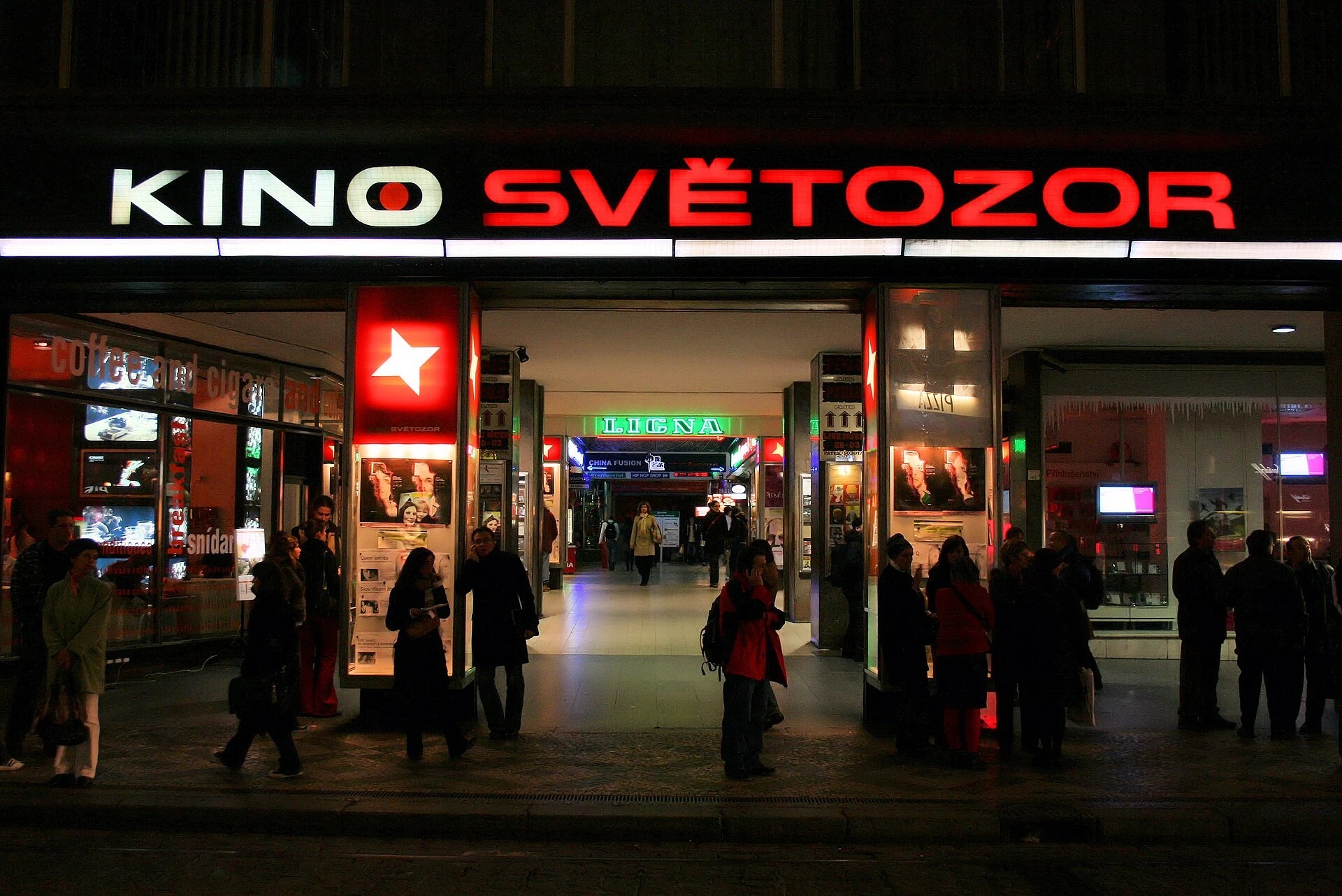
To understand cinema from the Czech Republic, it helps to start with a historical distinction: contemporary Czech cinema and films made when the country was part of Czechoslovakia are not interchangeable categories. This continuity lets us follow works and movements across political changes, but it does not justify retrospectively assigning Czech nationality to all films made before 1993. It is also important to distinguish a country’s film production from films shot on its territory: Czech studios, crews and locations can attract international productions without automatically making those films Czech.
A national film history with a shared past
The Lumière films were first screened in Prague in 1895; in 1898, Jan Kříženecký made short actuality films. Regular production developed from 1910, and Max Urban’s 1913 adaptation of the opera The Bartered Bride is counted among its early milestones. But this early chronology does not belong to an independent Czech state: Czechoslovakia was formed in 1918, and the Czech Republic remained part of it until 1993. For films from those decades, “Czechoslovak” may therefore be the more historically precise description. “Czech cinema” can also describe a broader cultural tradition, provided the two frameworks are not confused.Before the New Wave: studios, industry and commercial cinema
In the decades before the Second World War, a film industry took shape that combined commercial production with artistic ambitions. By the late 1930s, around 40 features had been made, and Prague’s Barrandov studios were among Europe’s most advanced. Director Martin Frič was a prolific figure in commercial cinema; in a different vein, Gustav Machatý gained international recognition with Erotikon (1929) and Ecstasy (1933). This picture avoids reducing film history to a single movement: before the New Wave, a studio industry and films seeking different forms and audiences already existed side by side.The New Wave: a movement shaped by Czechoslovak liberalization
The Czechoslovak New Wave was associated with the political and cultural thaw of the 1960s, which culminated in the Prague Spring of 1968. Around the middle of the decade, some 60 films appeared that are often associated with black humour and absurdism; some also featured young non-professional performers and unscripted dialogue. Films that show the movement’s range include A Blonde in Love (Miloš Forman, 1965), Closely Watched Trains (Jiří Menzel, 1966) and Daisies (Věra Chytilová, 1966). They are not examples of a single formula, but works by different filmmakers made during a period of liberalization. The repression that followed the Prague Spring drove several filmmakers into exile; Forman and Ivan Passer moved to the United States.What the label “Czech cinema” can—and cannot—tell us
The label is useful as a point of entry, not as an automatic explanation of a film’s form. A Czechoslovak film from the 1960s and a contemporary production from the Czech Republic belong to different state contexts, even if they are part of a related cultural history. A film’s nationality or production involvement must also be distinguished from its filming location: shooting in Prague or using local facilities is not, by itself, enough to establish who produced a film. Today, the Czech Film Center, established in 2002, promotes Czech cinema and the film industry abroad and works with producers on development and release strategies. Its work provides an institutional reference point for contemporary cinema, not a retrospective definition of the entire history.A short route into Czech cinema
An introductory selection can bring films from different periods and sensibilities into conversation: The Bartered Bride (1913) as an early milestone; Erotikon (1929) as a way into the pre-war era; and A Blonde in Love, Closely Watched Trains and Daisies to explore the New Wave’s range. This route does not represent all Czech cinema, nor does it make films produced before 1993 Czech in the state-based sense. Rather, it offers a way to see how a cinematic tradition crosses institutions and political borders while keeping the differences between its periods in view.Key takeaways
- Czech cinema includes periods before the Czech Republic existed and is closely connected to Czechoslovakia’s history.
- Films made before 1993 should be understood in the state context of their time; cultural continuity does not erase that distinction.
- The New Wave formed part of Czechoslovakia’s liberalization in the 1960s and brought together diverse films and filmmakers.
- Filming on Czech territory alone does not establish that a film is a Czech production.
Sources and filmography consulted
- Our activities. www.filmcenter.gov.cz. Consulted 30 Oct 2026
- Collection. www.nfa.cz. Consulted 30 Oct 2026
- Maria. distributionwithglasses.com. Consulted 30 Oct 2026
- Noticias y recursos de cine experimental. expcinema.org. Consulted 30 Oct 2026
- Czechia (Czech Republic) - Film Studies: National Cinemas. researchguides.dartmouth.edu. Consulted 30 Oct 2026
- Czech Film Industry. www.google.com. Consulted 30 Oct 2026
- buñuel, un cineasta surrealista. sede.mcu.gob.es. Consulted 30 Oct 2026
- the time-lapse portraits of helena třeštíková. anthologyfilmarchives.org. Consulted 30 Oct 2026
- Karel Zeman's Dream. www.google.com. Consulted 30 Oct 2026
- National Film Archive. www.google.com. Consulted 30 Oct 2026
- Czech Film Archive. en.wikipedia.org. Consulted 30 Oct 2026
- Cinema of the Czech Republic. en.wikipedia.org. Consulted 30 Oct 2026
