Film history
1920s Cinema: Documented Works and Context
A decade does not fit into a single film or the label of 'silent cinema.' Available sources allow for the study of specific works and their frameworks, but they do not support an exhaustive history of the industries, techniques, and audiences of those years.
Content prepared with AI assistance and documented automated checks. This does not imply human review or first-hand viewing. Editorial methodology
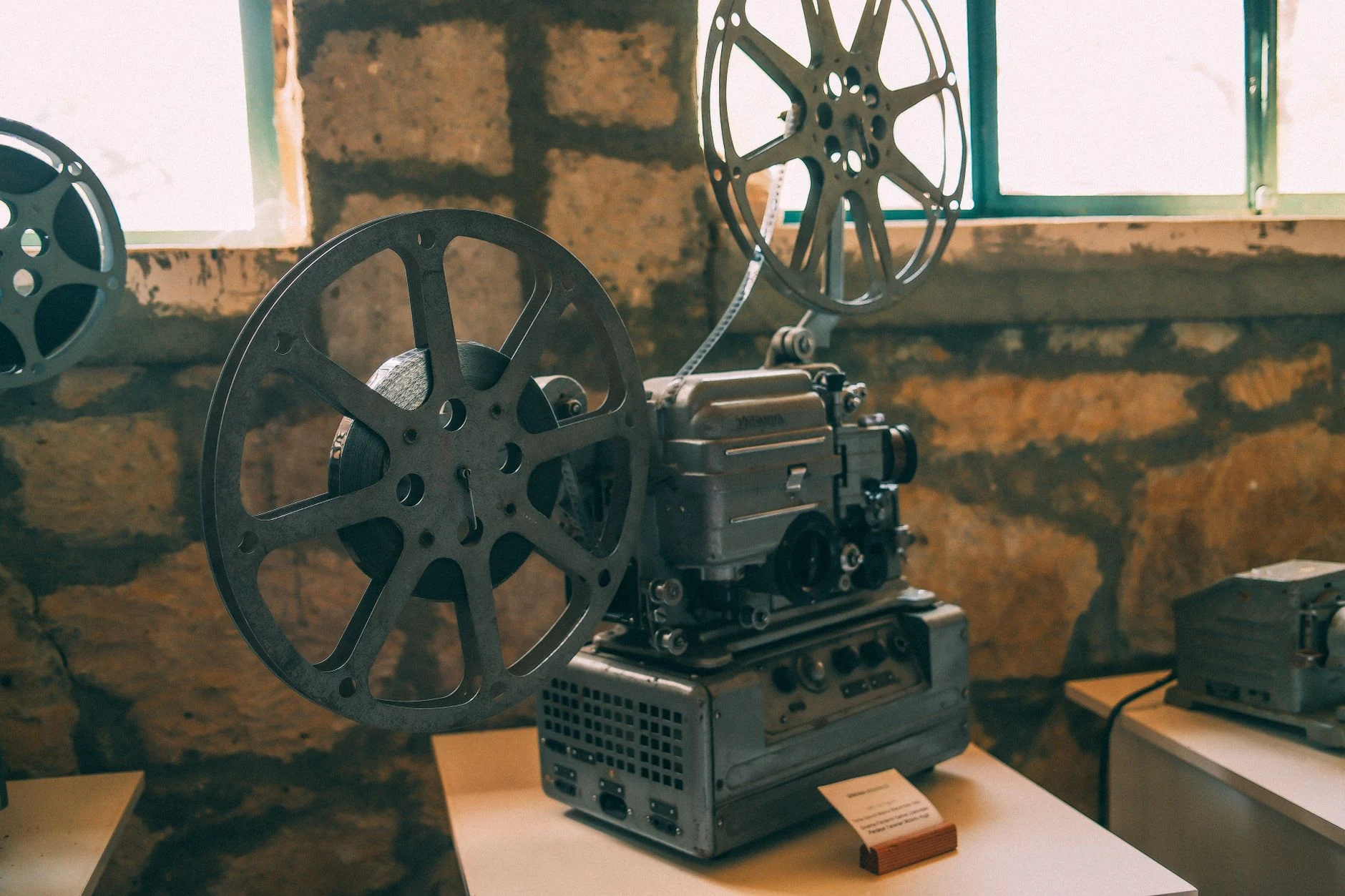
The 1920s are often summarized as the age of silent cinema or an era of avant-gardes. Both formulas orient but also reduce: one gathers under a single label cinemas from distinct contexts; the other can turn a selection of works into a portrait of the entire period. To avoid this, this article starts from a limited file: a clearly identified film, reference sources, and academic materials whose bibliographic data actually appear in search results. This evidence allows for posing questions and pointing out limits; it is not enough to offer a complete chronology or to confirm every credit, premiere, or industrial practice of the decade.
What the file can support
The most concrete case in the located documentation is Battleship Potemkin, identified as a 1925 film directed by Sergei Eisenstein and produced by Mosfilm. The synopsis describes a recreation of the 1905 mutiny aboard the battleship Potemkin. These data allow situating a Soviet work in the decade and distinguishing the film's year from the historical moment it represents. However, the available entry comes from a collaborative encyclopedia, not from an institutional catalog or production document. It is an identification clue, not independent corroboration sufficient for each data point. The file itself does not provide film archive entries, identified copies, original credits, or premiere documentation for this film. Therefore, the claims here are limited to what can be attributed to the located source and do not turn that attribution into archival certainty.A decade is not a single history
A decade's schema can help order dates, but it does not prove that films shared production, circulation, or reception conditions. The gathered evidence names a Soviet work, includes a university reference to research on Paris in cinema, and links a text on cinema and popular spectacle. These are indications of different lines of study, not a sufficient sample of all cinemas or audiences of the twenties. The located academic work on Paris mentions five films and compares their representations of the Seine; the excerpt does not list the titles nor offer a framework here that allows extrapolating its conclusions to the entire decade. Similarly, the text hosted on the Miguel de Cervantes Virtual Library proposes examining the relationship between cinema and popular spectacle, but the available fragment does not provide specific data that we can extend to all theaters or spectators. Comparison between works must begin with identifiable catalogs and studies, not with a generalization derived from the label 'twenties'.Battleship Potemkin: a case, not a measure
The consulted entry links Eisenstein's film to the 1905 rebellion and describes it as a silent historical drama. The distance between the represented date and the production date is useful for a historical reading: a film set in the past also belongs to the cultural and political circumstances of its own moment. But the file does not contain research on how it was produced, how it circulated, or how it was received in different territories. Nor is the encyclopedic mention of its association with montage enough to reconstruct a working method or measure its influence. The search result states that the film has been widely studied, but it does not offer a specific academic bibliography that allows evaluating that claim. Therefore, it is reasonable to treat it as a concrete example of cinema from the decade, not as its universal emblem or as autonomous proof of a common formal history.Context and evolution: questions before closed narratives
Speaking of evolution requires specifying what changes, where, and according to which sources: production forms, exhibition technologies, visual styles, distribution networks, or audience practices are not interchangeable. The provided material allows formulating these questions, but not answering them with general scope. The university reference on Paris points to a comparative method—observing how different films represent a city or a motif—while the Cervantes Virtual text opens another path: studying the place of cinema in popular spectacle. Neither excerpt, by itself, documents a technical or social transition of the entire decade. It would be especially risky to narrate these years as a uniform march toward synchronized sound: the file does not provide sources on the chronology, markets, or conditions of that transformation. The responsible conclusion is more modest: the decade can be researched as a set of trajectories and problems, but here primary and specialized studies are lacking to trace its compared evolution.Verifiable works: selection and cautions
A list of titles would be useful only if each film were identified through reliable records, with its dates and credits cross-checked. The available results do not reach that threshold for several works that appear in popular articles or lists: those texts can serve to locate themes, but they do not replace the records of archives, libraries, or conservation institutions. For Battleship Potemkin, the encyclopedic entry provides a year, direction, and producer, although independent corroboration remains pending. For the university study on Paris, the excerpt confirms the general object of the work, not the titles analyzed. We therefore do not add other films to the inventory nor attribute the value of a canon to an arbitrary selection. Subsequent research should compare film archive and library catalogs with academic studies and, when they exist, credits of copies or production documents. Until then, the most solid data in this file is that there is an identifiable case, while a broad and verified list is not yet documented.Limits and uncertainties
The quantity and nature of the sources determine the scope of the article. There is an encyclopedic result with information about a film, an academic reference whose excerpt summarizes a study on representations of Paris, and a text hosted on a digital library on cinema and popular spectacle. The file does not include three independent institutional or academic sources that corroborate the credits and date of the film; nor does it offer archival records of other works, evidence of premieres by territory, or current documentation of availability. A reference to a film does not certify that it can be legally seen on a specific platform nor that an associated image can be reused. The administrative date of a film permit, if it appeared in another research, should also not be confused with the premiere date. For these reasons, this essay functions as a map of what can be asked and what still needs to be proven, not as a definitive history of the decade.How to advance without turning a work into an emblem
A firmer history would begin by defining a sample and a territory, locating film records in archives or libraries, and checking which date each source describes: production, premiere, deposit, or authorization. Then credits and versions would have to be cross-checked with primary documentation, and academic bibliography added that allows contextualizing the differences between industries and audiences. Films could then be compared by concrete problems—urban representation, staging, montage, or relationship with other spectacles—without assuming that one case proves a general rule. In this file, the contrast between a 1925 Soviet film, an academic study on Paris, and a work on popular spectacle shows, above all, the diversity of possible questions. It does not authorize a total synthesis. That limitation does not invalidate the research: it makes visible the missing documentary work and avoids transforming a chronological label or a famous work into a substitute for evidence.Key takeaways
- Battleship Potemkin appears in the located source as a 1925 film directed by Sergei Eisenstein and produced by Mosfilm, but the file does not provide independent institutional corroboration of those data.
- The film represents the 1905 mutiny; its represented date should not be confused with its year of production.
- A university study on Paris in cinema and a text on cinema and popular spectacle open lines of research, but their excerpts do not allow generalizing about the entire decade.
- Available sources do not support a broad list of films with corroborated dates and credits nor an integral history of the evolution of the twenties.
- The mention of a work in a source does not confirm its current legal availability nor authorize the reuse of its images.

Sources and filmography consulted
- El cine por décadas- 1920-1930. mondo-berlanga.blogspot.com. Consulted 15 Oct 2026
- Películas de la década 1920. www.imdb.com. Consulted 15 Oct 2026
- El Cine de 1920 - El jardin del pulpo. www.eljardindelpulpo.cl. Consulted 15 Oct 2026
- Las mejores películas de los años 20, clímax y final del .... www.fotogramas.es. Consulted 15 Oct 2026
- Los años 20. El cine de vanguardia - miradasdecine. www.miradasdecine.es. Consulted 15 Oct 2026
- El acorazado Potemkin. es.wikipedia.org. Consulted 15 Oct 2026Colaboradores de Wikipedia · El acorazado Potemkin · CC BY-SA 4.0
- 1920, the decade of contrasts. Ten of the best films of the 1920s .... www.youtube.com. Consulted 15 Oct 2026
- Hace 100 años: las mejores películas de 1920. eltestamentodeldoctorcaligari.com. Consulted 15 Oct 2026
- París, musa cinematográfica en la década de 1920. riuma.uma.es. Consulted 15 Oct 2026
- El cine de los años 20 y su relación con el espectáculo .... www.cervantesvirtual.com. Consulted 15 Oct 2026