Film history
Action cinema: the available sources still do not allow us to tell the whole story
The genre is recognized by the centrality of movement and conflict, but turning that intuition into a verifiable history requires more than a quick chronology. The evidence available here is not enough to document films, dates or a complete evolution.
What defines action—and what does not
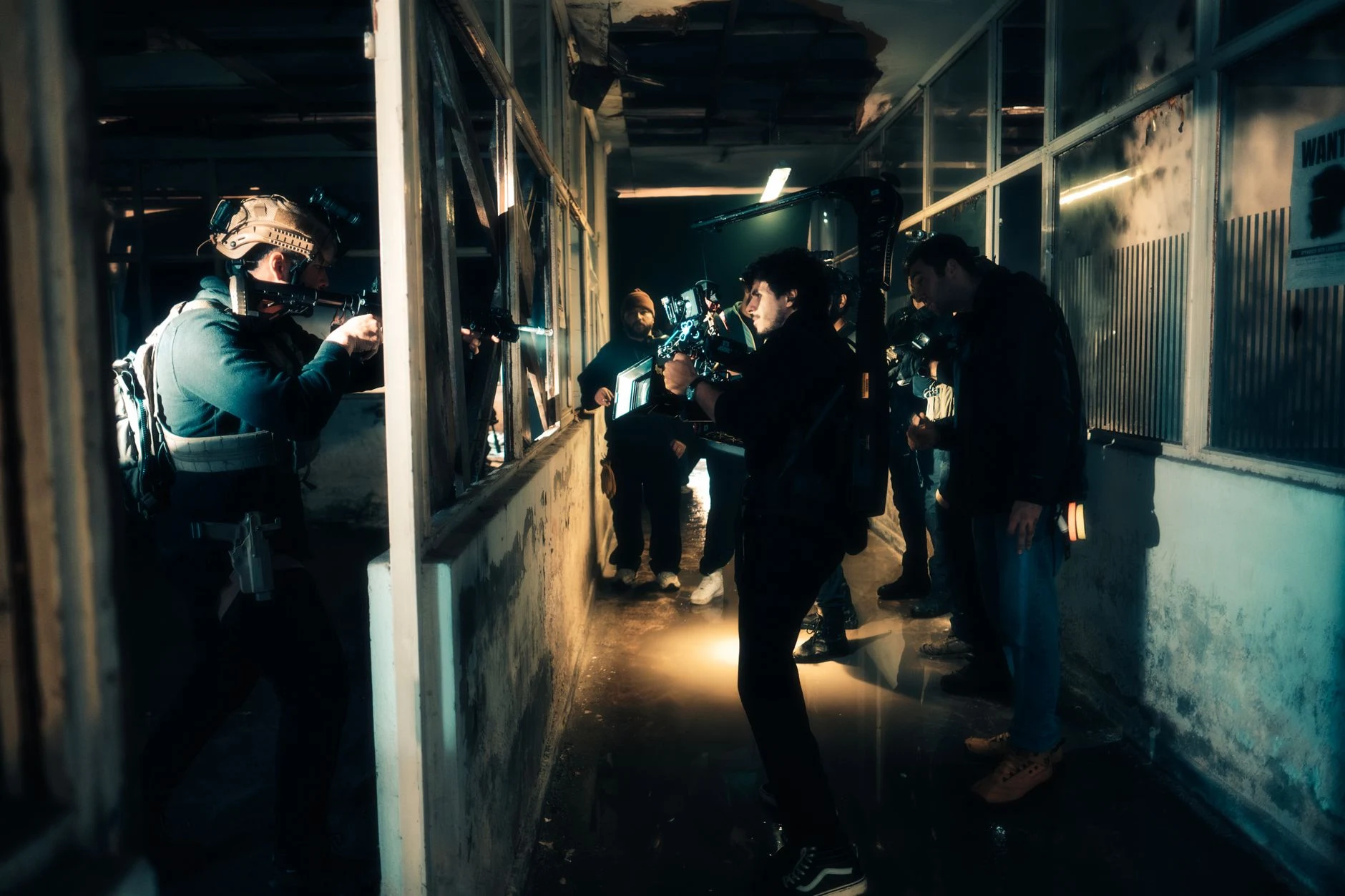
“Action cinema” is a useful label, but not a self-sufficient definition. A chase, a fight or an explosion can appear in a film whose overall structure belongs to another genre. Conversely, an action story can generate tension without maintaining constant movement. When analyzing a particular film, it is worth asking what the action does: Does it drive the chain of decisions? Does it test a character’s abilities? Does it organize a struggle toward a goal? Or is it an episode within a structure dominated by something else?These questions are not intended to establish a universal taxonomy. They are an editorial method: they distinguish the presence of a physical event from the function it serves in the story. They also guard against classifying a film based on a single promotional image or isolated scene. A film can combine action with adventure, crime, science fiction, war, comedy or melodrama. The label describes a possible priority, not a boundary that excludes all others.
This distinction matters because “more action” does not necessarily mean “more of the genre.” The number of punches, races or effects cannot, on its own, explain how a scene is constructed or what consequences its events have. A sound classification would require examining the film and comparing it with documentation about its production, reception or critical categorization. The evidence accompanying this proposal does not include film records or enough analysis to apply that examination to identifiable titles.
An evolution that cannot be reduced to a timeline
The available search results do not support a continuous history of the genre. One popular-audience excerpt suggests that adventure films of the 1950s and 1960s preceded a greater use of effects and stunts; another text refers to the growing popularity of widescreen techniques from the 1950s onward. These are general clues, not detailed enough to establish a transition, identify who drove it or attribute it to specific films. A general reference to film history does not, by itself, demonstrate a specific chronology for action cinema.Even as a hypothesis, a simple “before and after” can conflate distinct processes. Image scale, scene choreography, filming tools, editing and audience expectations are not the same variable. The growing use of a technique does not prove that it replaced another, or that it was adopted uniformly across countries, industries or traditions. To describe historical change, we would need to specify what changed, in which body of work, over what period and on the basis of which documents.
For that reason, this article does not propose a sequence of periods with dates. Nor does it assign the birth of a style or the invention of a convention to a particular decade. The search results contain no archive catalogues, specialist histories with verifiable references or primary sources relating to films that would support such claims. A more striking timeline would be less rigorous than acknowledging this limitation.
How to read a scene: space, continuity and consequence
One practical way to study action is to follow three questions. The first is spatial: Can viewers understand where the bodies are, what obstacles are present and how far apart the participants are? The second is temporal: How does the film connect a preparation, a movement and its result? The third is narrative: What changes after the confrontation or chase? These are analytical questions, not rules that every film must follow.Staging and editing offer different clues. A scene can make movement legible through the position of bodies and continuity between shots; it can also deliberately disorient, withhold information or fragment an action. None of these choices, on its own, is enough to decide whether a sequence is effective. To support such a judgment, we would need to identify what information viewers receive, what is withheld from them and what function that choice serves in the film. This article does not describe scenes from specific titles because the supplied search results do not document films that could serve as examples.
Sound raises a question of its own: Does it reinforce the perception of impact, foreshadow danger, identify a space or create a contrast with the image? Asking this helps prevent us from reducing action to what looks most spectacular. Here, too, it is important to distinguish an interpretive framework from a historical fact: without analyzing identified films, we cannot claim which device predominated in a given period or in which traditions it was more common.
Subgenres and boundaries: a provisional classification
The commonly proposed list of subgenres—crime, war, martial arts, espionage, adventure and futuristic action—can help organize a search, but it should not be mistaken for a stable, mutually exclusive system. The same film could fit several of these descriptions, and the most useful label would depend on the question being asked: its conflict, its narrative world, its formal conventions or the way it circulated.Responsible classification requires explicit criteria. A viewing guide might organize films by type of conflict or setting; an industrial history by conditions of production and distribution; a formal study by how events are linked and information is managed. These maps overlap, but they do not answer the same question. Grouping films without making the criteria clear turns a navigational tool into a misleading boundary.
The sources at hand cannot substantiate subgenres through a body of films either. There are no archive records, festival entries, official credits or specialist studies of films that would allow us to verify which categories have been assigned to them and on what basis. The terms above should therefore be read as examples of possible lines of inquiry, not as a historical classification demonstrated in this article.
What films would be needed to tell this story
The proposal calls for specific examples from the catalogue, but no film catalogue or selection of titles has been provided. It would not be rigorous to fill this gap with films recalled from memory: besides risking incorrect credits or dates, that would present as documented a connection between each film and the history of the genre that could not be verified here.A solid selection would require primary or institutional records identifying each film, confirming its basic details and providing relevant context. We would then need to explain why each example represents a formal change, a mode or a tension between categories, rather than including it solely on the basis of its reputation. A list of titles without that explanation would be a set of recommendations, not a historical map.
The next phase of research should locate independent specialist sources on the genre’s definition and trajectory, consult film archives or institutions for records on the works, and verify the details against primary sources for each film. Only then would it make sense to compare scenes and propose connections among techniques, contexts and subgenres. The current search does not meet that threshold.
Editorial scope and conclusion
The most useful answer to “how has action cinema changed?” is not to invent a progression, but to specify what evidence is needed to describe one. The available excerpts suggest that some popular accounts link the genre’s evolution to effects, stunts or widescreen formats. They do not establish how much those practices changed, when or where they did so, or through which films. Nor are they enough to define, by consensus, what distinguishes action from neighboring genres.They do allow us to set out a method for reading films: distinguish the presence of action from its function, observe how bodies and space are oriented, follow the relationship between movement and editing, and ask what narrative consequence each episode leaves behind. This is a starting point for comparing films once they have been identified and documented; it neither replaces that comparison nor amounts to a complete history.
Editorial status: AI-assisted article. It is not cleared for publication until automated checks of sources, claims, localization, originality, quality and media rights have been passed and documented.
Sources and filmography consulted
- ¿Qué ha cambiado en el cine con el uso de la tecnología .... www.senalcolombia.tv. Consulted 29 Sep 2026
- El cambio del cine: De los Lumière a la Era Digital. www.youtube.com. Consulted 29 Sep 2026
- Historia del cine: cuándo se originó y cómo ha evolucionado. brainstormingfilms.es. Consulted 29 Sep 2026
- Historia del cine - Wikipedia, la enciclopedia libre. es.wikipedia.org. Consulted 29 Sep 2026
- ¿Cómo ha cambiado el cine desde la década del 2000?. www.reddit.com. Consulted 29 Sep 2026
- EL CINE Y SUS TENDENCIAS ACTUALES - Acalanda Magacín. acalanda.com. Consulted 29 Sep 2026
- Cine de acción: Evolución y técnicas. www.studysmarter.es. Consulted 29 Sep 2026
- La evolución de la cámara de cine. rcservice.es. Consulted 29 Sep 2026
- Cómo cambió el cine de acción en las últimas décadas. www.facebook.com. Consulted 29 Sep 2026
- La evolución del cine desde su nacimiento. www.inci.gov.co. Consulted 29 Sep 2026