Film history
Australian New Wave: how to watch a cinema of landscapes without turning landscape into an explanation
The so-called Australian New Wave does not name a closed stylistic bloc, nor an Australia that films simply reveal. It poses a problem of reading instead: first attend to the decisions that organise space on screen, then compare them with the industrial, historical and critical mechanisms that circulated certain images as national emblems.
Content prepared with AI assistance and documented automated checks. This does not imply human review or first-hand viewing. Editorial methodology
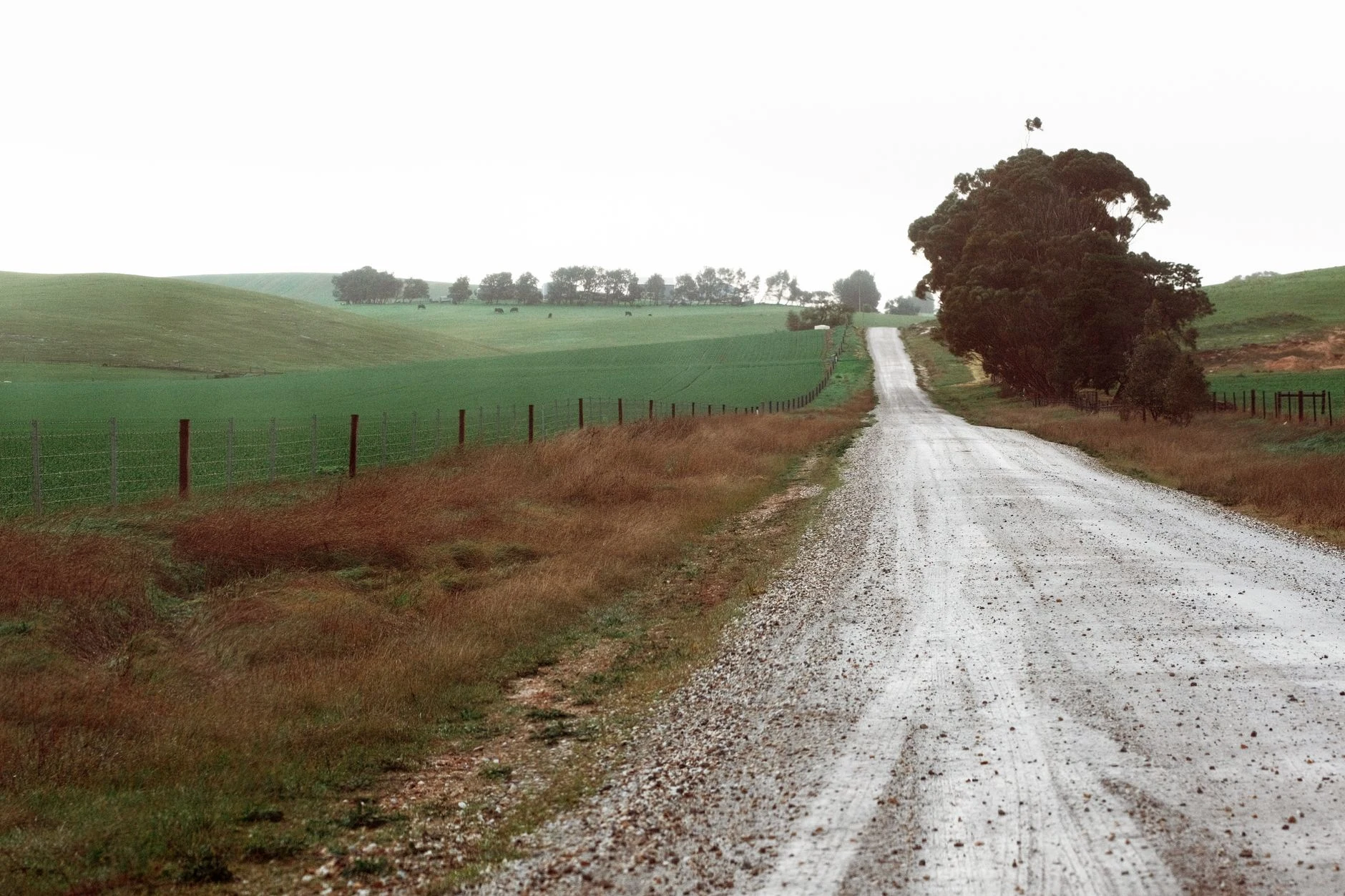
The formula seems convenient: Australian cinema of the 1970s, vast expanses, threat, isolation, bodies exposed before overwhelming nature. But that convenience carries a critical cost. It makes “Australia” the automatic cause of every wide shot, silence or story of disorientation; it turns a heterogeneous set of films, cultural policies, companies, genres, adaptations and representational disputes into a visual essence. Looking more carefully requires reversing the order. Before concluding that a landscape expresses a nation, describe what the film does with distance, sound, bodies, architecture and movement. Only then ask which conditions of production, circulation and reception made that form possible, and which interests did or did not turn it into a national image.
A useful but historically unstable label
“Australian New Wave” works as shorthand for the revival of feature-film production during the 1970s and early 1980s. It works less well as the name of a unified school. Institutional sources often refer to a revival or industrial renaissance; international criticism in the early 1980s helped consolidate the term New Wave; more recent studies recall that its boundaries shift depending on whether one privileges prestige films, ocker comedies, exploitation cinema, experimental work, documentaries or cooperative practices. There is therefore no neutral list that can settle once and for all what belongs and what does not.That instability is not a flaw to be erased. It is the movement’s first lesson. A broad periodisation may begin with attempts to revive production in the late 1960s, move through the institutional expansion of the following decade, and extend to the point at which private finance and tax incentives altered the ecosystem in the 1980s. Another may focus on a small group of historical dramas and literary adaptations that travelled with international prestige. A third will include horror, action, sex, satire or low-budget titles long left at the margins of the official story. Each framing answers a different question; none should be presented as the whole reality.
Replace “which films are essential?” with three verifiable questions: who used the label, and when? Which circuits of finance, exhibition or criticism connected the films being grouped? Which works disappear when cultural respectability is prioritised? The last question matters especially because canon formation can mistake international visibility for representativeness. A film’s travel, critical attention or restored home-media release does not prove that it summarises a national experience; above all, it proves that it passed through particular channels of legitimation.
Describe space first: six operations, not a postcard
Landscape is not an explanation; it is an audiovisual construction. A viewing method can begin with six concrete operations. First, distance: note when the camera keeps characters small in the frame and when it moves close enough to make their setting illegible. A long shot does not automatically mean human insignificance; it may situate a task, register surveillance or establish a practical relation between bodies and infrastructure.Second, duration: ask how long a shot remains before cutting and what activity that duration accommodates. Waiting, walking, farm work, conversation and travel may all seem alike under the label of slowness, but they do not have the same effect. Third, sound: distinguish what is heard within the fictional world from added music and apparent silence. Wind, insects, engines, distant voices, radios and footsteps may measure a place’s depth more precisely than a panorama.
Fourth, bodies: observe who can move safely, who needs guidance, who works, who watches, and who is immobilised by social conventions or violence. Fifth, mobility: attend to roads, fences, trains, horses, cars, paths and thresholds. Cinematic space is not merely terrain; it is also a network of permissions, obstacles and speeds. Sixth, infrastructure: locate houses, schools, farms, power lines, fences, shops and state buildings. A film may shoot open country while also addressing property, labour, education, extraction or administration.
This method prevents the reflex of reading every exterior as pure nature. In Picnic at Hanging Rock, for example, it is not enough to call the rock “mysterious.” The more useful question is how the school, dresses, class rules, the landform’s vertical composition and the unequal distribution of looking organise an opposition the film never reduces to geography. The rock reaches the screen not as transparent Australian fact, but in relation to disciplined bodies, an institution shaped by British inheritance and a deliberately unresolved intrigue.
In My Brilliant Career, the countryside should not become shorthand for national authenticity either. Observe how labour, drought, domestic life and restrictions on writing or marriage distribute the space available to its protagonist. The formal question is not simply whether there is landscape, but whether framing and narrative make it a horizon of possibility, economic obligation, confinement or negotiation. The exterior may open the frame without opening a character’s options.
Form does not arise by itself: compare, do not deduce
After description comes the archive. The film revival of the 1970s was linked to public funding bodies and state film corporations; later, the tax-incentive regime altered sources of capital. This is decisive context, but not a key that deciphers every staging decision on its own. Public support does not automatically explain a focal length, narrative structure or sound mix. Likewise, attributing an image to budgetary scarcity without consulting production materials can turn conjecture into false certainty.Verification must proceed film by film. For Picnic at Hanging Rock, the archive identifies several production companies, producers, the executive participation of the South Australian Film Corporation, Cliff Green’s screenplay and the project’s literary source. It also preserves scripts, costumes, photographs, interviews and discarded material. This documentary density permits concrete questions: which choices belong to the adaptation, which narrative alternatives were abandoned, how state production intervened, and which elements of the film survive in the archive. It does not, however, authorise attributing one intention to everyone involved.
For The Chant of Jimmie Blacksmith, documentation preserves production credits and records assistance from the Victorian Film Corporation; the archive also lists a script, script amendments and a shooting schedule. Here the method must add an ethical caution. The film constructs a story focused on an Aboriginal character, but it was written and directed by Fred Schepisi from Thomas Keneally’s novel. A critical note by Romaine Moreton warns that the work is shaped by stereotypes and by the limits of non-Indigenous authorship in representing Indigenous sensibility. This case prevents landscape, pursuit and colonial violence from being discussed as innocent visual resources. Ask who owns the narrative voice, what history is adapted and what forms of knowledge remain outside the apparatus.
The comparison is not meant to turn these three films into a definitive canon. It shows that one word, landscape, can name incompatible operations: institutionalised mystery, domestic economy and a desire for autonomy, or a territory of pursuit structured by colonial relations. The industrial archive does not replace formal analysis; it compels it to become more precise.
When the market turns an image into an emblem
International circulation added another layer. In the early 1980s, the US press described Australia’s boom through a combination of natural beauty, drama and distinctive visual texture. This description helped sell films and organise very different titles for foreign readers under the same promise of national discovery. There is no need to deny that some films work intensely with exteriors in order to recognise that the commercial formula simplifies their conflicts.The operation has consequences. If a period film, a literary adaptation and a thriller share the display case of “the Australian,” viewers may learn to see first what confirms the label: rock, desert, coast, sudden violence, accent, rural life. Mediations of class, gender, race, migration, city life, technical labour and distribution become less visible. So do traditions that do not fit the export of spectacular nature: cooperative, experimental, political and Indigenous cinema, or popular titles with uneven critical prestige.
The point is not to replace a national cliché with an automatic rejection of every national reading. The nation can be a pertinent historical category where a film relates to funding bodies, censorship, cultural policy, colonial imaginaries, local markets or public debates. But it must be a demonstrated and delimited hypothesis. A film is not Australian in the same sense because it was financed there, set there, adapted from a local novel, circulated at a foreign festival or received as a national symbol. These conditions may coincide, but they are not interchangeable.
A guide to keep watching without making the continent the answer
After watching a film associated with the Australian New Wave, first write one page without using the words “Australia,” “national,” “outback” or “identity.” Describe only visible and audible relations: shot scale, movement, cuts, sound sources, directions of looking, bodily work, access and barriers. The exercise keeps the label from deciding in advance what has been seen.On a second page, add verifiable information: year, companies, credits, funding body, format, running time, aspect ratio, literary source where applicable, release, distribution, restorations and preserved materials. Always distinguish what a document proves from what it merely makes plausible. A shooting schedule proves planning; it does not itself prove the political meaning of a shot. A later interview reveals a memory or retrospective position; it does not cancel contradictions in credits, documents or the film itself.
On a third page, formulate questions of representation. Whose space is this? Who names it? Who crosses its boundaries? Which bodies seem to belong, and which are treated as intruders? Does the camera affirm or disrupt that hierarchy? Does the soundtrack expand the world or close it off? For films representing Indigenous peoples, these questions must include authorship, consultation, archive and reception, without pretending that good intentions resolve a power relation.
The reward of this method is not a final definition of the Australian New Wave. It is something more useful: the possibility of moving from nationality imagined as landscape to a field of aesthetic decisions, institutions, labour, conflicts and contested memories. Landscape will remain central to many of these films, but it will cease to be an automatic explanation. At last, it becomes a question.
Key takeaways
- Treat the “Australian New Wave” as a disputed historical label, not a homogeneous school.
- Before assigning national meaning to landscape, describe distance, duration, sound, bodies, mobility and infrastructure.
- Public funding, incentives and archives contextualise films, but do not replace analysis of form.
- International circulation can turn diverse visual traits into a simplifying national brand.
- In works about history and Indigenous peoples, spatial analysis must include authorship, focalisation and power relations.
Sources and filmography consulted
- www.nfsa.gov.au. www.nfsa.gov.au. Consulted 19 Sep 2026
- www.nfsa.gov.au. www.nfsa.gov.au. Consulted 19 Sep 2026
- aso.gov.au. aso.gov.au. Consulted 19 Sep 2026
- tickets.nfsa.gov.au. tickets.nfsa.gov.au. Consulted 19 Sep 2026
- www.screenaustralia.gov.au. www.screenaustralia.gov.au. Consulted 19 Sep 2026
- www.nfsa.gov.au. www.nfsa.gov.au. Consulted 19 Sep 2026
- metromagazine.com.au. metromagazine.com.au. Consulted 19 Sep 2026
- www.tandfonline.com. www.tandfonline.com. Consulted 19 Sep 2026
- aso.gov.au. aso.gov.au. Consulted 19 Sep 2026
- aso.gov.au. aso.gov.au. Consulted 19 Sep 2026
- www.nfsa.gov.au. www.nfsa.gov.au. Consulted 19 Sep 2026
- www.nfsa.gov.au. www.nfsa.gov.au. Consulted 19 Sep 2026
- aso.gov.au. aso.gov.au. Consulted 19 Sep 2026
- aso.gov.au. aso.gov.au. Consulted 19 Sep 2026
- aso.gov.au. aso.gov.au. Consulted 19 Sep 2026
- pro.nfsa.gov.au. pro.nfsa.gov.au. Consulted 19 Sep 2026
