Festivals and awards
How to read Venice 2026 beyond the awards: the map of an uneven, expanded programme
The 83rd Mostra, held from 2 to 12 September 2026, cannot be reduced to the Golden Lion. Its programme distributed risk, prestige, political cinema, long-form nonfiction, restoration and first features across spaces governed by different rules and degrees of visibility.
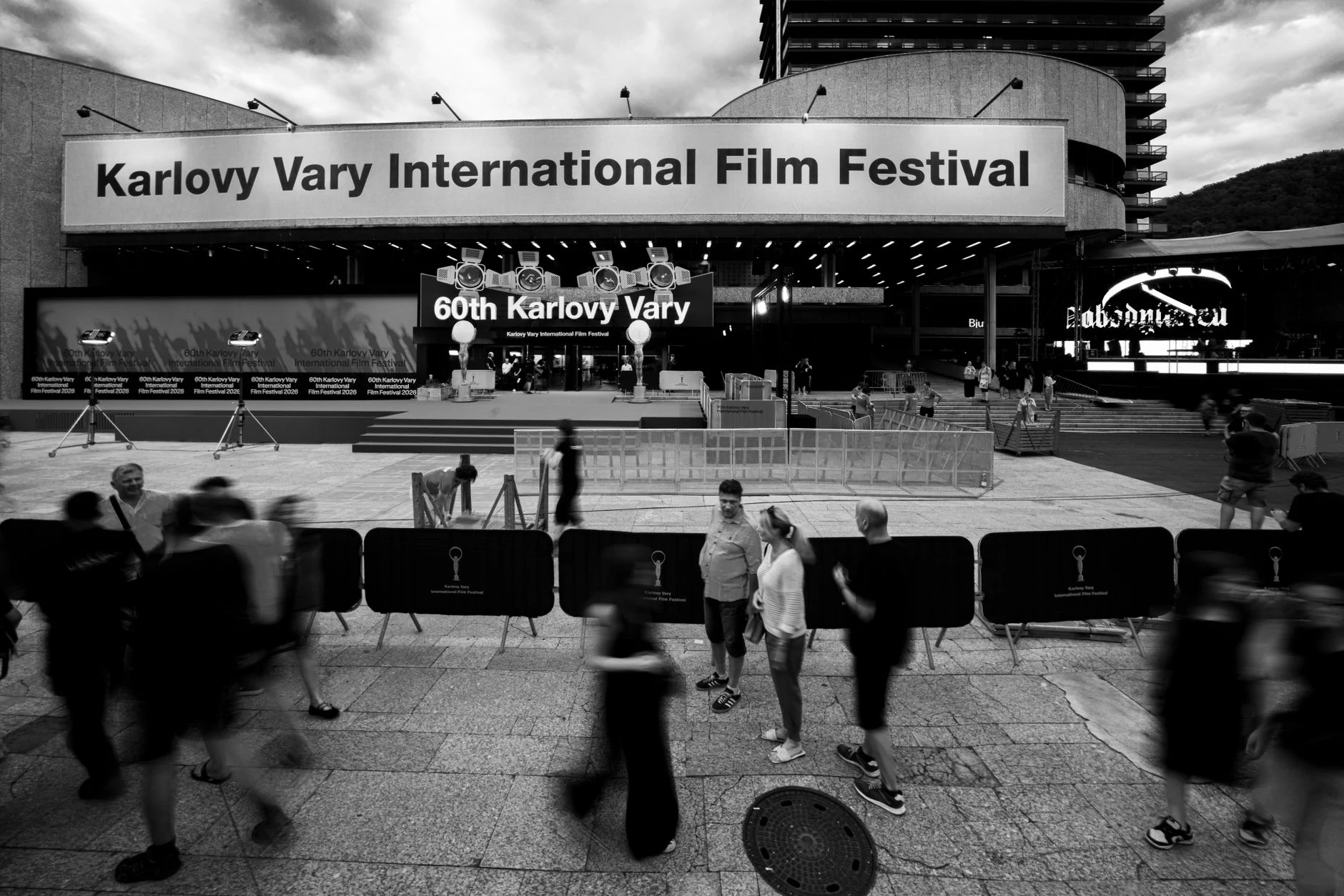
From headline to map: the awards answer a different question
The closing ceremony on 12 September made Woman Unknown, by May el-Toukhy, the immediate Venice 2026 headline when it received the Golden Lion. But an award records a jury’s verdict on the competition; it does not, on its own, explain what the festival chose to show, which works screened out of competition, or what kind of cinema was placed in Orizzonti, Spotlight, Classics or Immersive.La Biennale’s official selection brings together very different functions. Venezia 83 was the main competition, comprising 21 feature films and subject to the regulatory requirement of a world premiere. Venice Open brought together fiction, nonfiction, series, shorts and the Film on Films strand out of competition. Orizzonti defines itself as a competition attentive to formal trends, debuts, emerging talent, independent cinema and lesser-known film cultures. Reading all this as a single race towards the awards erases the very hierarchy of formats and aims that shapes the edition.
What counts as programming, and what must remain separate
The Mostra programme includes the official sections: Venezia 83, Venice Open, Orizzonti, Venice Spotlight, Venice Classics, Venice Immersive and Biennale College Cinema. Each operates within a different framework. Spotlight, for example, focuses on works of any genre distinguished by their innovative relationship with audiences; Classics presents recent restorations; Immersive brings together XR projects on the island of Lazzaretto Vecchio.Two parallel spaces also coexisted and should not be confused with La Biennale’s official selection: Giornate degli Autori, an independent section promoted by Italian authors’ associations, and the Settimana Internazionale della Critica, organised by the Italian critics’ union and centred on seven first features in competition. Being part of either platform means being present within the Venetian ecosystem, but it is not the same as competing for the Golden Lion.
The same applies to Venice Production Bridge. From 3 to 9 September, it operated as an industry platform for unreleased or in-progress projects: adaptation-rights and financing markets, Final Cut in Venice and professional meetings. A project presented there may matter to the future circulation of cinema without being a film premiered in the public programme.
The 2026 cartography: competitive concentration and expansion around it
The competition combined established auteurs with titles from widely varied origins. Its 21 films included productions or co-productions from Europe, the Americas, Asia and the Middle East: from Danny Boyle’s Ink and Martin McDonagh’s Wild Horse Nine to Hirokazu Koreeda’s Look Back, Lee Chang-dong’s Possible Love, Ali Asgari’s Kami nour, and NAZA, co-directed by Yuval Abraham and Rachel Szor. It also concentrated a notable Italian presence, with works by Marco Bechis, Edoardo De Angelis, Nanni Moretti, Andrea Pallaoro and Paolo Strippoli.The decisive expansion occurs outside the competition. Venice Open made particularly ample room for nonfiction and for running times that alter the usual rhythm of a festival: Musk runs 225 minutes, Biografía de Jorge Luis Borges 330, My Undesirable Friends: Part II – Exile 355, and Joie de vivre 435. These are not marginal anomalies: the section accommodates them without requiring that they conform to the main competitive format. By contrast, Venezia 83 had only two very long works, Dau, at 195 minutes plus an intermission, and Possible Love, at 164 minutes.
Spotlight completed this map with eight films whose stated criterion is neither auteur prestige nor debut status, but innovation and a relationship with specific audiences. It brought together productions from Palestine, Mexico, Lebanon, Georgia, Hungary, Romania and Japan. The documentable outcome is not a single thesis about “world cinema”, but an edition that deliberately separated its showcases for legitimisation, discovery, access and experimentation.
Four dialogues the programme makes visible, without assigning it an overarching intention
First, the political present runs through several areas, albeit in different forms and with different degrees of centrality. Competition titles included NAZA and Wild Horse Nine; out of competition came Citizen Osama, Letters from the Silenced Country, My Undesirable Friends: Part II – Exile and Imperium; and Spotlight included Conversation With The Sea. The synopses and credits do not authorise turning these coincidences into a closed festival doctrine, but they do allow us to note a recurrence of works connected to conflict, public memory, journalism, displacement or power.Second, the programme upheld a broad idea of duration. Films exceeding three, five and even seven hours were housed mostly out of competition, where the regulations permit works in varied formats and types. That distribution does not prove that the festival considers nonfiction “lesser”; more cautiously, it indicates that the Open section was the organisational instrument for programming works that exceed the scale of a conventional screening.
Third, the edition organised discovery without reducing it to the main competition. Orizzonti included films by Phuttiphong Aroonpheng, Rubaiyat Hossain, Auguste Bernard Kouemo Yanghu, Jacqueline Lentzou and other filmmakers placed by the section itself under the banner of new trends, debuts and less visible film cultures. Subsequent recognition may alter their circulation, but a work’s initial position in Orizzonti should not be read as a lower rank on a quality table.
Fourth, Venice Classics recalled that programming also means intervening in cinema’s material past. The section presented 19 restorations, including works by Luis Buñuel, John Cassavetes, Roger Corman, Ann Hui, Roberto Rossellini, Ettore Scola, Andrzej Wajda and Flora Gomes. This presence is not nostalgic decoration: the institution frames it as the preservation, reappraisal and transmission of film heritage.
Absences, repetitions and an inequality that can be counted
Absences do not in themselves prove an intention: a film may be missing because of producers’ decisions, scheduling, eligibility, financing or premiere negotiations. It is, however, legitimate to describe what appears in the final list. The competition credited May el-Toukhy as its only sole female director, and Rachel Szor as co-director of NAZA alongside Yuval Abraham. Two imprecise formulations that circulated during the festival should therefore be avoided: there was not only one woman credited as director among the 21 titles, but there was only one film directed exclusively by a woman.The distinction matters because it measures different things. Counting directing credits identifies authorial participation; counting films directed solo reveals another barrier to access in the section with the greatest visibility. Neither figure can, by itself, explain the causes of inequality. A responsible reading must retain the figure, state its method and refrain from turning the programme’s composition into automatic evidence of an intention the festival has not documented.
A guide to following Venice after Venice
To follow the films from this edition, it is worth keeping five pieces of information for each title: its exact section; premiere date and status; country or countries of production listed by the festival; running time; and whether it is fiction, nonfiction, a restoration, series, short or immersive project. Adding an award, where there was one, is useful, but it should never replace this information.It is also worth distinguishing three statements that are often conflated: “it premiered in Venice”, “it was in the official selection” and “it competed for the Golden Lion”. All three may be true of the same film, but they are not equivalent. Likewise, an appearance in Giornate degli Autori, Settimana della Critica or Venice Production Bridge describes a specific relationship to the event, not participation in Venezia 83.
The best available reading for someone who did not attend is not to pretend to have a total view. It is to reconstruct the map, identify which works circulate again in cinemas, on platforms, at festivals or in physical editions, and consult reviews only after establishing in which section, and under what conditions, each one was presented.
![[Portrait of Sam Donahue and Hep, Aquarium, New York, N.Y., ca. Dec. 1946]](https://www.movieresort.com/media/library/2026/09/article9supporting1-c42e6e66a5287dc2.webp)
Sources and filmography consulted
- www.labiennale.org. www.labiennale.org. Consulted 13 Sep 2026
- www.labiennale.org. www.labiennale.org. Consulted 13 Sep 2026
- www.labiennale.org. www.labiennale.org. Consulted 13 Sep 2026
- www.labiennale.org. www.labiennale.org. Consulted 13 Sep 2026
- www.labiennale.org. www.labiennale.org. Consulted 13 Sep 2026
- apnews.com. apnews.com. Consulted 13 Sep 2026
- www.labiennale.org. www.labiennale.org. Consulted 13 Sep 2026
- www.labiennale.org. www.labiennale.org. Consulted 13 Sep 2026
- static.labiennale.org. static.labiennale.org. Consulted 13 Sep 2026
- www.labiennale.org. www.labiennale.org. Consulted 13 Sep 2026
- www.giornatedegliautori.com. www.giornatedegliautori.com. Consulted 13 Sep 2026
- www.labiennale.org. www.labiennale.org. Consulted 13 Sep 2026
- www.labiennale.org. www.labiennale.org. Consulted 13 Sep 2026
- apnews.com. apnews.com. Consulted 13 Sep 2026
- www.labiennale.org. www.labiennale.org. Consulted 13 Sep 2026
- apnews.com. apnews.com. Consulted 13 Sep 2026