Film history
Lebanese Cinema: A History of Production, Circulation, and Co-production
Since the 1920s, Lebanese cinema has functioned as a production and distribution hub in the Arab world. This history examines how institutions, the civil war, and transnational networks shaped a cinema that cannot be reduced to a single national label.

Cinema in Lebanon has existed since the 1920s, and the country has produced more than 500 films. However, its history is not understood as an isolated industry, but as a space of intersection between local production, co-production with Egypt and Syria, and the circulation of works in the Arab and European markets. During the French Mandate, Beirut became an exhibition center and, after independence, a production alternative to Egyptian hegemony. The civil war (1975-1990) interrupted this dynamic, but also drove a new wave of filmmakers who documented the conflict and the diaspora. Today, Lebanese cinema continues to depend on foreign financing and international festivals for visibility, maintaining an identity marked by transnationalism.
Origins and the French Mandate
The first feature film, The Adventures of Elias Mabruk, was filmed in Lebanon in 1929 under the direction of Jordano Pidutti. In 1936, In the Ruins of Baalbec became the country's first sound film, a commercial success that consolidated the presence of cinema in Beirut. During the French Mandate, movie theaters were common and were even used for political meetings, such as the Communist Party's gathering at the Crystal Cinema in 1925. France imposed the dubbing of American films into French to compete with Hollywood, and documentaries were subject to heavy censorship. This stage laid the foundations for an industry that, although small, had a notable technical infrastructure in the region.The Golden Age and the Relationship with Egypt
After independence, Lebanon experienced an economic boom that turned Beirut into the financial center of the eastern Mediterranean. With 38 banks and a multicultural society, the country positioned itself as a production alternative to Egypt, which dominated the Arab film industry. Lebanese distributors monopolized the export of Egyptian films from the 1930s to the 1970s. Directors like Mohamed Selmane, trained in Egypt, produced 30 films in 25 years in Lebanon. Co-productions with Egypt and Syria were common, and the musicals by the Rahbani brothers, starring Fairuz, stood out for using the Lebanese dialect instead of the Egyptian one, offering a more marked local identity.Beirut as an International Filming Location
In the 1960s and 1970s, Beirut became a filming location for international productions. Films such as Where the Spies Are (1965), starring David Niven, and Agent 505: Death Trap (1966), directed by Manfred R. Köhler, were shot in the capital. In 1971, Beirut hosted the first international film festival in the Arab world. Cinema attendance in Lebanon was the highest among Arabic-speaking countries during the 1970s. This international visibility contrasted with local production, which often lacked a clear national identity and was oriented toward a pan-Arab audience, except for works like those of the Rahbani brothers.The Civil War and the New Wave
The civil war (1975-1990) destroyed much of the film infrastructure and halted commercial production. However, a new wave of filmmakers emerged, with a notable presence of women and men, who addressed political issues and displacement. Directors such as Maroun Baghdadi, Jocelyn Saab, Borhane Alaouié, Heiny Srour, and Randa Shahal Sabbag documented the conflict. The film Beirut, the Encounter (1981) by Borhane Alaouié is an example of how displacement became a recurring theme. This stage marked a turn toward a more political and personal cinema, moving away from the commercialism of the post-war period.Preservation and Contemporary Circulation
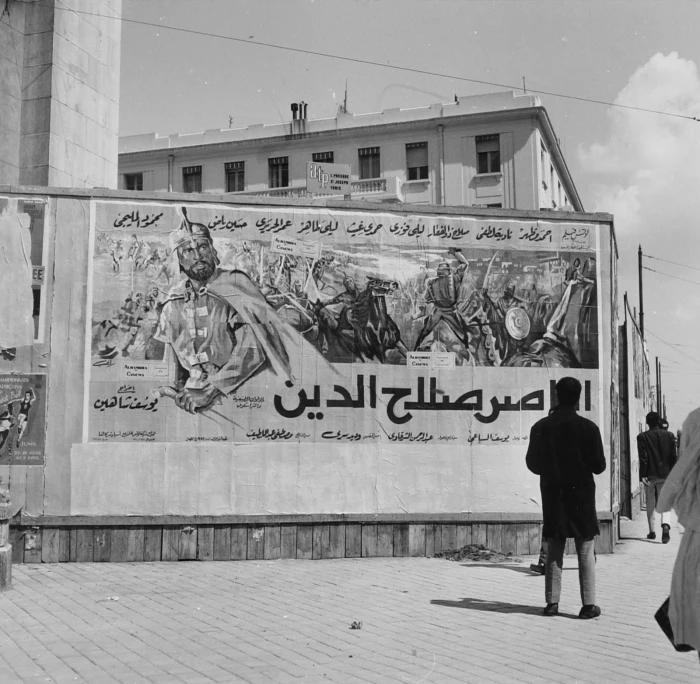
The preservation of Lebanese cinema has been a challenge due to the war and the lack of strong institutional archives. The Cinemateca Libanesa, recently reopened, is a national archive dedicated to preserving the country's cinematic history. Collectors like Abboudi Abou Jaoude have saved thousands of posters and memorabilia, creating a living archive that documents the region's film culture. Currently, Lebanese cinema depends on foreign financing and international festivals. Films like Where Do We Go Now? by Nadine Labaki, winner of the Audience Award in Toronto, and The Insult by Ziad Doueiry, nominated for an Oscar, show the ability of Lebanese cinema to achieve global recognition, although its annual production remains limited.Key takeaways
- Lebanese cinema has produced more than 500 films since the 1920s, but its industry is small and depends on foreign financing.
- Beirut was a key production and exhibition center in the Arab world, rivaling Cairo in the 1960s.
- The civil war (1975-1990) interrupted the commercial industry but drove a new wave of documentary and political cinema.
- The preservation of Lebanese cinema is an ongoing effort, with archives like the Cinemateca Libanesa and private collectors saving historical material.
- Recent films like Where Do We Go Now? and The Insult have achieved international recognition, demonstrating the current relevance of Lebanese cinema.
Sources and filmography consulted
- Cinema of Lebanon. en.wikipedia.org. Consulted 13 Nov 2026
- Lebanese Cinema | PDF | Lebanon | Phoenicia. www.scribd.com. Consulted 13 Nov 2026
- Despite war, Lebanon reopens film archive celebrating cinematic history. www.al-monitor.com. Consulted 13 Nov 2026
- Lebanese Films Matter : A Shared Memory. filmatters.org. Consulted 13 Nov 2026
- The man saving Lebanon's cinema history, a poster at a time. www.dw.com. Consulted 13 Nov 2026
- Sights of Memory – Films from Lebanon. www.arsenal-berlin.de. Consulted 13 Nov 2026
- Cine del Líbano. www.wikiwand.com. Consulted 13 Nov 2026
- A Lebanese Archive. www.cinemathequebeirut.com. Consulted 13 Nov 2026
- The International Restructuring of Post-War Lebanese .... journals.openedition.org. Consulted 13 Nov 2026
- Film Archives. fondationlibancinema.org. Consulted 13 Nov 2026
- Cine del Líbano - Wikipedia, la enciclopedia libre. es.wikipedia.org. Consulted 13 Nov 2026
- 9.ª edição Olhares do Mediterrâneo - Women's Film Festival. cria.org.pt. Consulted 13 Nov 2026
- Scripted Success. carnegieendowment.org. Consulted 13 Nov 2026
- LEBANON CINEMA… (In the Entertainment industry. .... www.linkedin.com. Consulted 13 Nov 2026
- Film Studies: National Cinemas: Middle East - Research Guides. researchguides.dartmouth.edu. Consulted 13 Nov 2026
- Más allá de la cámara: una conversación con Sam Lahoud. revistadiafanis.com.ar. Consulted 13 Nov 2026
- The Legacy of Jocelyne Saab as a Lebanese Film Archive. hal.science. Consulted 13 Nov 2026
- Mujeres Mediterráneas. Líbano» arrives in Beirut and Trípoli. fundacionsalomsabar.org. Consulted 13 Nov 2026
- Cinematheque Beirut. metropoliscinema.net. Consulted 13 Nov 2026
- Cinematic Dialogs. www.palestinefilminstitute.org. Consulted 13 Nov 2026
- Encountering the Paranational Film Archive. paranational-cinema.org. Consulted 13 Nov 2026
